Believers brings together works by Janine Antoni, Kazumi Tanaka, Wolfgang Tillmans, Nari Ward, and Chen Zhen, alongside Jonathan Berger, Taylor Davis, Gordon Hall, Pallavi Sen, and Cauleen Smith 

(Boston, MA—JANUARY 16, 2025) On Feb. 13, 2025, the Institute of Contemporary Art/Boston (ICA) opens Believers: Artists and the Shakers, a tightly conceived group exhibition revisiting The Quiet in the Land: Everyday Life, Contemporary Art and the Shakers, an exhibition presented at the ICA in 1998. The Quiet in the Land was organized by independent curator France Morin and brought to the ICA by Jill Medvedow at the beginning of her tenure as Ellen Matilda Poss Director. Believers reunites a core group of works first presented in The Quiet in the Land by artists Janine Antoni, Kazumi Tanaka, Wolfgang Tillmans, Nari Ward, and Chen Zhen—some of which have been remade for this exhibition—alongside more recent works by artists Jonathan Berger, Taylor Davis, Gordon Hall, Pallavi Sen, and Cauleen Smith. Believers considers how contemporary artists continue to derive inspiration from the utopian community’s vital experience as “ordinary people attempting to live an extraordinary life.” On view from Feb. 13 to Aug. 3, 2025, Believers: Artists and the Shakers is organized by Jeffrey De Blois, Mannion Family Curator, with Tessa Bachi Haas, Assistant Curator. 

The Quiet in the Land was a deeply meaningful project for me when I began my work at the ICA,” said Jill Medvedow, Ellen Matilda Poss Director of the ICA. “I look forward to revisiting many of the artworks included in the 1998 exhibition and to discover how Shaker ideas around community, utility, and simplicity continue to resonate with artists today.” 

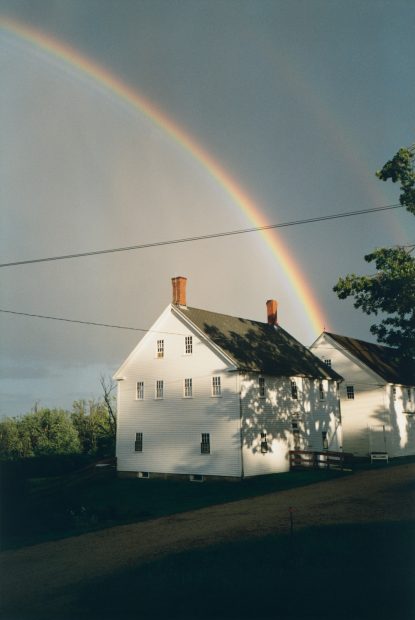
The Quiet in the Land featured a dynamic body of works born out of an unorthodox residency initiated by Morin in 1996. During this residency, ten artists were invited to live, work, and worship in the only remaining active Shaker community located near New Gloucester in Sabbathday Lake, Maine. According to Morin, The Quiet in the Land set out “to explore the complex relationship between artistic practice and everyday life, as well as to define the spiritual impetus of the creative act,” with and through the art works inspired by the Shakers. Believers builds on the ways the earlier project “sought to probe conventional notions of gender, work, and spirituality, to redefine the making and experiencing of art, and to challenge the widespread belief that art and life exist in separate realms.” 

Since arriving in America from England 250 years ago, the Shakers—a radical Christian sect—have occupied a unique and romantic place in American national identity and the public imaginary. Also known as the United Society of Believers in Christ’s Second Appearing, the Shakers ascribe to values and practices of celibacy, communal living, pacifism, shared property, and gender and racial equality, and they are widely recognized for their simple living and architectural style, music, and furniture design. The Shakers have captured the imagination of many artists since at least the early 20th century, when ideas about self-perfection, practicality, and the austere elegance associated with Shaker material culture and religious practice took hold. These ideas entered more strongly into the American consciousness following a string of influential exhibitions and books, many of them organized and authored by those outside of Shaker communities (what Shakers refer to as “the world”). 

“Whereas artists were attracted initially to the sense of perfection and simplicity they associated with Shaker furniture, many artists today find in the Shakers a model for living otherwise at a time of radical social transformation,” said De Blois. “Long-held Shaker values like communal living, pacifism, shared property, and gender and racial equality are appealing for many artists—ideas that Believers traces from The Quiet in the Land to artists responding to the Shaker legacy in their work today.”  

Believers presents selected works from The Quiet in the Land alongside more recent works by Jonathan Berger and Cauleen Smith. Taylor Davis, Gordon Hall, and Pallavi Sen have made new works for the exhibition. Examples include:  

  • Community Threshold (1997–2024), a found object sculpture by New York-based artist Nari Ward. Previously presented in The Quiet in the Land, this assemblage originally combined a child’s cradle, elements of a porch from Sabbathday Lake, and two banisters from a church in Harlem. The material conversation held by the sculpture between elements of the Shaker built environment and Harlem church banisters reflects Ward’s own consideration of his Baptist upbringing alongside his experience living with the Shakers. However, only a portion of the original sculpture survived after The Quiet in the Land. For Believers, Ward remade the sculpture around what remained, transforming it in the process by adding new materials such as children’s cots, bed springs, and lecterns. Elements of the sculpture are bound with strips of burlap that suggest techniques of Shaker basket making, while two washbasins with inset mirrors feature scattered soil recently collected from the grounds of Sabbathday Lake. Remaking the sculpture allowed the work to grow with him, mirroring the lasting impact that his time at Sabbathday Lake among the Shakers had on his life. 
  • Communion (1996/2025) by New York-based artist Kazumi Tanaka was made following her 1996 residency at Sabbathday Lake. Tanaka was inspired by the everyday rituals of communion, such as shared meals in the dining room of the dwelling house. Tanaka memorialized this experience in the form of an installation composed of two tables and a clock, all made meticulously by hand. Inlaid into the top of the tables—which evoke the separate tables for men and women in the dining room—are metal trays filled with water. The plates float on the surface of the water, evoking the presence of the Shakers sharing a meal, just as the ticking clock with no hands evokes the passage of time, which Tanaka observed passed “more carefully” at the village. Here, Tanaka also included an anamorphic door that sits permanently ajar. Conceived in 1996 but not shown until 2025, the door alludes to Shaker founder Mother Ann Lee’s sentiment that the Shakers should open the windows and doors to receive whoever will arrive, a spirit of openness and generosity Brother Arnold Hadd carries forward at Sabbathday Lake today. 
  • Pilgrim (2017) is a short film by Los Angeles-based filmmaker and artist Cauleen Smith. Against the backdrop of a live recording of Alice Coltrane performing “One for the Father,” Smith combines ecstatic footage from three inspired sites: Alice Coltrane’s Sai Anantam Ashram (founded in 1983 though lost to a California wildfire in 2018); Simon Rodia’s Watts Towers (a collection of seventeen interconnected sculptural towers built between 1921 and 1954 in Los Angeles, and designated a National Historic Landmark in 1990); and the Watervliet Shaker Village (the first Shaker settlement in America, established in 1776 in Albany County, New York). Presenting these three unique places on a continuum, Smith’s approach in Pilgrim traces lines between Shaker placemaking and other important sites of spiritual practice in America. 
  • In Jonathan Berger’s text-based, sculptural installation An Introduction to Nameless Love—Untitled (Brother Arnold Hadd, with Sarah Workneh), Brother Arnold Hadd of Sabbathday Lake Shaker Village was one of six protagonists interviewed on the subject of “nameless love,” a term the artist uses to describe nonromantic forms of love. After extensive conversations with Brother Arnold, the transcripts were edited and condensed by Sarah Workneh, Berger’s collaborator and the former codirector of Skowhegan School of Painting and Sculpture, located in Maine near Sabbathday Lake. Berger then cut the text letter by letter from tin and reassembled them into a wall-size, text-based sculpture with doors on either side—a reference to the Shaker separation of genders reflected in their architectural forms. In the text, Brother Arnold describes how, for the Shakers, labor is a spiritual expression of divine love. This labor of love is likewise expressed in Berger’s meticulously crafted sculpture.

Media Contact  
Theresa Romualdez, press@icaboston.org 
Working with Boston residents and organizations, the artist will integrate personal stories into her Watershed presentation

(Boston, MA—JANUARY 14, 2025) This summer, the Institute of Contemporary Art/Boston (ICA) opens the 2025 Watershed season with Chiharu Shiota: Home Less Home, on view May 22 through Sept.1, 2025. The exhibition features two large-scale installations by the Berlin-based, Japanese artist Chiharu Shiota (born 1972 in Osaka, Japan), including the debut of a new commission made for the ICA Watershed. Shiota foregrounds universal stories of migration, home, connection, memory, and survival. Her signature approach combines intricate, immense, and web-like installations built of thread and rope with quotidian objects—such as shoes, suitcases, beds, chairs, dresses, and keys—that serve as symbols for human presence and memory. Chiharu Shiota: Home Less Home amplifies the ICA Watershed as a unique space for public art in Boston and will be included as part of the inaugural Boston Public Art Triennial. The exhibition is the artist’s first solo presentation in New England and is organized by Ruth Erickson, the ICA’s Barbara Lee Chief Curator and Director of Curatorial Affairs, with Brianne Chapelle, Curatorial Department Coordinator. 

“Shiota’s awe-inspiring installations address themes of migration and home that resonate meaningfully with the Watershed’s location in East Boston and beyond,” said Erickson. “She uses common materials to imbue her work with profound and personal connections. We are honored to be able to invite Boston audiences to participate by sharing an image or story of their personal experiences of leaving one home and finding another, adding another meaningful dimension to this important exhibition.”  

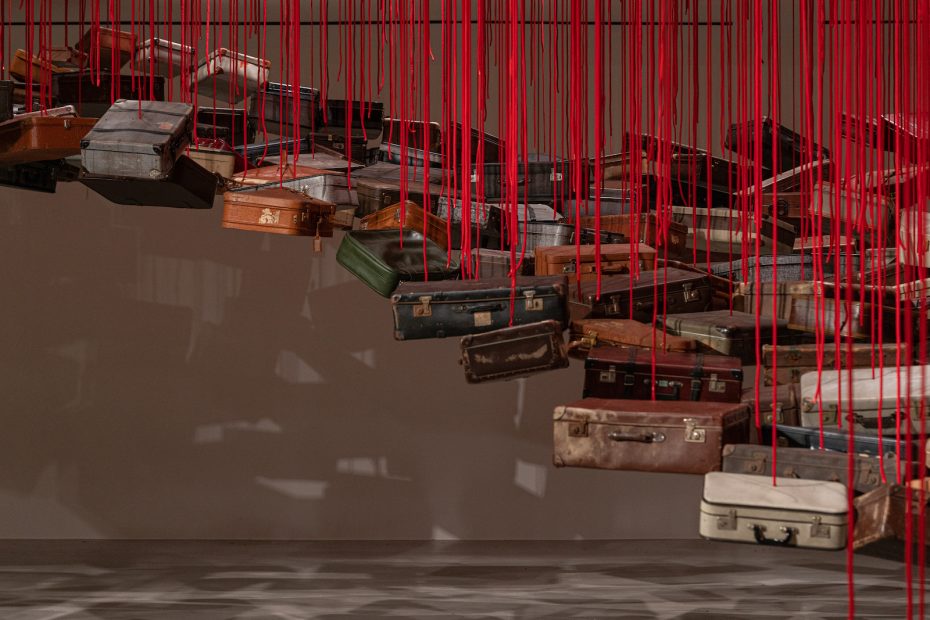
Visitors to the exhibition will first encounter the installation Accumulation – Searching for the Destination (2014/2025), which the artist has adapted to fill the monumental scale of the Watershed space. In this powerful work, dozens of vintage suitcases are suspended from red rope, some vibrating and shaking with the turbulence of anticipation. For Shiota, who brought only one suitcase when she moved from Japan to Berlin in 1996, the suitcase symbolizes the starting point of a new journey.  

The exhibition then leads to the artist’s newly commissioned work, Home Less Home. Within a field of red and black ropes forming the shape of a house in space, Shiota suspends thousands of documents, including those contributed by local Boston participants. These passports, letters, photographs, immigration papers, and messages hover above vignettes of domestic furniture selected and arranged by Shiota.  

For her new work, Shiota invites individuals to share stories and images of what home means, what it feels like to leave home, and what it takes to rebuild it. The collection of personal images and stories will take place in the spring of 2025 through partnerships with local community organizations and an open call to East Boston residents from the artist and ICA. Together, these works consider the journey towards one home and away from another. 

Chiharu Shiota: Home Less Home will be included as part of the inaugural Boston Public Art Triennial, the city’s first and only public art event set to run every three years from May to October.

About the Artist
Chiharu Shiota (born 1972, Osaka, Japan) is a Berlin-based Japanese artist who has been working at the intersection of performance, sculpture, and large-scale installation since the 1990s. Shiota is internationally renowned for her large-scale installations, which she has exhibited globally, with recent solo presentations at the Nakanoshima Museum of Art, Osaka, Japan (2024); Fundació Antoni Tàpies, Barcelona, Spain (2024); Hammer Museum, Los Angeles (2023); Queensland Art Gallery of Modern Art, Brisbane, Australia (2022); ZKM | Zentrum für Kunst und Medien, Karlsruhe (2021); Museum of New Zealand Te Papa Tongarewa, Wellington (2020); Mori Art Museum, Tokyo (2019); and Gropius Bau, Berlin (2019). Her work has also been included in numerous group shows and international exhibitions, including the 56th International Art Exhibition at the Venice Biennale (2015) where Shiota represented Japan with her installation The Key in the Hand.

About the ICA
Since its founding in 1936, the ICA has shared the pleasures of reflection, inspiration, imagination, and provocation that contemporary art offers with its audiences. A museum at the intersection of contemporary art and civic life, the ICA has advanced a bold vision for amplifying the artist’s voice and expanding the museum’s role as educator, incubator, and convener. Its exhibitions, performances, and educational programs provide access to the breadth and diversity of contemporary art, artists, and the creative process, inviting audiences of all ages and backgrounds to participate in the excitement of new art and ideas. The ICA is located at 25 Harbor Shore Drive, Boston, MA, 02210. For more information, call 617-478-3100 or visit our website at icaboston.org. Follow the ICA on FacebookInstagram and TikTok.

Media Contact
Theresa Romualdez, press@icaboston.org
Opening Feb. 13, the presentation will feature a site-specific, billboard-scale photo collage, and an immersive photo-based installation

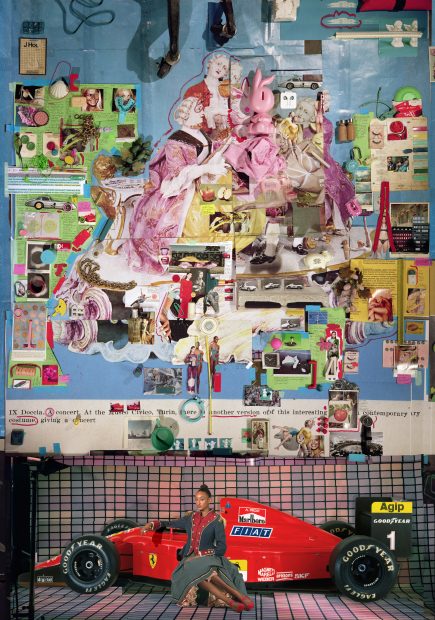
(Boston, MA—DECEMBER 20, 2024) On February 13, 2025, the Institute of Contemporary Art/Boston (ICA) unveils an ambitious two-part exhibition from New York-based artist Sara Cwynar (b. 1985, Vancouver). Cwynar is creating a floor-to-ceiling, photo collage billboard for the Sandra and Gerald Fineberg Art Wall in the ICA’s lobby, as well as an installation in the Paul and Catherine Buttenwieser Gallery on the fourth floor, marking the first time an artist has worked simultaneously in these two spaces at the ICA. The photo-based exhibition builds on the artist’s longstanding investigation of the relationship between images and the construction of selfhood in the digital era. Organized by Jeffrey De Blois, Mannion Family Curator, with Max Gruber, Curatorial Assistant, Sara Cwynar and Sara Cwynar: Alphabet are on view from Feb. 13 to Aug. 3, 2025.

Cwynar’s densely layered photographs, films, and installations employ the visual languages of design and advertising to explore themes of seduction, desire, and commodification. Her practice of constant archiving and re-presentation of collected visual materials recalls advertisements, retail catalogues, and old history books. These visual assemblages invite viewers to consider how life online increasingly structures our perceptions of the world, and how these perceptions can change through time and contextual manipulation. Her work interrogates how the dizzying velocity with which images circulate today online conceals systems of control embedded in our everyday lives.

“Cwynar is one of the most exciting contemporary artists working with photography to emerge in the last several years,” said De Blois. “Her meticulously assembled artworks take on pressing questions around the ways in which human biases are implicit in technologies, how photography works in lockstep with capitalism, and, against the backdrop of the proliferation of images online, how we understand who we are and want to be today.”   

Upon entering the ICA, visitors will first see Cwynar’s floor-to-ceiling, site-specific billboard created for the Sandra and Gerald Fineberg Art Wall. The billboard is a visual index of an alphabetical list of terms pulled from the media in the last few years. Some words are more personal, such as terms suggested by search engine algorithms responding to the artist’s online activities, and others are more universally common search terms. The terms are represented in the artwork by commonplace image types from advertising: the reclining woman, the domestic object, perfect looking food, familiar logos, luxury cars, and more. Although the form of the artwork is guided by principles of billboard design, nothing is clearly for sale: what is being “advertised” is an overview of our contemporary moment as seen through seductive images suggesting a generalized desire.

Upstairs, the alphabetical list of terms is expanded into an immersive photo-based installation. Each term is accompanied by an array of associated images, objects, or videos presented around the gallery on panels inspired by German art historian Aby Warburg’s Mnemosyne Atlas (1925–29). Warburg organized an encyclopedic collection of nearly 1,000 images on black panels to understand and contextualize recurring visual themes and patterns across time and cultures, from antiquity to the present. Cwynar similarly combines each term with a corresponding visual, connecting each term to contemporary life. For Cwynar, all archives, including the internet, are inflected with human biases and failed aspirations toward objectivity. Even still, as the human impulse to search for answers moves online, Cwynar considers how “personal responses to the world are filtered through a history of images that trails behind us.” 

Artist Bio
Sara Cwynar (b. 1985, Vancouver, British Columbia, Canada) is interested in the way that images accumulate, endure, and change in value over time. Her conceptual photographs and films involve constant archiving and re-presentation of collected visual materials, layering diverse imagery with references to art theory. The works intricately recall advertisements, retail catalogues, and old art history textbooks. Her visual assemblages meditate on how vernacular images shape collective world views, and how those ideals can change through time and contextual manipulation. Cwynar was one of the recipients of the 2020 Sobey Art Award, the 2020 Louis Comfort Tiffany Foundation Award, and the 2021 Shpilman Photography Prize. She earned her Bachelor of Design from York University in 2010 and her MFA from Yale University in 2016. In 2014, she was awarded the Printed Matter Emerging Artists Publication Series and published her first monograph, entitled Kitsch Encyclopedia, with Blonde Art Books. A monograph of Cwynar’s work, entitled Glass Life, was published in 2021 by Aperture with the Remai Modern.

About the ICA 
Since its founding in 1936, the ICA has shared the pleasures of reflection, inspiration, imagination, and provocation that contemporary art offers with its audiences. A museum at the intersection of contemporary art and civic life, the ICA has advanced a bold vision for amplifying the artist’s voice and expanding the museum’s role as educator, incubator, and convener. Its exhibitions, performances, and educational programs provide access to the breadth and diversity of contemporary art, artists, and the creative process, inviting audiences of all ages and backgrounds to participate in the excitement of new art and ideas. The ICA is located at 25 Harbor Shore Drive, Boston, MA, 02210. The Watershed is located at 256 Marginal Street, East Boston, MA 02128. For more information, call 617-478-3100 or visit our website at icaboston.org. Follow the ICA on Facebook, Instagram, and TikTok. 

Media Contact 
Theresa Romualdez, press@icaboston.org
Credits
Sara Cwynar is organized by Jeffrey De Blois, Mannion Family Curator, with Max Gruber, Curatorial Assistant.

Support for Sara Cwynar is provided by The Kristen and Kent Lucken Fund for Photography.

(Boston, MA—Nov. 20, 2024) The Institute of Contemporary Art/Boston (ICA) announced today that Nora Burnett Abrams has been appointed the museum’s next Ellen Matilda Poss Director, succeeding Jill Medvedow after a 26-year tenure that has transformed the ICA into one of the leading centers for contemporary art in the country. Abrams joins the ICA from the Museum of Contemporary Art, Denver (MCA Denver), where she has served as the Mark G. Falcone Director since 2019. Medvedow will step down on March 31, 2025, and Abrams will begin her new role on May 1, 2025.

“On behalf of the Board of Trustees, we welcome Nora to the ICA with great enthusiasm,” said Board Co-Chair Bridgitt Evans, who led the yearlong search for the new director. “In Denver, Nora elevated expectations for how a museum can embed its work in its community and engage audiences. She has an ambitious vision for programmatic excellence combined with cultural and civic relevance, and we look forward to bringing that vision to Boston.”

“As a longtime admirer of the ICA, I am deeply honored to lead this inspiring and courageous organization,” said Abrams. “Through its lauded exhibitions and programming, the ICA embodies the rigor, relevance, and creativity which so many in our field look to as a model. Jill’s visionary leadership has set the bar for what a contemporary art museum can be and redefined what museums can achieve through the values of openness and care. My 15-year tenure at MCA Denver was an extraordinary and formative experience which I will always treasure thanks to our inspiring artists, colleagues, and Board of Trustees. I look forward to building on the ICA’s incredible legacy and collaborating with the ICA’s outstanding team to begin an exciting new chapter for the museum.”

“Nora has articulated a bold vision for the ICA’s future, and we are confident that the ICA will continue to flourish under Nora’s leadership, energy, and values,” said Charlotte Wagner, President of the ICA’s Board of Trustees.

An accomplished museum leader and highly regarded curator, Abrams developed and realized a new strategic vision for MCA Denver, deepening the museum’s role as a catalyst for creative energy, community engagement, and artistic experimentation. As director, she increased the museum’s endowment by 30%, led successful fundraising campaigns, and spearheaded the opening of the museum’s second space at the historic Holiday Theater in Denver’s Northside neighborhood. Through a landmark agreement with the Denver Cultural Property Trust, Abrams ensured the city’s creative community would have a long-term hub for the arts and expanded MCA Denver’s impact by developing a new destination for innovative community and artist-driven programming. She also led the creation of the organization’s Racial Equity Plan to further MCA Denver’s dedication to inclusivity, inspiring and building strong teams, engaging internal and external stakeholders, and broadening institutional development.

Over her 15 years at MCA Denver, Abrams took on roles of increasing scope and responsibility, serving as adjunct curator (2009), associate curator (2010–2015), curator (2015–2018), and Ellen Bruss Curator & Director of Planning (2018–2019), helping increase the museum’s attendance by more than 200% before being named director in 2019. Within the curatorial department, she organized more than 40 exhibitions and authored or contributed to more than 15 publications. Abrams was the curator of some of MCA Denver’s most successful exhibitions, including Basquiat Before Basquiat (2017); the first-ever survey of Senga Nengudi’s R.S.V.P. sculptures (2014); and Fieldwork (2018), a retrospective of Tara Donovan; and she co-curated Cowboy (2023), a thematic group show exploring the mythology of the American West. As director, she oversaw the expansion of the museum’s youth programming, including the launch of a workforce development program for young creatives, and grew a range of multi-disciplinary adult programs.

Abrams serves on the Board of Trustees of the American Association of Museum Directors and is an alumna of the Center for Curatorial Leadership (2018 class). She also served as a co-chair of Mayor Mike Johnston’s transition committee for Denver’s Arts & Venues (2023). Prior to MCA Denver, Abrams worked at the Metropolitan Museum of Art and the Museum of Modern Art in New York. She holds a Ph.D. in the history of art from the Institute of Fine Arts, New York University, an M.A. in Modern Art and Critical Studies from Columbia University, and a B.A. in Art History from Stanford University.

About the ICA
Since its founding in 1936, the ICA has shared the pleasures of reflection, inspiration, imagination, and provocation that contemporary art offers with its audiences. A museum at the intersection of contemporary art and civic life, the ICA has advanced a bold vision for amplifying the artist’s voice and expanding the museum’s role as educator, incubator, and convener. Its exhibitions, performances, and educational programs provide access to the breadth and diversity of contemporary art, artists, and the creative process, inviting audiences of all ages and backgrounds to participate in the excitement of new art and ideas. The ICA is located at 25 Harbor Shore Drive, Boston, MA, 02210. For more information, call 617-478-3100 or visit our website at icaboston.org. Follow the ICA on FacebookInstagram and TikTok.

Media Contact
Theresa Romualdez, press@icaboston.org
Opening Oct. 10, the exhibition premieres a room-sized sculptural video installation featuring several of the artist’s frequent collaborators

(Boston, MA—AUGUST 27, 2024) In October 2024, the Institute of Contemporary Art/Boston (ICA) presents Charles Atlas: About Time, the first U.S. museum survey of pioneering interdisciplinary artist Charles Atlas (b. 1949 in St. Louis). The retrospective exhibition presents work created over 50 years, including the debut of a new, room-sized sculptural video installation that considers abiding themes of collaboration and friendship. The exhibition brings together key components of more than 125 films and videos in monumental and immersive multichannel video installations the artist describes as “walk-through experiences.” Encompassing themes of performance and portraiture, gender and sexuality, and collaboration and friendship, Charles Atlas: About Time is oriented around the artist’s groundbreaking work at the intersections of moving image, dance, and performance, and his intimate video portraits of close collaborators and friends. The exhibition is accompanied by a lushly illustrated catalogue featuring significant new scholarship on Atlas’s practice and co-published by the ICA and DelMonico Books. On view from Oct. 10, 2024 to March 16, 2025, Charles Atlas: About Time is organized by Jeffrey De Blois, the ICA’s Mannion Family Curator, with Max Gruber, ICA Curatorial Assistant. 

“Charles Atlas originated the genre of ‘media-dance’ while working as filmmaker-in-residence at Merce Cunningham Dance Company in the 1970s and early 80s. This retrospective exhibition offers visitors an important and long overdue immersion into Atlas’s unparalleled and highly influential legacy in film and video art,” said Jill Medvedow, Ellen Matilda Poss Director. 

Charles Atlas: About Time is a historically significant retrospective, displaying the breadth of Atlas’s work through room-filling installations that collapse time within their structures and showcase the full scope of Atlas’s creative powers,” said De Blois. “Featuring ‘exploded views’ of the artist’s genre-defying works, this presentation reveals Atlas’s unique negotiation of time as a medium throughout his storied, 50-year career.” 

Atlas’s early career is defined by his time as filmmaker-in-residence at the Merce Cunningham Dance Company in New York. There, he followed the circle of artists with whom Cunningham collaborated closely, including John Cage, Jasper Johns, Robert Rauschenberg, and others. Atlas and Cunningham pioneered the genre of “media-dance”—dance made for the camera, rather than an in-person audience—through a series of video collaborations of successive complexity. Following his time at the company, his works increasingly featured overt expressions of sexuality, especially gay and queer sexuality, and notions of gender that move well beyond constrictive binaries. Likewise, Atlas goes on to value every form of performance equally, from modern dance made for the stage, to drag shows in underground clubs, to today’s viral dance videos made for TikTok. 

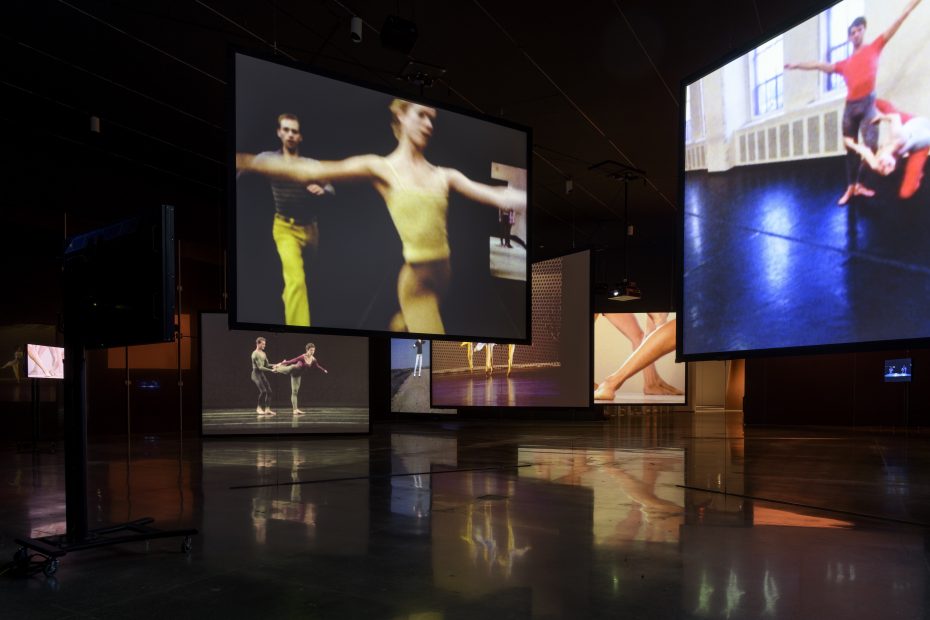
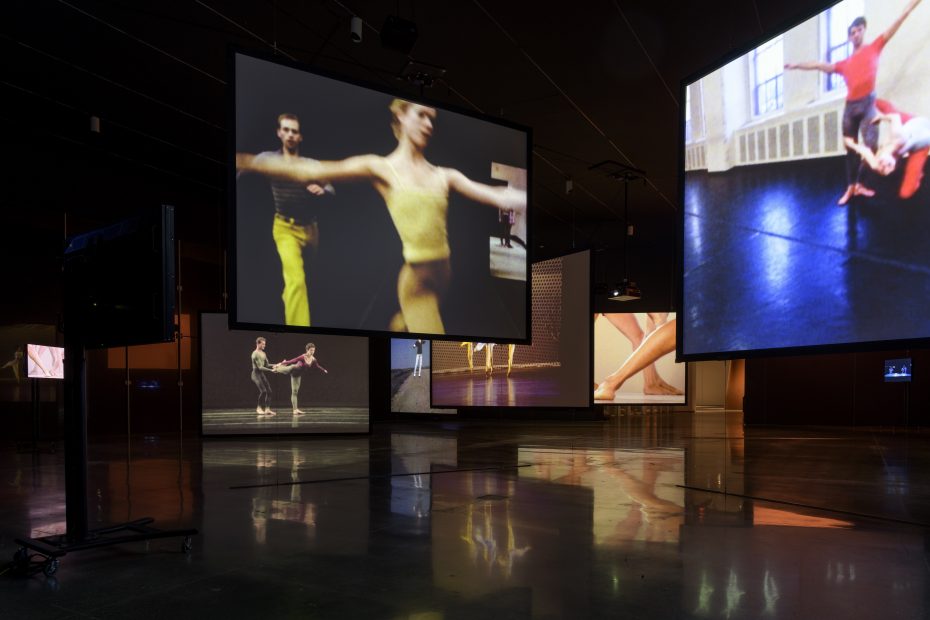
Beginning around the time of friend and collaborator Merce Cunningham’s death in 2009, Atlas, an artist who always looked unflinchingly forward to the next project, began to look back at his vast archive of video to create new and increasingly personal works. Through this retrospective approach, Atlas creates “exploded views” of his earlier single-channel videos. Footage from one video is displayed in new spatial configurations on multiple screens and monitors, split into fragments, and edited together for dramatic effect as a “walk-through experience.” These installations are choreographed in space in a way that approximates the movements of the performers on-screen, inspiring visitors to move fluidly between and among them. The works reveal Atlas’s astute sense of architectural space—informed by his time working for the Merce Cunningham Dance Company. 

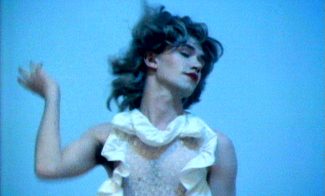
Charles Atlas: About Time traces a non-linear arc of the artist’s practice from the early 1970s to the present, featuring works that highlight key moments from Atlas’s prodigious career, starting with his sculptural video installation, The Years (2018). In The Years, the artist imagines a stand-alone retrospective comprising 77 videos and films laid out across four flat-screen monitors that are displayed upright, like gravestones. On each screen, short excerpts of earlier works—organized into 12-year periods—scroll like the ending credits of a film. These include moments from the small, personal film Cartridge Lengths and Long Shots (1970); Son of Sam and Delilah (1991), which the artist describes as an emotional response to the AIDS crisis; Mrs. Peanut Visits New York (1992–99), which features famed performance artist, fashion designer, and nightlife icon Leigh Bowery; and What Does Unstable Time Even Mean (2015), a media-dance choreographed by Rashaun Mitchell and Silas Reiner. Projected behind the gravestone-like monitors is a group of four expressionless young people staring unmoved into the distance. Farther behind them is a projection showing a starry night sky, as if the sun had already set. This heightens the theatricality of The Years, in which Atlas wonders openly what his work will mean to subsequent generations. 

Since leaving the company in 1983, Atlas has been a leading figure in film and video art, and one of the preeminent artists to capture dance and performance on camera through groundbreaking collaborations with Michael Clark, Yvonne Rainer, Leigh Bowery, Marina Abramović, Rashaun Mitchell, and Silas Reiner, among others. Much of Atlas’s genre-defying, collaborative work has proved prescient for a generation of artists working today. Contemporary concerns such as the creative possibilities of performance and portraiture on camera and the political urgency of challenging commonly held conventions of gender, sexuality, and queer identity have been at the heart of Atlas’s creative output for decades. 

Of her time working with Charles Atlas, Abramović said, “Putting together his over-the-top spirit of plenty and my minimalism, we brought to life three collaborative works: SSS, The Biography, and Delusional. Looking back, I can see now how this collaboration pushed me into a new dimension, liberating me from my own limitations and fears. Charles Atlas is a true original and innovator, helping us to see the world around us in a new way through his work.” 

Collaboration has been central to Atlas’s practice and his work. MC⁹ (2012) commemorates the artist’s long-term collaboration and friendship with choreographer Merce Cunningham. Created following Cunningham’s death in 2009, MC⁹ combines large-scale projection screens and sculpturally positioned monitors in a complex arrangement of newly edited material from Atlas’s work with Cunningham. The installation encompasses fragments of 21 videos from their 40-year collaboration, from Walkaround Time, Atlas’s first proper film documenting a performance in 1973, through Ocean, completed in 2010. Also included is footage of a gray-haired Cunningham dancing to house music around a ballet barre, his final filmed dance piece captured by Atlas. The monumental scale of MC⁹ in many ways conveys the scale of the artists’ creative partnership.  

Taking an approach similar to MC⁹, A Prune Twin (2020) adapts fragments of Hail the New Puritan (1986) alongside elements from Because We Must (1989), riffing on two iconic works in Atlas’s long-term collaboration with Michael Clark. One of Atlas’s most well-known works, Hail the New Puritan revolves around the anarchic energy of Clark’s countercultural milieu in mid-1980s London. The film—which Atlas refers to as an “anti-documentary”—purports to show a typical day in the life of Clark in Thatcherite London, albeit one that is highly stylized and fictionalized. Made two years after Hail the New Puritan, Because We Must was based on an original stage production at Sadler’s Wells Theatre in London, whose formal theatricality is counterbalanced by a behind-the-scenes narrative fantasy featuring Leigh Bowery’s extravagant costumes and production design. In 2020, Atlas created A Prune Twin—an anagram of New Puritan. This transposition of letters from the original phrase to coin the new title is analogous to the transposition of fragments from Atlas’s older works to imagine something entirely new. The baroque aesthetic captured on screen is perfectly complemented by a sense of irony that reflects the spirit and specificities of queer cultures in the 1980s and is now matched by the almost over-the-top sense of excess that this newly imagined installation brings to life.  

Charles Atlas: About Time also features The Tyranny of Consciousness (2017), a work that marries a montage of sunsets Atlas filmed at the Rauschenberg Residency on Captiva Island in Florida with a monologue by iconic drag performer Lady Bunny about the flowering of her political consciousness. In The Tyranny of Consciousness, Atlas synthesizes the social urgency and political consciousness of his portrait of Lady Bunny with the geometric patterns and repeated numerical sequences of his “number pieces”, uniquely tying together his overarching artistic concerns across decades to transformative effect. One of the numbers pieces, Plato’s Alley (2008), is a site-specific video installation and architectural intervention that will be displayed alongside documentation of other site-specific works.  

Finally, the exhibition will premiere a new sculptural video installation entitled Personalities (2024). Personalities is comprised of twelve video monitors with each monitor newly edited footage of one or more of Atlas’s collaborators. These include performance artist Marina Abramović, musicians John Zorn and Sonic Youth, performers Leigh Bowery, Johanna Constantine, and Annie Iobst, and even his father Dave Atlas and his longtime partner Joe Westmoreland. The monitors are arranged in a spiral, presented against two backdrops: collage-based wallpaper and bright orange walls, the artist’s signature color complemented by the artist’s lighting design. The wallpaper brings together a range of images featured in INSTANT FAME! (2003), an exhibition in New York in which the artist simultaneously created and projected live video portraits in a gallery space. Personalities conveys the extent to which collaboration and friendship have always been at the heart of Atlas’s decades-long practice and prefigures today’s artists, who continue to be moved by the progressive motion of Atlas’s pioneering work today. 

Charles Atlas will be at the ICA on March 6th for An Artist’s Voice conversation with Mannion Family Curator, Jeffrey De Blois. 

Publication 

The exhibition is accompanied by a generous and lushly illustrated catalogue that generates significant new scholarship on Atlas’s practice, framed by the exhibition’s key themes and artworks. It features commissioned essays by leading scholars, historians, and writers discussing Atlas’s groundbreaking work and legacy: Erika Balsom, Joshua Chambers-Letson, Drew Sawyer, and Jeffrey De Blois, the exhibition’s curator. The catalogue also foregrounds the voices of a diverse group of artists reflecting on Atlas’s influence, including Nicole Eisenman, Eileen Myles, Jordan Strafer, Martine Syms, and Ryan Trecartin.  

About the ICA 

Since its founding in 1936, the ICA has shared the pleasures of reflection, inspiration, imagination, and provocation that contemporary art offers with its audiences. A museum at the intersection of contemporary art and civic life, the ICA has advanced a bold vision for amplifying the artist’s voice and expanding the museum’s role as educator, incubator, and convener. Its exhibitions, performances, and educational programs provide access to the breadth and diversity of contemporary art, artists, and the creative process, inviting audiences of all ages and backgrounds to participate in the excitement of new art and ideas. The ICA is located at 25 Harbor Shore Drive, Boston, MA, 02210. The Watershed is located at 256 Marginal Street, East Boston, MA 02128. For more information, call 617-478-3100 or visit our website at icaboston.org. Follow the ICA on Facebook, Instagram, and TikTok. 

About Orange Barrel Media 

Recognizing that the future of this country is in its cities, OBM’s pioneering work in out-of-home media has defined the company since its founding in 2004. Today, OBM is one of the largest independent out-of-home media companies and is nationally recognized by cities seeking to implement programs that add to the character of urban places. OBM has a longstanding commitment to investing in the production and presentation of contemporary art and has engaged in projects with hundreds of artists and institutions on public projects of all sizes. Over the past 20 years, OBM’s architecturally significant projects and balanced programming mix of art, community, and commercial content have redefined the possibilities of outdoor media. The company’s ongoing investment in new technologies has evolved its portfolio from wallscapes and unique large-format digital displays to freestanding digital spectaculars, and with the development of sister company IKE Smart City in 2015, interactive wayfinding kiosks. The company is headquartered in Columbus, OH, with additional offices in New York City, West Hollywood, CA, and Charlotte, NC. OBM currently operates in 28 top U.S. markets. Learn more at www.obm.com. 

Media Contact 

Theresa Romualdez, press@icaboston.org 

Credits 

Charles Atlas, MC⁹, 2012. Installation view, Merce Cunningham, Clouds and Screens, Los Angeles County Museum of Art, 2018. Photo © Museum Associates/LACMA. Courtesy Los Angeles County Museum of Art. 

Charles Atlas: About Time is organized by Jeffrey De Blois, Mannion Family Curator, with Max Gruber, Curatorial Assistant.  

With warmest thanks, we gratefully acknowledge the generosity of the ICA’s Avant Guardian Society in making this exhibition possible. 

Media Sponsor: 

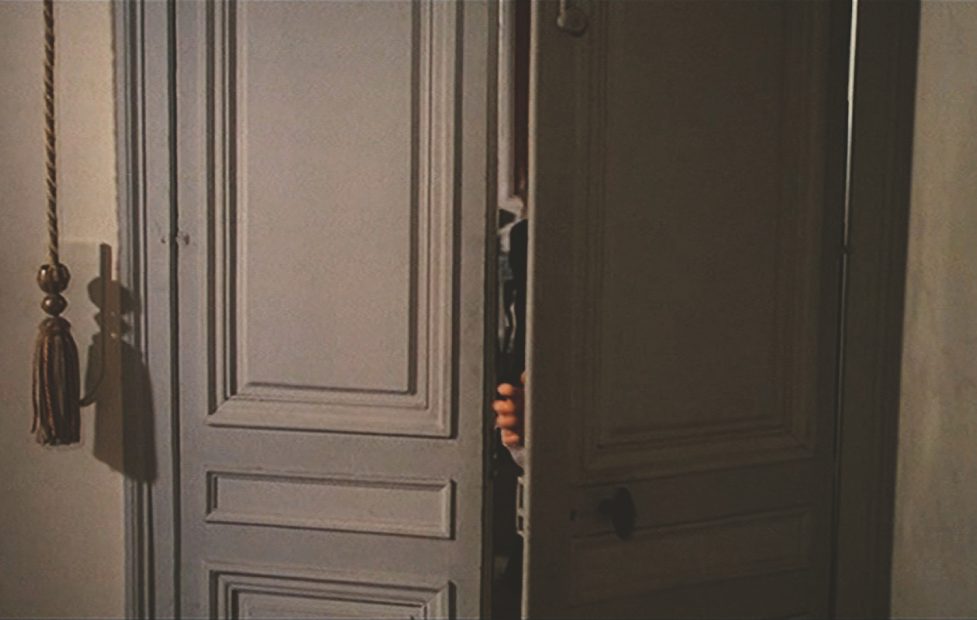
(Boston, MA—AUGUST 7, 2024) The Institute of Contemporary Art/Boston (ICA) presents the U.S. debut of Christian Marclay’s Doors, a captivating single-channel video that stitches together hundreds of film clips depicting movement in and out of doorways. 

In Doors (2022), Christian Marclay (b. 1955, San Rafael, California) creates a continuously looping, seemingly endless journey where protagonists get lost and find themselves again. As one door opens or closes, the film cuts to the next clip of another door opening or closing. The pioneering visual artist, composer, and DJ employs several techniques from his background in sound design — including sampling, pacing, and looping — to seamlessly transition between imagery and soundscapes. More than a decade in the making, the moving image collage draws from nearly all genres of narrative cinema ranging from French New Wave to Hollywood blockbusters. Christian Marclay: Doors is organized by Tessa Bachi Haas, ICA Assistant Curator, and will be on view from April 17 through Sep. 1, 2025. 

Marclay describes Doors as a perfect loop: “We enter a dark projection space and don’t know when the video has started, how long it will last, and when to leave. In this work, I play with that anxiety. There’s no beginning and no end, it’s a perfect loop, yet there are repetitions within. When you see something you’ve already seen you think it’s time to leave, but those repetitions might lead to different doors, not the ones you have seen before. I’m building in people’s minds an architecture in which to get lost.” 

“We are thrilled to present the U.S. premiere of Christian Marclay’s highly anticipated work,” said Haas. “Doors is a spellbinding film that exemplifies the artist’s innovative editing capacities with equal attention to visual imagery and immersive sound. Disparate spaces, actors, and scenes are tethered together through carefully edited transitions marked by doors. It invites audiences to follow, and get lost, on a journey across seemingly endless passageways.” 

Artist Biography 
Born in 1955 in San Rafael, California, Christian Marclay is a composer and visual artist based in London and New York, renowned for his experimental, interdisciplinary work across sound, video, sculpture, collage, and installation. Marclay began his investigations into sound and art through performances with turntables while he was a student at the Massachusetts College of Art and Design, where he completed his BFA in 1980. He has exhibited widely, including solo exhibitions at Centre Pompidou, Paris (2022); Los Angeles County Museum of Art (2019); Sapporo Art Museum, Japan (2017); Whitney Museum of American Art, New York (2010); MoMA PS1, New York (2009); Moderna Museet, Stockholm (2006); Barbican Art Gallery, London (2005); and Tate Modern, London (2004), among others. Marclay was awarded the Golden Lion at the 54th Venice Biennale (2011) for his experimental video masterpiece, The Clock (2010)—a 24-hour film montage comprising thousands of clips featuring clocks and time references that are synchronized in real time.  

About the ICA 
Since its founding in 1936, the ICA has shared the pleasures of reflection, inspiration, imagination, and provocation that contemporary art offers with its audiences. A museum at the intersection of contemporary art and civic life, the ICA has advanced a bold vision for amplifying the artist’s voice and expanding the museum’s role as educator, incubator, and convener. Its exhibitions, performances, and educational programs provide access to the breadth and diversity of contemporary art, artists, and the creative process, inviting audiences of all ages and backgrounds to participate in the excitement of new art and ideas. The ICA is located at 25 Harbor Shore Drive, Boston, MA, 02210. The Watershed is located at 256 Marginal Street, East Boston, MA 02128. For more information, call 617-478-3100 or visit our website at icaboston.org. Follow the ICA on Facebook, Instagram, and TikTok

Media Contact 
Theresa Romualdez, press@icaboston.org 
(Boston, MAJULY 10 2024) The Institute of Contemporary Art/Boston (ICA) announced the promotions of two curators, Jeffrey De Blois and Tessa Bachi Haas. De Blois, who first joined the ICA in 2015, assumes the position of Mannion Family Curator, taking on an expanded leadership role in the ICA’s curatorial and exhibition programs. He will also continue to manage the ICA’s publications program. Haas, who joined the curatorial department in 2022 as a fellow, has been promoted to Assistant Curator at the museum, deepening her involvement in the ICA’s exhibition program and educational initiatives. 

“We are so pleased to be able to build the ICA’s curatorial department with these well-deserved promotions,” said Ruth Erickson, the ICA’s Barbara Lee Chief Curator and Director of Curatorial Affairs. “In their time at the ICA, Jeff and Tessa have made invaluable contributions to the museum’s curatorial program, and we are excited to recognize their many talents and support their professional growth.” 

Devoted to working closely with artists and an expert in all things books, De Blois has been part of the curatorial team on more than 30 exhibitions and 10 books at the ICA, successfully realizing some of the museum’s most ambitious projects. He curated the first U.S. solo museum exhibitions of artists Caitlin Keogh, Napoleon Jones-Henderson, and Tammy Nguyen. He has also organized solo shows with artists Rose B. Simpson, Carolina Caycedo, William Kentridge, and Raúl de Nieves, among others. De Blois is currently at work on the first retrospective dedicated to pioneering artist Charles Atlas, opening Oct. 10, 2024, and the first monograph and U.S. solo exhibition of the work of Tau Lewis, opening Aug. 29, 2024.  

Haas begins her new role as Assistant Curator after working with the ICA since 2022, most recently as Curatorial Assistant and previously as Simone Leigh curatorial fellow and Graduate Student Lecturer. Prior to the ICA, she had held curatorial positions at various institutions, including the MIT List Visual Arts Center and the Pennsylvania Academy of Fine Arts. This past year, she co-curated Wu Tsang: Of Whales and supported the presentation of artist Firelei Báez’s first North American museum survey, coordinating its accompanying catalogue and assisting with the exhibition’s tour. Haas brings her expertise in time-based media to her new role. She is presently working on the US premiere of Christian Marclay’s Doors, on view Apr. 17, 2025, and the 2025 James and Audrey Foster Prize exhibition, opening Aug. 21, 2025.  

About the ICA 

Since its founding in 1936, the ICA has shared the pleasures of reflection, inspiration, imagination, and provocation that contemporary art offers with its audiences. A museum at the intersection of contemporary art and civic life, the ICA has advanced a bold vision for amplifying the artist’s voice and expanding the museum’s role as educator, incubator, and convener. Its exhibitions, performances, and educational programs provide access to the breadth and diversity of contemporary art, artists, and the creative process, inviting audiences of all ages and backgrounds to participate in the excitement of new art and ideas. The ICA is located at 25 Harbor Shore Drive, Boston, MA, 02210. For more information, call 617-478-3100. Follow the ICA on Facebook, Instagram, and TikTok

Presented in partnership with the ICA/Boston; Mayor’s Office of Arts and Culture, City of Boston; MASS Design Group; and Songha & Company led by artist and creative director Hank Willis Thomas

(Boston, MA—JUNE 11, 2024) This summer, the Institute of Contemporary Art/Boston (ICA) presents The Gun Violence Memorial Project, an exhibition and citywide collaboration between the Mayor’s Office of Arts and Culture, City of Boston; MASS Design Group; Louis D. Brown Peace Institute; Purpose Over Pain; and Songha & Company, a producer of public artworks founded by artist Hank Willis Thomas. From Aug. 29, 2024, to Jan. 20, 2025, The Gun Violence Memorial Project will be on view at the ICA, Boston City Hall, and the MASS Design Group gallery in Boston’s South End (see hours and locations below).  

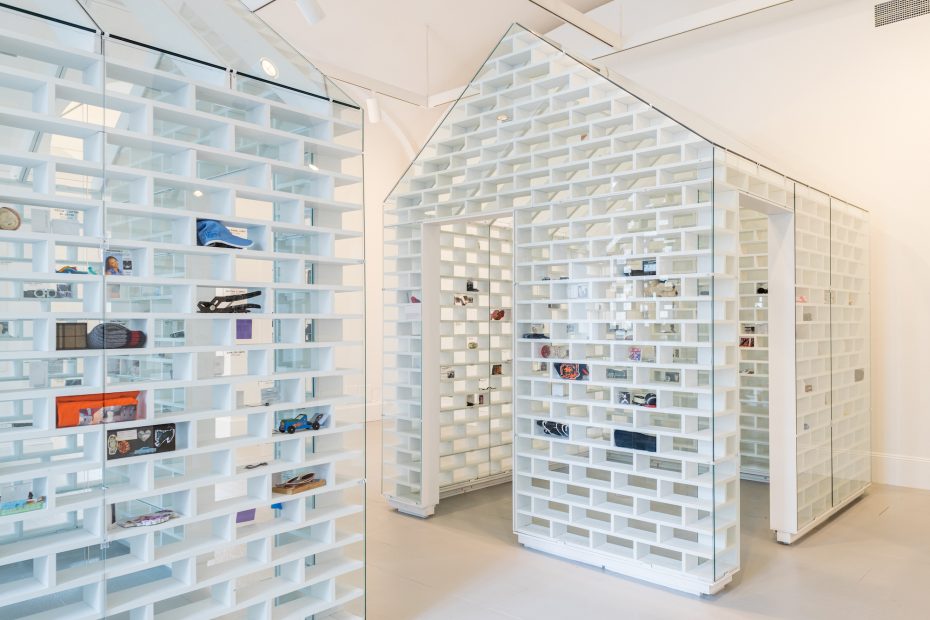
The Gun Violence Memorial Project creates space to gather and remember in light of the ongoing gun violence crisis. The memorial comprises four glass houses, each built of 700 clear bricks, a reference to the average number of gun deaths every week in the United States in 2019, when the memorial opened. The average number of U.S. weekly gun deaths in 2024 is 840. Many of the bricks hold remembrance objects—baby shoes, graduation tassels, and photographs—offered by families in honor of loved ones whose lives have been taken due to gun violence. These living memorials invite us to view the impact of gun violence through individual personal narratives. 

As Pamela Bosley, co-founder of Purpose Over Pain and mother of Terrell Bosley, a victim of gun violence, said: “You hear those numbers all the time, but you never tie names to them. I wanted you to see who my son was.”  

First launched at the 2019 Chicago Architecture Biennale and exhibited at the National Building Museum in Washington, D.C. The Gun Violence Memorial Project will be on view for the first time in the northeast in Boston. The project was conceived in 2018 by MASS Design Group and Songha & Company, with gun violence prevention organizations Purpose Over Pain and Everytown for Gun Safety. Local collection events will be organized in partnership with the Louis D. Brown Peace Institute to accept new remembrance objects from those who have had loved ones taken by gun violence. These remembrance objects in addition to the families’ stories will be incorporated into the memorial houses on view at the ICA to honor Boston-area victims of the gun violence epidemic.  

“We are honored to host The Gun Violence Memorial Project in Boston and, with our partners across the city, bring together our communities to reflect, remember and respond to the devastating consequences of gun violence,” said Jill Medvedow, Ellen Matilda Poss Director of the ICA. “Hank Willis Thomas and MASS continue to reimagine memorials that offer new ways for thinking about commemoration, memory, history and how art and architecture can connect with our communities and the issues of our times.” 

The effects of gun violence in our country are not just numbers and statistics, but real, personal stories that the impact of gun violence has had for victims and will continue to have for their families and loved ones,” said Mayor Michelle Wu. “Our hope is for The Gun Violence Memorial Project to create space to reflect on the lasting effects of gun violence and how we as a nation can make changes to prevent this crisis from continuing.” 

“Our goal was to communicate the enormity of the epidemic,” said Jha D. Amazi from MASS Design Group, “while also honoring the individuals whose lives have been taken.” 

“For every murder, there are at least 10 survivors left to mourn,” said Chaplain Clementina Chéry, President and CEO of the Louis D. Brown Peace Institute. “These numbers do not include extended family, friends, classmates, neighbors or coworkers, raising that number by the dozens. As a survivor-led organization, we are proud to honor those who’ve been killed by gun violence and to give voice to the countless survivors impacted by murder, trauma, grief and loss.”


Hours and Locations  

ICA 
Two Gun Violence Memorial Houses will be at the ICA  

TUESDAY 10 AM – 5 PM 
WEDNESDAY 10 AM – 5 PM 
THURSDAY 10 AM – 9 PM 
FRIDAY 10 AM – 9 PM 
SATURDAY 10 AM – 5 PM 
SUNDAY 10 AM – 5 PM 
Closed Mondays 

Boston City Hall 
One Gun Violence Memorial House will be at Boston City Hall  

MONDAY – FRIDAY, 8:30 AM – 5 PM 
Closed on City holidays 

MASS Design Group 
1 Chandler St, Boston MA 02116 
One Gun Violence Memorial Project House will be at MASS’s office    

FRIDAY, 1 PM – 5PM 
Email participate@massdesigngroup.org to schedule visit 

Remembrance Object Collection Events in Boston  
June 26th – 29th and November (Date TBD) 2024 

To allow Greater Boston families and those throughout the Northeast to contribute to the memorial, donation events will be held with information being shared closer to the dates. In partnership with the Louis D. Brown Peace Institute, a multi-day collection event will take place this summer and fall to accept new remembrance objects from those who have had loved ones taken by gun violence. Please visit gunviolencememorialproject.org for more information on Remembrance Object Collection events or email participate@massdesigngroup.org with any specific questions  

The Artist’s Voice: Hank Willis Thomas + Jha D Amazi 
Thursday, October 24, 2024  
FREE admission  
Location: ICA/Boston 


About the ICA     
Since its founding in 1936, the ICA has shared the pleasures of reflection, inspiration, imagination, and provocation that contemporary art offers with its audiences. A museum at the intersection of contemporary art and civic life, the ICA has advanced a bold vision for amplifying the artist’s voice and expanding the museum’s role as educator, incubator, and convener. Its exhibitions, performances, and educational programs provide access to the breadth and diversity of contemporary art, artists, and the creative process, inviting audiences of all ages and backgrounds to participate in the excitement of new art and ideas. The ICA is located at 25 Harbor Shore Drive, Boston, MA, 02210. The Watershed is located at 256 Marginal Street, East Boston, MA 02128. For more information, call 617-478-3100 or visit our website at icaboston.org. Follow the ICA on Facebook, Instagram, and TikTok.  

About MASS Design Group  
MASS Design Group is an architecture and design collective that researches, builds, and advocates for architecture that promotes justice and human dignity. They have worked in over 20 countries, with 30 projects built or in construction. MASS brings inclusive design processes and invests in community empowerment, helping partners advance their mission through the built environment. Their project, the National Memorial for Peace and Justice in Montgomery, Alabama, was recently called “the single greatest work of American architecture of the twenty-first century.” 

About Songha & Company 
Songha & Company is a producer of public artworks. By and through its founder, artist Hank Willis Thomas, Songha & Company practices in the area of conceptual public art by working primarily with themes related to perspective, identity, commodity, media, and popular culture. The company was named after Thomas’ cousin, Songha Thomas Willis, who was a victim of gun violence on February 2, 2000.  

About Purpose Over Pain 
Purpose Over Pain was formed in 2007 by several Chicago area parents whose children’s lives were taken by gun violence. They advocate for safer communities, strengthen families by providing crisis support to parents/guardians whose children have been victims of gun violence and provide positive development activities for children and youth. 

About the Mayor’s Office of Arts and Culture, City of Boston  
The Mayor’s Office of Arts and Culture is a City agency that enhances the quality of life, the economy, and the design of the City through the arts. The role of the arts in all aspects of life in Boston is reinforced through equitable access to arts and culture in every community, its public institutions, and public places. Key areas of work include support to the cultural sector through grants and programs, support of cultural facilities and artist workspace, as well as the commissioning, review, and care of art in public places. Learn more at www.boston.gov/arts. 

Media Contacts
ICA: Theresa Romualdez, press@icaboston.org 
MASS Design Group: Amber Lacroix, alacroix@mass-group.org 
City of Boston: Morgan Clark, morgan.clark@boston.gov 

(Boston, MA—JUNE 5, 2024) On Aug. 29, the Institute of Contemporary Art/Boston (ICA) opens Tau Lewis: Spirit Level, the artist’s first solo museum presentation in the United States. For the ICA, Lewis (b. 1993, Toronto) is creating a new body of work that will be accompanied by her first monograph. On view from Aug. 29, 2024, to Jan. 20, 2025, the exhibition is organized by Jeffrey De Blois, ICA Mannion Family Curator, with Max Gruber, Curatorial Assistant. 

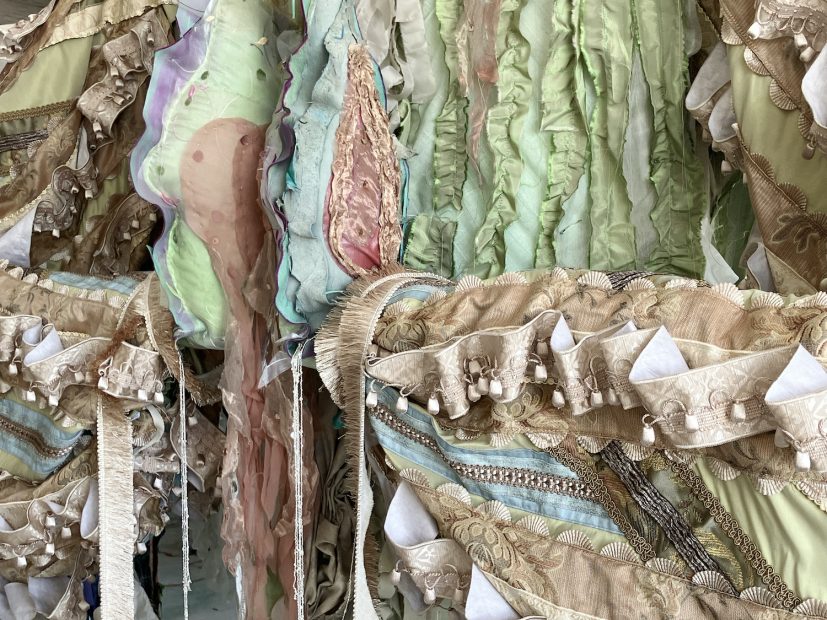
Lewis transforms found materials into fabric-based figurative sculptures, quilts, masks, and other assemblages through labor-intensive processes such as hand-sewing and carving. She forages for objects and materials that carry meaning and memories—from previously worn clothing and leather to driftwood and seashells. Often, these artifacts are drawn from a meticulously organized material library the artist has amassed since 2000 collected from innumerable places. The evocative objects Lewis gathers and transforms carry their own spirit and energy and connect her work to the social, cultural, and physical landscapes that she moves through, collects from, and inhabits. Lewis describes these different landscapes as “Black geographies.” These geographies—oceanic, terrestrial, extraterrestrial—are the areas where Lewis’s otherworldly beings live.  

“Lewis harnesses the beauty and power carried by found materials in her monumental soft sculptures,” said De Blois. “Her sculptures are alive with the energy of previously worn found fabrics and animated through every meticulous gesture. They are intensely personal, yet open to a world of associations and meanings.” 

Lewis’s upcycling relates to forms of material inventiveness practiced by Afro-diasporic communities. For the artist, working with things close at hand is a reparative act aimed at reclaiming agency. Her works circumnavigate a broad range of references, from the mythic underwater civilization of Drexciya, to forms of material inventiveness practiced by artists such as Thorton Dial, Lonnie Holley, and the quilters from Gee’s Bend Alabama. Throughout, Lewis’s interest is in advancing the diasporic traditions and exploring the transformation and rebirth of materials that occurs when an object is made by hand.  

For the ICA, Lewis is creating a new, interrelated body of sculptures including a large floor-bound quilt and five monumental figurative sculptures. The patchwork quilt is pieced together with a series of repeating panels the artist refers to as sequences radiating out from the center, where a miniature architectural form made from found metal components and a starfish is located. Each repeating sequence is composed of a set of found objects from the artist’s material library that recall kingdom-like organizations of the universe: animals, planets, satellites, weapons, aliens, and more. Intricately detailed in its configuration, and a whole world unto itself, the quilt evokes the idea of a portal or a galactic landscape; a cosmological ecosystem where struggles for power are playing out. The quilt is surrounded by five statuesque, fabric-based sculptures, each approximately 10 feet in height, adorned with hand-sewn, cloak-like garments and holding unique gestural hand poses. Their garments are pieced together with a makeshift aesthetic from found fabrics—ranging from muslin scraps dyed with tea or rust to deconstructed leather jackets and parachutes—while the figures themselves are by turns oceanic and extraterrestrial in appearance. Holding space in the exhibition, the figures congregate together as onlookers towering over the quilt.    

Artist Biography 
Born in 1993 in Toronto, Tau Lewis lives and works in New York. Her work has been exhibited internationally, at venues including the Barbican, London; Institute of Contemporary Art, Miami; Lafayette Anticipations, Paris; ICA/Boston; National Gallery of Canada, Ottawa; Hammer Museum, Los Angeles; The Hepworth Wakefield, London; MoMA PS1, New York; the Art Gallery of York University, Toronto; and New Museum, New York. Her work has been included in major international group exhibitions including The Milk of Dreams, the 59th Biennale di Venezia, and Yesterday we said tomorrow, Prospect.5, New Orleans. Lewis’s work is held in several permanent collections, including Grinnell College Museum of Art, Iowa; Hammer Museum, Los Angeles; Institute of Contemporary Art, Miami; The Montreal Museum of Fine Arts; National Gallery of Canada, Ottawa, Ontario; and San Francisco Museum of Modern Art.  

Publication 
The exhibition will be accompanied by the artist’s first monograph featuring an essay from the exhibition’s curator, Jeffrey De Blois, and a conversation between Tau Lewis and Lonnie Holley, renowned artist, musician, and long-time mentor to Lewis.  

About the ICA  
Since its founding in 1936, the ICA has shared the pleasures of reflection, inspiration, imagination, and provocation that contemporary art offers with its audiences. A museum at the intersection of contemporary art and civic life, the ICA has advanced a bold vision for amplifying the artist’s voice and expanding the museum’s role as educator, incubator, and convener. Its exhibitions, performances, and educational programs provide access to the breadth and diversity of contemporary art, artists, and the creative process, inviting audiences of all ages and backgrounds to participate in the excitement of new art and ideas. The ICA is located at 25 Harbor Shore Drive, Boston, MA, 02210. The Watershed is located at 256 Marginal Street, East Boston, MA 02128. For more information, call 617-478-3100 or visit our website at icaboston.org. Follow the ICA on Facebook, Instagram, and TikTok.  

Media Contact  
Theresa Romualdez, press@icaboston.org   
Credits  
Organized by Jeffrey De Blois, ICA Mannion Family Curator, with Max Gruber, Curatorial Assistant. 

This exhibition is supported by The Coby Foundation, Ltd., Mathieu O. Gaulin, Girlfriend Fund, Robert Nagle and Katherine Hein, Kim Sinatra, the Jennifer Epstein Fund for Women Artists, and Miko McGinty.  

Opening Oct. 10, the exhibition brings together more than 125 films and videos for an immersive “walk-through experience.”

(Boston, MA—MAY 9, 2024) In October 2024, the Institute of Contemporary Art/Boston (ICA) presents Charles Atlas: About Time, the first U.S. museum survey of pioneering interdisciplinary artist Charles Atlas (b. 1949 in St. Louis). The retrospective exhibition presents work created over 50 years, including a new sculptural video installation on view for the first time. It brings together key components of more than 125 films and videos in monumental and immersive multichannel video installations the artist describes as “walk-through experiences.” Encompassing themes of performance and portraiture, gender and sexuality, and collaboration and friendship, Charles Atlas: About Time is oriented around the artist’s groundbreaking work at the intersections of moving image, dance, and performance, and his intimate video portraits of close collaborators and friends. The exhibition is accompanied by a lushly illustrated catalogue featuring significant new scholarship on Atlas’s practice and co-published by the ICA and DelMonico Books. On view from Oct. 10, 2024 to Mar. 16, 2025, Charles Atlas: About Time is organized by Jeffrey De Blois, the ICA’s Mannion Family Curator, with Max Gruber, ICA Curatorial Assistant. 

“Charles Atlas originated the genre of ‘media-dance’ while working as filmmaker-in-residence at Merce Cunningham Dance Company in the 1970s and early 80s. This retrospective exhibition offers visitors an important and long overdue immersion into Atlas’s unparalleled and highly influential legacy in film and video art,” said Jill Medvedow, Ellen Matilda Poss Director. 

Charles Atlas: About Time is a historically significant retrospective, displaying the breadth of Atlas’s work through room-filling installations that collapse time within their structures and showcase the full scope of Atlas’s creative powers,” said De Blois. “Featuring ‘exploded views’ of the artist’s genre-defying works, this presentation reveals Atlas’s unique negotiation of time as a medium throughout his storied, 50-year career.” 

Atlas’s early career is defined by his time as filmmaker-in-residence at the Merce Cunningham Dance Company in New York. There, he followed the circle of artists with whom Cunningham collaborated closely, including John Cage, Jasper Johns, Robert Rauschenberg, and others. Atlas and Cunningham pioneered the genre of “media-dance”—dance made for the camera, rather than an in-person audience—through a series of video collaborations of successive complexity. Following his time at the company, his works increasingly featured overt expressions of sexuality, especially gay and queer sexuality, and notions of gender that move well beyond constrictive binaries. Likewise, Atlas goes on to value every form of performance equally, from modern dance made for the stage, to drag shows in underground clubs, to today’s viral dance videos made for TikTok. 

Beginning around the time of friend and collaborator Merce Cunningham’s death in 2009, Atlas, an artist who always looked unflinchingly forward to the next project, began to look back at his vast archive of video to create new and increasingly personal works. Through this retrospective approach, Atlas creates “exploded views” of his earlier single-channel videos. Footage from one video is displayed in new spatial configurations on multiple screens and monitors, split into fragments, and edited together for dramatic effect as a “walk-through experience.” These installations are choreographed in space in a way that approximates the movements of the performers on-screen, inspiring visitors to move fluidly between and among them. The works reveal Atlas’s astute sense of architectural space—informed by his time working for the Merce Cunningham Dance Company. 

Charles Atlas: About Time traces a non-linear arc of the artist’s practice from the early 1970s to the present, featuring works that highlight key moments from Atlas’s prodigious career, starting with his sculptural video installation, The Years (2018). In The Years, the artist imagines a stand-alone retrospective comprising 77 videos and films laid out across four flat-screen monitors that are displayed upright, like gravestones. On each screen, short excerpts of earlier works—organized into 12-year periods—scroll like the ending credits of a film. These include moments from the small, personal film Cartridge Lengths and Long Shots (1970); Son of Sam and Delilah (1991), which the artist describes as an emotional response to the AIDS crisis; Mrs. Peanut Visits New York (1992–99), which features famed performance artist, fashion designer, and nightlife icon Leigh Bowery; and What Does Unstable Time Even Mean (2015), a media-dance choreographed by Rashaun Mitchell and Silas Reiner. Projected behind the gravestone-like monitors is a group of four expressionless young people staring unmoved into the distance. Farther behind them is a projection showing a starry night sky, as if the sun had already set. This heightens the theatricality of The Years, in which Atlas wonders openly what his work will mean to subsequent generations. 

Since leaving the company in 1983, Atlas has been a leading figure in film and video art, and one of the preeminent artists to capture dance and performance on camera through groundbreaking collaborations with Michael Clark, Yvonne Rainer, Leigh Bowery, Marina Abramović, Rashaun Mitchell, and Silas Reiner, among others. Much of Atlas’s genre-defying, collaborative work has proved prescient for a generation of artists working today. Contemporary concerns such as the creative possibilities of performance and portraiture on camera and the political urgency of challenging commonly held conventions of gender, sexuality, and queer identity have been at the heart of Atlas’s creative output for decades. 

Of her time working with Charles Atlas, Abramović said, “Putting together his over-the-top spirit of plenty and my minimalism, we brought to life three collaborative works: SSS, The Biography, and Delusional. Looking back, I can see now how this collaboration pushed me into a new dimension, liberating me from my own limitations and fears. Charles Atlas is a true original and innovator, helping us to see the world around us in a new way through his work.” 

Collaboration has been central to Atlas’s practice and his work. MC⁹ (2012) commemorates the artist’s long-term collaboration and friendship with choreographer Merce Cunningham. Created following Cunningham’s death in 2009, MC⁹ combines large-scale projection screens and sculpturally positioned monitors in a complex arrangement of newly edited material from Atlas’s work with Cunningham. The installation encompasses fragments of 21 videos from their 40-year collaboration, from Walkaround Time, Atlas’s first proper film documenting a performance in 1973, through Ocean, completed in 2010. Also included is footage of a gray-haired Cunningham dancing to house music around a ballet barre, his final filmed dance piece captured by Atlas. The monumental scale of MC⁹ in many ways conveys the scale of the artists’ creative partnership.  

Taking an approach similar to MC⁹, A Prune Twin (2020) adapts fragments of Hail the New Puritan (1986) alongside elements from Because We Must (1989), riffing on two iconic works in Atlas’s long-term collaboration with Michael Clark. One of Atlas’s most well-known works, Hail the New Puritan revolves around the anarchic energy of Clark’s countercultural milieu in mid-1980s London. The film—which Atlas refers to as an “anti-documentary”—purports to show a typical day in the life of Clark in Thatcherite London, albeit one that is highly stylized and fictionalized. Made two years after Hail the New Puritan, Because We Must was based on an original stage production at Sadler’s Wells Theatre in London, whose formal theatricality is counterbalanced by a behind-the-scenes narrative fantasy featuring Leigh Bowery’s extravagant costumes and production design. In 2020, Atlas created A Prune Twin—an anagram of New Puritan. This transposition of letters from the original phrase to coin the new title is analogous to the transposition of fragments from Atlas’s older works to imagine something entirely new. The baroque aesthetic captured on screen is perfectly complemented by a sense of irony that reflects the spirit and specificities of queer cultures in the 1980s and is now matched by the almost over-the-top sense of excess that this newly imagined installation brings to life.  

Charles Atlas: About Time also features The Tyranny of Consciousness (2017), a work that marries a montage of sunsets Atlas filmed at the Rauschenberg Residency on Captiva Island in Florida with a monologue by iconic drag performer Lady Bunny about the flowering of her political consciousness. In The Tyranny of Consciousness, Atlas synthesizes the social urgency and political consciousness of his portrait of Lady Bunny with the geometric patterns and repeated numerical sequences of his “number pieces”, uniquely tying together his overarching artistic concerns across decades to transformative effect. One of the numbers pieces, Plato’s Alley (2008), is a site-specific video installation and architectural intervention that will be displayed alongside documentation of other site-specific works.  

Finally, the exhibition will premiere a new multichannel sculptural video installation, a collage of portraits featuring musicians Sonic Youth, artist Marina Abramović, director John Waters, and choreographer Yvonne Rainer, among others. This collage of portraits conveys the extent to which collaboration and friendship have always been at the heart of Atlas’s decades-long practice. 

Publication 
The exhibition is accompanied by a generous and lushly illustrated catalogue that generates significant new scholarship on Atlas’s practice, framed by the exhibition’s key themes and artworks. It features commissioned essays by leading scholars, historians, and writers discussing Atlas’s groundbreaking work and legacy: Erika Balsom, Joshua Chambers-Letson, Drew Sawyer, and Jeffrey De Blois, the exhibition’s curator. The catalogue also foregrounds the voices of a diverse group of artists reflecting on Atlas’s influence, including Nicole Eisenman, Eileen Myles, Jordan Strafer, Martine Syms, and Ryan Trecartin.  

About the ICA 
Since its founding in 1936, the ICA has shared the pleasures of reflection, inspiration, imagination, and provocation that contemporary art offers with its audiences. A museum at the intersection of contemporary art and civic life, the ICA has advanced a bold vision for amplifying the artist’s voice and expanding the museum’s role as educator, incubator, and convener. Its exhibitions, performances, and educational programs provide access to the breadth and diversity of contemporary art, artists, and the creative process, inviting audiences of all ages and backgrounds to participate in the excitement of new art and ideas. The ICA is located at 25 Harbor Shore Drive, Boston, MA, 02210. The Watershed is located at 256 Marginal Street, East Boston, MA 02128. For more information, call 617-478-3100 or visit our website at icaboston.org. Follow the ICA on Facebook, Instagram, and TikTok. 

Media Contact
Theresa Romualdez, press@icaboston.org 
Credits 
Charles Atlas: About Time is organized by Jeffrey De Blois, Mannion Family Curator, with Max Gruber, Curatorial Assistant.  

With warmest thanks, we gratefully acknowledge the generosity of the ICA’s Avant Guardian Society in making this exhibition possible.