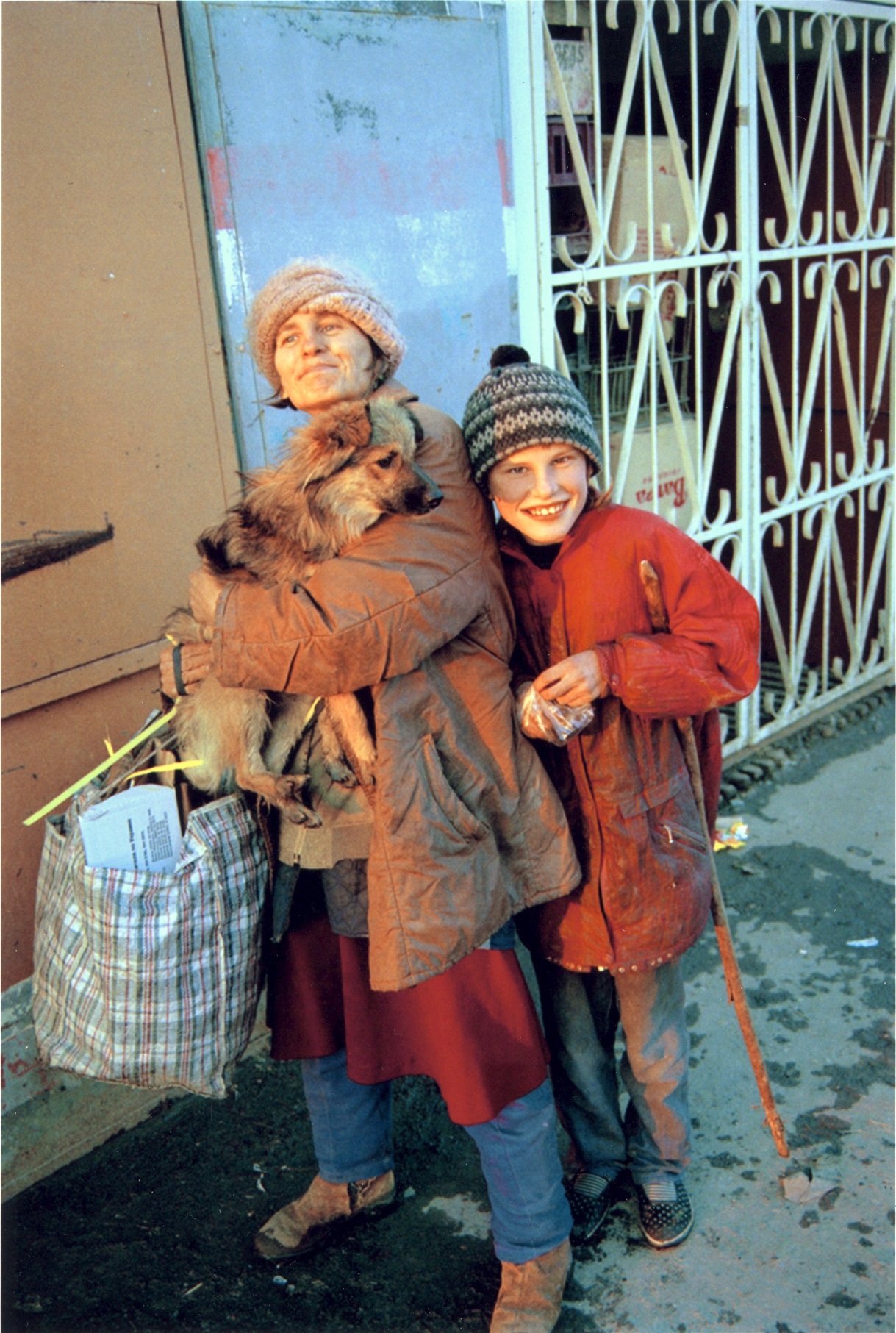
Boris Mikhailov (Born 1938 in Kharkiv, Ukraine) has been called “the former Soviet Union’s most influential living photographer,” but only began receiving recognition from the global art scene after the collapse of the USSR in the 1990s. Mikhailov started his career in the 1970s, running parallel to the tumultuous height, decline, and fall of the Soviet Union and its aftermath. The Case History series documents the lives of people left unhoused by the fall of the USSR in the Ukrainian city of Kharkov. In the late 1990s, he began photographing these individuals, known as bomzhes, approaching them with his wife, Vita, and asking if he could take their photographs. The subjects, with tattered clothing and ailing bodies, bluntly reflect the economic deterioration of the post-Soviet era.
This photograph depicts what appears to be a mother and child, photographed on a sunny street. The woman’s overloaded arms hold a small dog and an overstuffed bag. Yet, this image retains a light-hearted quality not expressed in other Case History images: the woman looks away from the camera with an amused smirk while the child gazes directly at the photographer with a sweet, familiar smile. Despite the difficulties of their circumstances, the pair convey a sense of contentment and happiness, defiant of the grim outlook many had during the fall of the USSR. Mikhailov’s Case History highlights a reality that most do not see or would rather ignore and unflinchingly documents a community and a reality that would otherwise be lost.