Emerging in the early 1990s as part of a generation of artists exploring the intersections of art, identity formation, and political representation, Nari Ward (Born 1963 in Saint Andrew, Jamaica) engages the symbolic potential of found objects. The artist draws on many references, ranging from folklore to West African and Western avant-garde sculptural legacies. Using labor-intensive processes, Ward imbues his work with layered meanings connected to cultural expression, history, and black experience, particular of his native Jamaica and his adopted home of Harlem, while also addressing issues related to immigration.
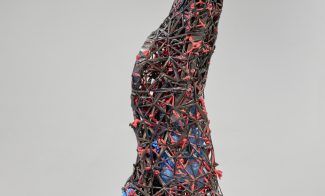
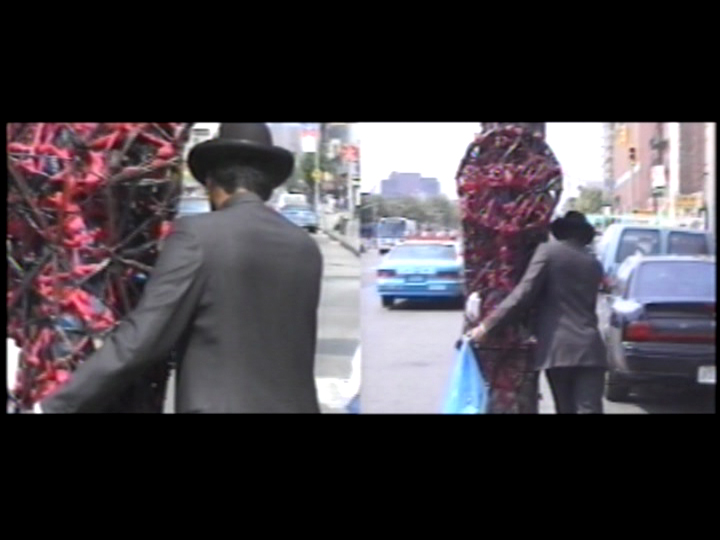
Pushing Savior documents Ward’s first work of performance in which he pushes his sculpture Savior through the streets of Harlem. Bound by a plastic and fabric web filled with plastic bags, empty bottles, and refuse atop a shopping cart, the tower’s presumed precarity imbues the work with tension. Pushing Savior serves as an activation of Savior, claiming agency over fate. He started the sculpture during an artist residency at the Sabbathday Lake Shaker Village in Maine, where a community member building a chair explained to Ward that he constructs each piece of furniture for an angel to sit on. The sculpture and performance jointly engage with notions of devotion and craft. While Ward is skeptical of organized religion, believing that reliance on otherworldly entities strips one of agency, he seeks communion with the regenerative qualities of faith. This video documentation of Ward’s performance work and the accompanying sculpture question the visibility and invisibility of the disenfranchised in the public sphere, while touching on the human experience of seeking agency over one’s destiny.