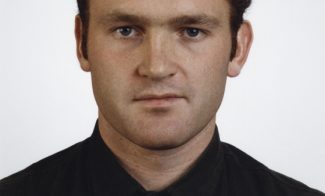
In 1980 Thomas Ruff (Born 1958 in Zell am Harmersbach, West Germany) began a series of portraits of his classmates at the Düsseldorf Academy of Arts, Germany, where he studied with Bernd and Hilla Becher, photographers known for their unemotional serial images of industrial buildings. Ruff’s compositions adhere to the bureaucratic format of a passport or license photo, while assuming the monumental scale of aristocratic portraiture. Despite the abundance of visual detail and the identification of the sitter in the title, Ruff’s portraits lay no claim to representing social or psychological identity. Photography, Ruff asserts, “has its own reality, its own autonomous existence, independent of the person [it records].” In questioning photography’s promise of documentary truth, Ruff joins other Düsseldorf-trained artists (Andreas Gursky and Thomas Struth, especially) who employ super-real, large-format photographs to similar ends. A longer history of German photography is at play in Ruff’s work as well, encompassing August Sander’s project of documenting everyday German citizens during the 1920s.
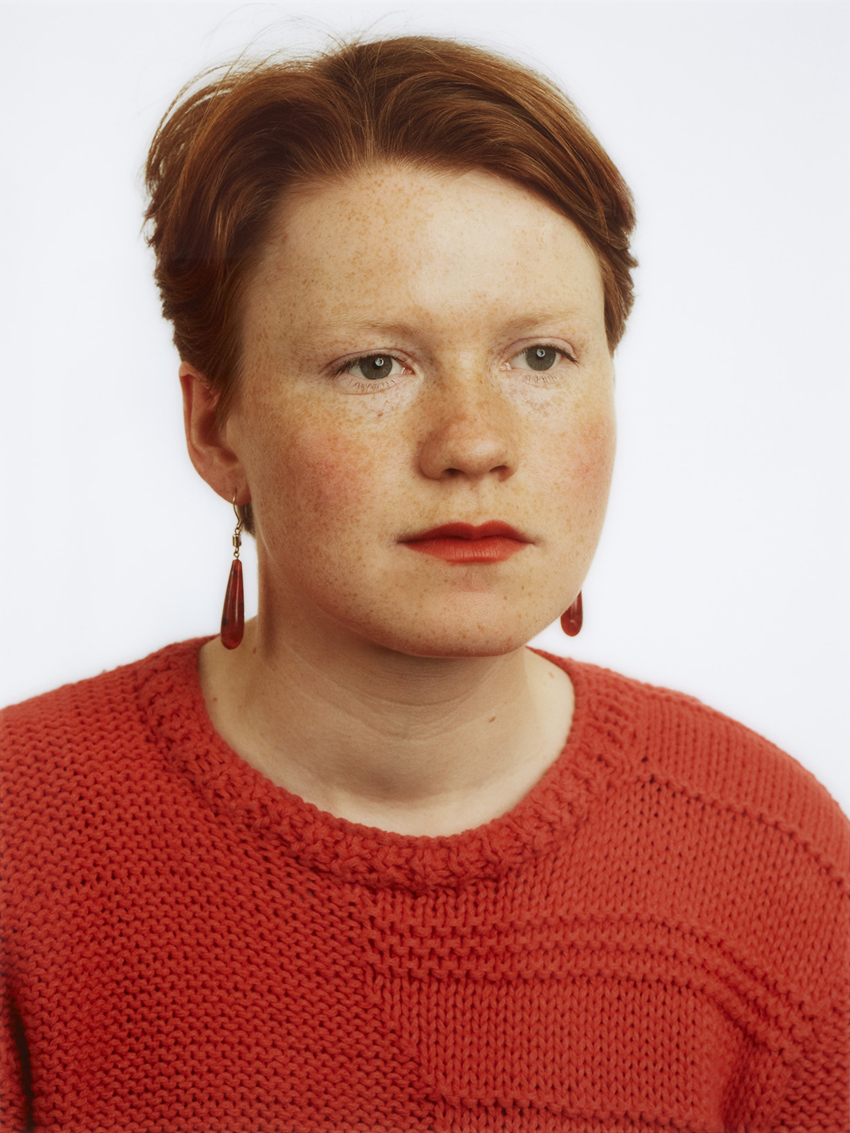
Thomas Ruff, Portrait (P. Fries), 1984. Chromogenic color print. 85 x 65 inches (215.9 x 165.1 cm). Institute of Contemporary Art/Boston. Gift of Sandra and Gerald Fineberg. Courtesy the artist and David Zwirner, New York/London. © Thomas Ruff