Inspired by Play Dates and the artist Nick Cave, a talented young ICA fan finds new possibilities in creative expression.


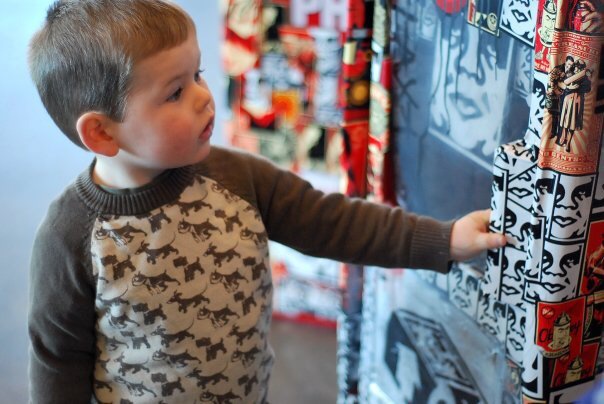
At the ICA, we regularly hear from parents about how much they appreciate our free programs for kids, especially our monthly Play Dates, which offer chances to engage with the art on view, see kid-centric films and performances, and make creative projects together. Some families become regulars who return again and again. 

The ICA received the following letter from the mother of a longtime Play Date participant (and one of the ICA’s biggest fans). Let’s just say the feeling’s mutual.

Dear ICA,

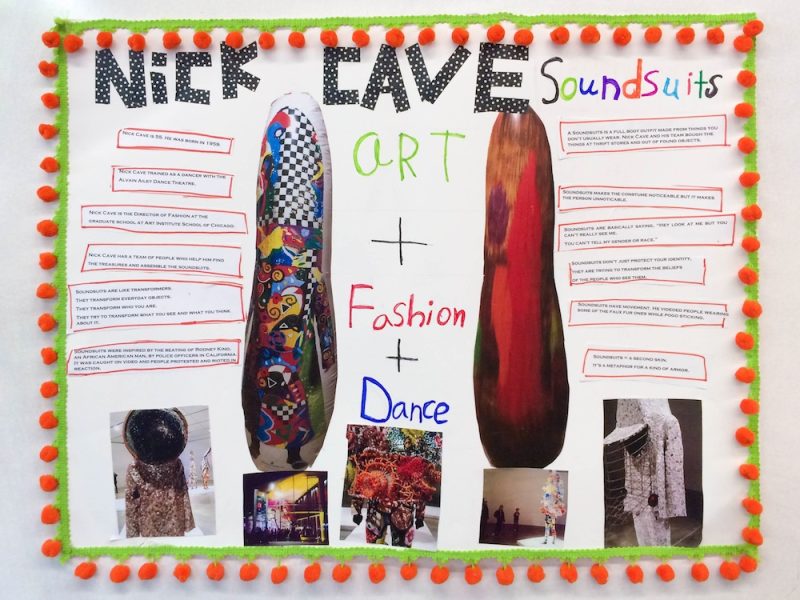
My family and I have been regulars at your monthly Play Dates and we so appreciate this amazing (and free!) public service. My son is a big-idea guy with tons of creativity. Seeing himself as an artist is a big part of his identity and has helped him construct a positive self-image even when things get challenging at school.

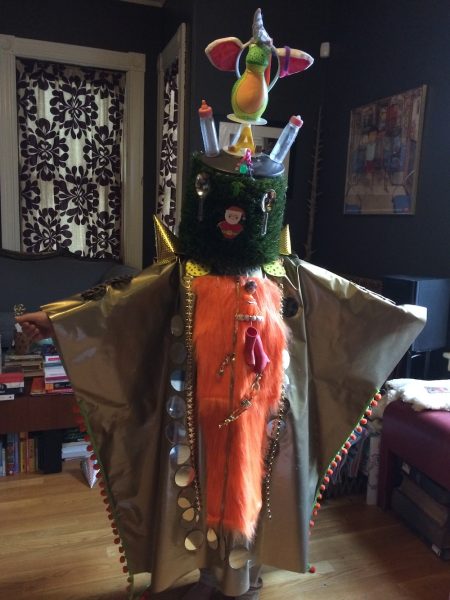
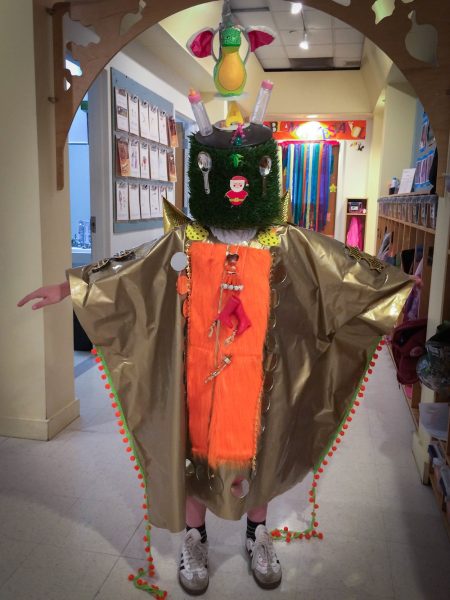
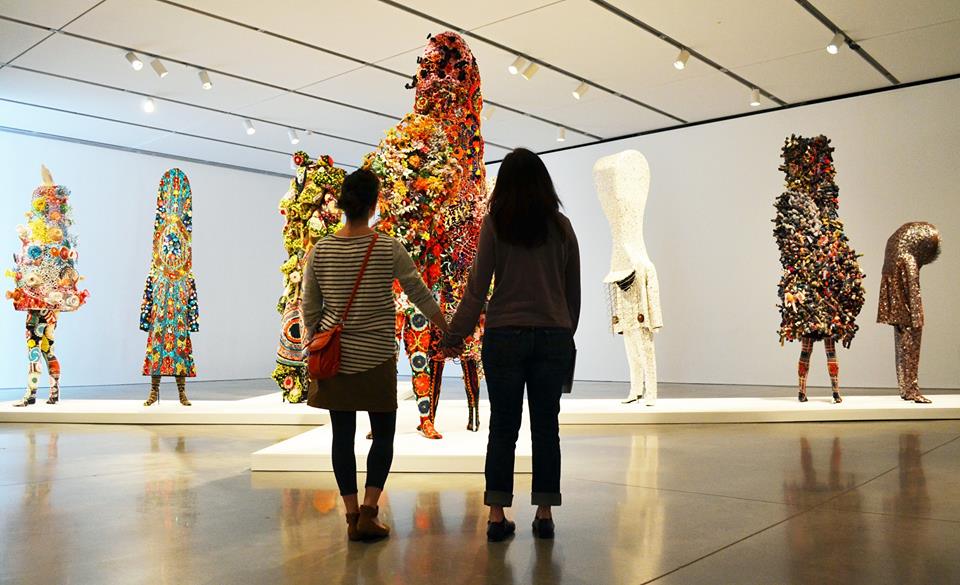
I wanted to share with you a poster he made about Nick Cave for a “Design Your Own Homework” project at school that allowed the children to choose their own topics. He also made his own Soundsuit. The mask he made from an old lampshade and some leftover turf from the school’s field at his school’s fall festival, where children make their own Halloween costumes. The body he made out of oilcloth and thrifted items.

Last month he had a chance to meet Nick Cave in person at a talk at Lesley University, and give him photos of his project and his Soundsuit. It was like he met a rock star. When I said to my son later what an amazing, once-in-a-lifetime opportunity that was, he replied, “No, I’ll see him again.” Maybe it will be at the ICA!

Thank you to the ICA for being such an important part of our family and in particular an inspiration to my son’s creative development.

Best,

Tracey


The artist uses photography, sculpture, performance, and collage to probe the construction of history—but the heart of his work is storytelling.

Informed by his upbringing in Beirut during the Lebanese civil war (1975–1990), artist Walid Raad has spent the past 25 years exploring the ways we represent, remember, and make sense of history. Walid Raad, the artist’s first comprehensive North American museum survey, brings together work in photography, video, sculpture, and performance dedicated to themes of veracity, authority, and ownership in the construction of histories and art.

For Eva Respini, the Barbara Lee Chief Curator at the ICA, storytelling is the heart of the artist’s perceptive and thought-provoking work. She talks about constructing histories, the slippery nature of truth, and why Raad’s work feels especially prescient today below.

What drew you to Walid Raad’s work? Why did you choose to present this work at this time?

I have known and followed Raad’s work for more than a decade. The first time I encountered it was through a lecture he gave in 2002 in New York City. I thought I was attending a regular artist talk, and what unfolded was an intricately constructed lecture that wove elements of history (specifically the civil war in the artist’s home country Lebanon), with flights of fancy and fictional characters. He used the apparatus of the archive (that is, archival photographs, video testimonies, and documents) to create his own account of the experience of war and trauma. I was blown away by his storytelling and his probing capacity to question what we understand as fact. The United States has been involved in a series of conflicts in the Middle East since the first Gulf War in the 1990s, and we are acutely aware of the various ongoing conflicts all over the globe. We receive images, reports, and news of these events at lightning speed, whether online or through the 24-hour news cycle. But in the era of Photoshop, we all understand that images, videos, and documents can be manipulated to support a certain narrative or version of events. What become the indelible images that represent history? What are the stories and facts that emerge as the official accounts of history? Who has the authority to tell those histories? His work deals with these urgent questions, and it is in this context that Raad’s work is more relevant than ever.

This exhibition was originally organized for the Museum of Modern Art in New York, for a different audience and very different spaces. How do you think the exhibition will “translate” or differ from one space to another?

The ICA exhibition will retain the spirit of the MoMA presentation. The exhibition features the artist’s two major bodies of work—The Atlas Group (1998–2004) and Scratching on Things I Could Disavow (2007–ongoing). In New York, these two bodies of work were presented in separate gallery spaces on two different floors, but in Boston they will be united in a single gallery. Because these large bodies of work are presented in a contiguous space in Boston, the exhibition will draw a clearer thread through the arc of the artist’s career.

Walid Raad opened at MoMA in October. Some of the images in the exhibition gained a new resonance after the terrorist attacks on Paris in November—both because Raad pictures iconic Parisian sites and because the attack on a Western city provoked renewed thinking about the realities of living amid fear and unrest. Have current events altered the discussion around the exhibition and the work, or your own understanding of it?

Because Raad’s work deals with some historical events, current events do impact the reading and understanding of his work. In addition to the events in Paris this fall, we also saw terrorist attacks in Istanbul and Beirut, as well as reports of the destruction by ISIS of significant cultural monuments, such a Palmyra. In our own context in Boston, the events of the marathon bombing are still viscerally felt. While these specific events do not directly inform Raad’s work, his explorations of the effects of conflict and trauma seem sadly prescient nevertheless.

How is Walid’s work received and read in Lebanon and the Middle East as opposed to in the United States? How much familiarity with Lebanese culture and history does a viewer need to appreciate the work?

A viewer need not know the history of Lebanon or the Middle East to engage with this art; at its heart is a coming-to-terms with the limits of directly capturing history through images or words. This is an issue we can all relate to, especially in Boston, a town steeped in history. Investigating how photographs, moving images, documents, and first-person narratives confer authenticity on official histories, be they histories of war or of art, Raad’s work weaves elements of the past, the present, and the future to build narratives that question how history, memory, and geopolitical relationships are constructed.

Raad refers to experiences growing up during Lebanon’s civil war—collecting bullet casings on the street, for example, or misinterpreting the news. While thematically and intellectually sophisticated, the work also blurs fact and fiction, reality and imagination. Does this element of his work relate to the fact that he came of age during a time of conflict?

Yes, that experience of trauma directly relates to his work. But he is an artist, not a journalist. While the work is rooted in historical fact, it is essentially about the relationship between image and language, memory and lived experiences, and the slippery nature of truth. In his work, Raad proceeds from facts. But as he says, there are different kinds of facts. Some facts tend to be historical. Some facts are emotional. And some facts are aesthetic. An artwork is an interesting instance in which one may be able to maintain all these facts in their continuum and their complexity. Raad’s two bodies of work tell a complex composite truth stretching beyond historical fact, and both rely on storytelling and performance to activate imaginary narratives. Parsing fact from fiction is beside the point.

Walid Raad is an organizer of Gulf Labor, a coalition of artists and activists raising awareness of living and working conditions on Abu Dhabi’s Saadiyat Island, where a massive cultural district, home to future Louvre and Guggenheim outposts, is being developed. Last May, he released a statement about relations with the United Arab Emirates after being barred entry due to “security reasons.” In response, more than 60 art-world professionals, including yourself and Jill Medvedow, Ellen Matilda Poss Director of the ICA, signed a letter to the UAE and the arts institutions building in the Gulf region opposing any existing travel bans. Have there been any new developments? Have relations improved since? How relevant is this activism to Raad’s artwork?

Sadly, at the time of this writing, Raad is still not able to travel to the United Arab Emirates. I have a deep respect for his work as an activist, but the work of activism and art are separate for this artist. Raad clearly makes this distinction when talking about his activist work. Gulf Labor—which includes journalists, artists, and activists—are in ongoing conversations with various institutions in the Gulf, and we will continue to learn more as the events unfold. I hope that the work of Gulf Labor will result in ameliorated working conditions for those building these important cultural institutions.

Raad was recently awarded the International Center of Photography’s 2016 Infinity Award, which recognizes “major contributions and emerging talent in the fields of photojournalism, art, fashion photography, and publishing.” Raad’s practice is grounded in photography but spills into sculpture, collage, performance, and conceptual practice. What do you think is his greatest contribution to contemporary visual art?

Raad works fluidly in a variety of mediums, but I would say at the heart of his work is storytelling, and that is one of the most significant contributions he has made to contemporary art. For Raad, the relationship between image and text is key to unlocking how photographs, videos, and documents occupy the public sphere. He activates this relationship, this interdependence, through wall texts written in the first-person voice or in the guise of a fictive character. His works are further illuminated by frequent lecture performances wherein Raad adopts the persona of a scholar or artist. It is through these literary acts—the performance monologue or wall-text narrative—that that the work truly comes into its own. In fact, its success hinges on our need to believe in official narratives.

Walid Raad is on view at the ICA Feb. 24–May 30, 2016.
 

Twenty-seven years after joining the ICA as a guest curator, the ICA’s Director of Film and Media is turning to her own film projects.

When Branka Bogdanov joined the ICA in 1989, the museum was still on Boylston Street, and the staff of about twenty-seven shared four computers among them.

It was a time of transition both technologically and politically. “The Berlin Wall fell, the Soviet Union ceased to exist, the Cold War ended, my small former country, Yugoslavia, dissolved into six different countries, and in a way, art predicted all of these changes,” Branka says. One of the first exhibitions she saw on view at the ICA was Between Spring and Summer: Conceptual Art in the Era of Late Communism. “The artists in that exhibition predicted the fall,” she says. “We have to listen to and recognize what artists say.”

Branka had first come to the United States in the mid-80s on a six-week cultural exchange program, giving talks about female Eastern European filmmakers in Louisville, Los Angeles, Albuquerque, and at the ICA, where then-director David Ross offered her a year-long position as a guest video curator. “I came for a year and then I stayed 27 years,” she says.

I didn’t come to the USA, I came to the ICA.

To amplify the voice of the artist, Branka instituted the ICA’s in-house video production program, one of the first of its kind. These videos included award-winning interviews with artists, curators, and experts, as well as studio visits. “It was a unique endeavor at the time in that the program crossed boundaries between different departments in the museum, looking under the many layers of the artist’s creation to provide context.”

The goals of the program were twofold: to provide context for complex ideas, and to bring the voice of the artist to a wider audience. “I saw we had these exhibitions and openings, and the artists came, but they were only for a certain group of people. And I thought, maybe other people would like to see what artists’ studios look like, how artists talk about their work.”

Branka estimates she’s filmed more than 200 artists for the ICA, “from Cornelia Parker to Marlene Dumas, from Anish Kapoor to Thomas Hirschhorn, to Shellburne Thurber and Sheila Pepe, to all of the wonderful Foster Prize artists, to Damián Ortega, to Louise Bourgeois.”

Filming Bourgeois, in 2007, was especially memorable. After months of preparation, Branka and her crew had only a few hours with the artist, then 96, in her New York studio. “She was just amazing, full of energy and wit,” Branka says. “During the filming, she did many things I didn’t even ask her to do. She sang. She spoke about feminism. And then at the end, I asked if she wanted to say anything else, and she said, ‘Turn off the camera. Come with me.’ And she did a little performance for us, just gliding through some kind of sheets in her dressing room. It lasted maybe 2 or 3 minutes. But it was simply amazing.”

In December, Branka left the ICA to focus on her own film projects, including a documentary about the Sarajevo Haggadah, a rare 14th-century illustrated manuscript protected over centuries by Christians, Muslims, and Jews across Europe.

“I didn’t come to the USA, I came to the ICA,” Branka says.

See a few recent samples of Branka’s work below.

Some lovey-dovey quotes from our favorite contemporary creators to get you through Valentine’s Day. Feel free to filch for extra points with the art lover in your life.

  • “The heart is a museum, filled with the exhibits of a lifetime’s loves.” —Diane Ackerman

  • “Love is the greatest refreshment in life.” —Pablo Picasso

  • “Love involves a peculiar unfathomable combination of understanding and misunderstanding.” —Diane Arbus

“The best love is not-to-think-about-it love.”

Andy Warhol

  • “A lot of people seem to think that art or photography is about the way things look, or the surface of things. That’s not what it’s about for me. It’s really about relationships and feelings…” —Nan Goldin
  • “Fantasy love is much better than reality love.” —Andy Warhol
  • “We never stop silently loving those who we once loved out loud.” —Marina Abramovic

Whenever you make love to someone, there should be three people involved – you, the other person, and the devil.”

Robert Mapplethorpe

  • “I want to throw up because we’re supposed to quietly and politely make house in this killing machine called America and pay taxes to support our own slow murder and I’m amazed we’re not running amok in the streets, and that we can still be capable of gestures of loving after lifetimes of all this.” —David Wojnarowicz
  • “People should fall in love with their eyes closed.” —Andy Warhol
  • “True love for whatever you are doing is the answer to everything.” —Marina Abramovic

I told the students [at Yale] we were going to talk about love – I meant love in the sense of devotions to one’s work – and about half the students got really pissed off.

Kiki Smith

  • “My knives are like a tongue – I love, I do not love, I hate. If you don’t love me, I am ready to attack. I am a double-edged knife.” ―Louise Bourgeois

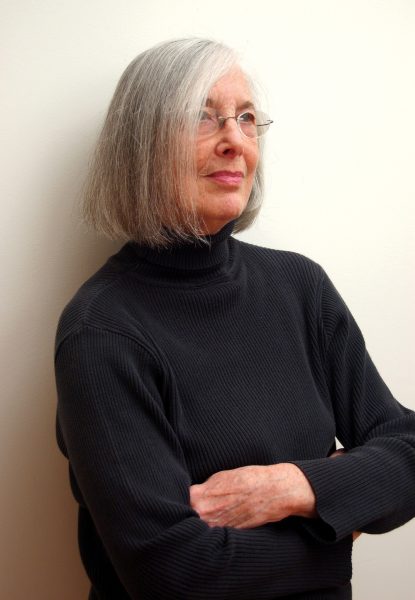
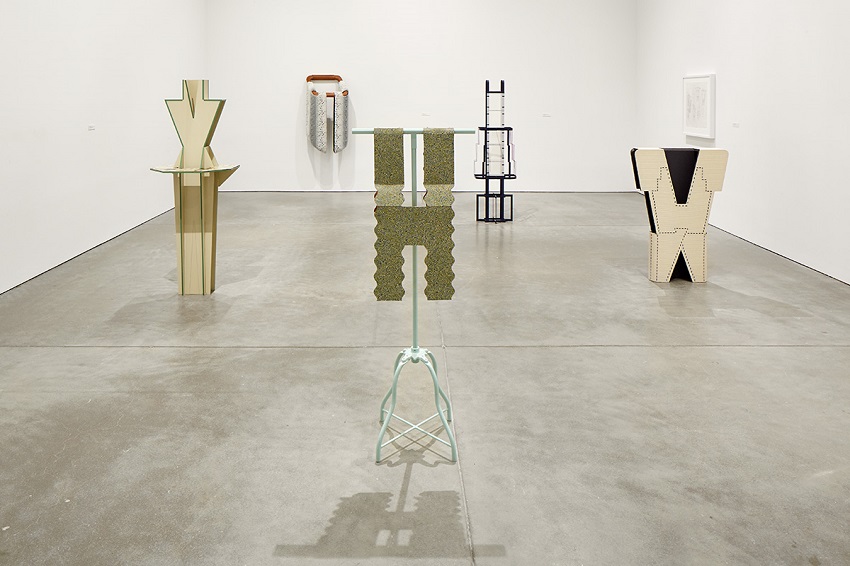
Artist Diane Simpson gets her due.

“Diane Simpson show at ICA is superb,” reads the headline for the Boston Globe review of Simpson’s first major museum solo show, currently on view at the ICA.

Two years ago, the artist had her first New York solo show in 33 years at the Lower East Side gallery JTT, featuring “crisp, rigorous, body-scale sculptures” (New York Times). In 2010, a retrospective at the Chicago Cultural Center surveyed 40 works produced over 30 years. Diane Simpson has been enjoying a kind of renaissance: while she’s shown steadily throughout the Midwest since the 1970s, the Chicago-based artist recently admitted to Artforum that she’s amazed by the wider attention her work is currently receiving.

Now 80, Simpson attended School of the Art Institute of Chicago (SAIC) in the 1950s but had her first child just shy of finishing her final quarter. She returned ten years later, when the youngest of her three children entered first grade, to complete her bachelor’s degree.

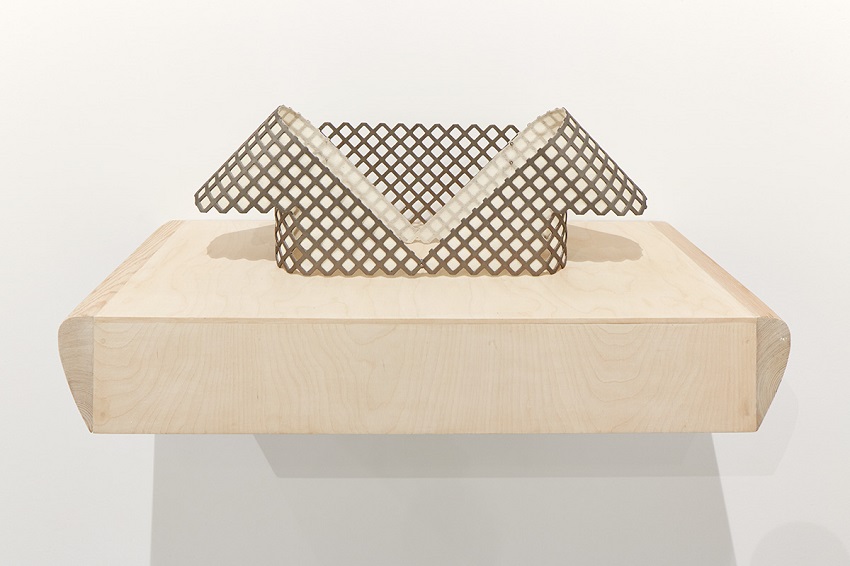
Using her bedroom as a studio (she and her husband “slept on a hide-a-bed for six years,” she told curator Dan Byers in an interview in the exhibition catalogue), Simpson had been making art all along, and in her 40s she went back to the SAIC to pursue an MFA. “When I first went back to grad school I started making large drawings on graph paper, primarily of tools and mechanical objects,” as well as collagraph prints of boxlike forms, Simpson says. She turned to sculpture when an advisor suggested she try to build one of the drawings.

“The objects I was drawing were very dimensional due to a system of perspective I devised myself,” Simpson explains—a system reminiscent of early non-Western perspective that involves denoting volume via parallel 45-degree angles, rather than the two- or three-point perspective most commonly employed since the time of the Renaissance. “I never gave it a name, but I think ‘axonometric’ might be the system whose description broadly fits what I had been practicing for many years —and thought I had invented,” she says.

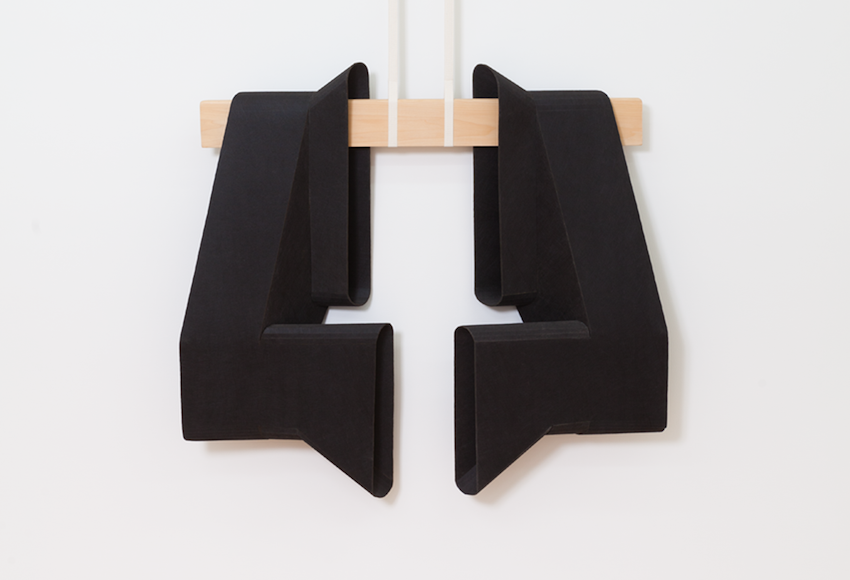
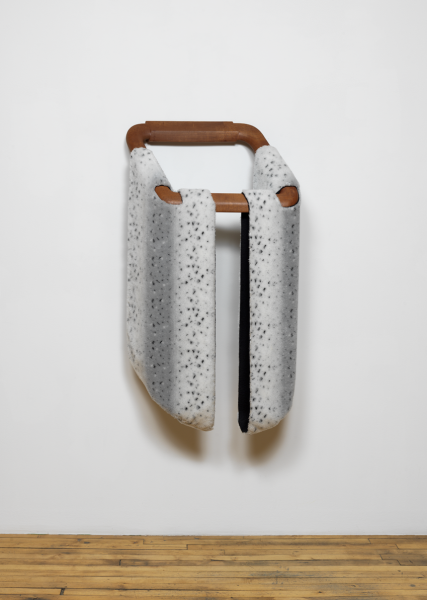
With no training in sculpture, Simpson has often invented her own methods for constructing her work, and she says sometimes her unorthodox solutions contribute important aesthetic details, such as the cords that hold together architectural elements in works such as Amish Bonnet and Court Lady

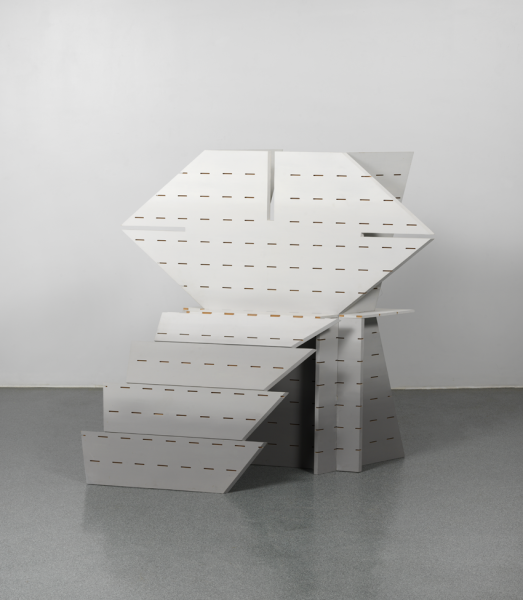
“One of the unique aspects of Diane’s work is the relationship between the drawings and the sculptures, and in how she fabricates them so precisely and beautifully to mimic the angles that are in the drawings,” says Dan Byers, Mannion Family Senior Curator. “The physical objects are hard to read—they almost look impossible—even though they’re so physically present and so carefully made. You’re at once sure you’re in the room with something that’s physical and affecting you, and at the same time, it almost feels like an image of itself.”

As much praise as Simpson is currently receiving—the Boston Globe celebrates her “stunning” and “beautiful” work for its craftsmanship, its sensuality, its interplay between media, its significance—Byers believes the artist has not yet received her due. “This show is a great start. But there’s more incredible work in the attic that hasn’t been seen in 30 years,” he says.

Hear Diane Simpson speak about her work in conversation with Dan Byers, Mannion Family Chief Curator, on March 3.

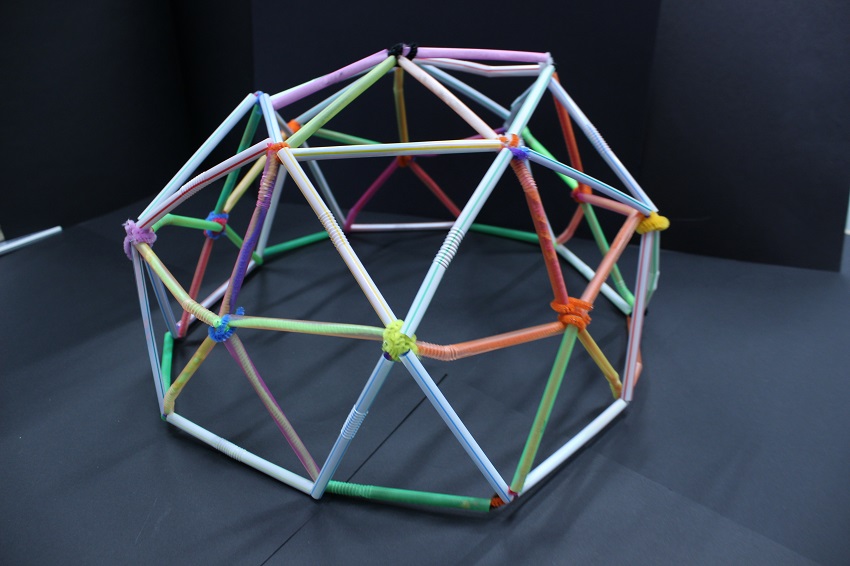
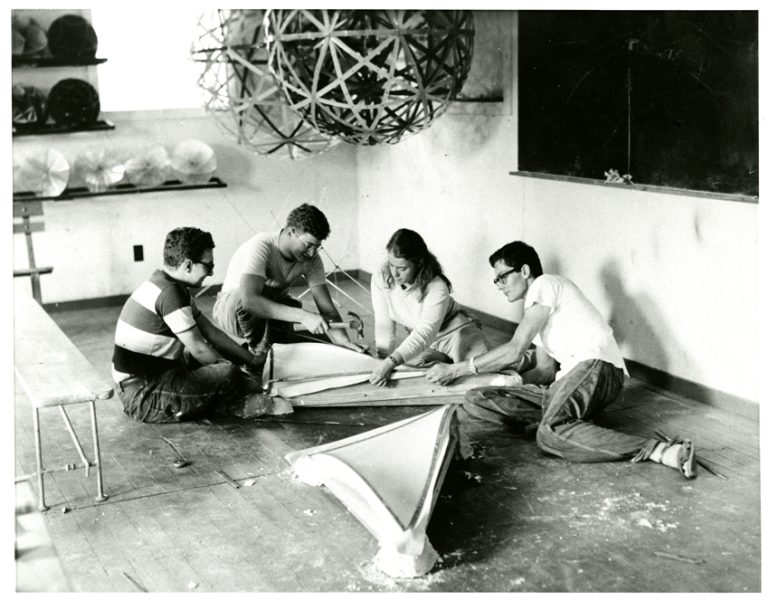
Get inspired by Bucky Fuller and try your hand at geodesic dome-making, as students at Black Mountain College did!

Appropriate for: Creative minds age 9+ with adult assistance, or  younger children broken into repeatable construction steps over time with plenty of adult guidance. Making a geodesic dome is a perfect activity for multiple generations of family participants; working together makes the “dome” come to life sooner.

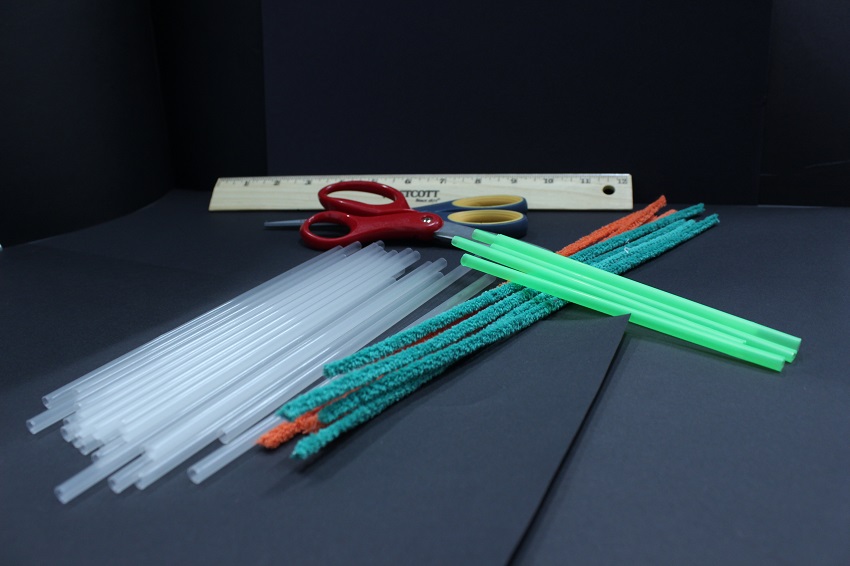
Tools and Materials needed:

(Use what you have on hand already.)

  • Straws of two colors (avoid using ‘flex’ straws unless you cut off the flexible joint) for Strut A & B
    You will need 33 straws (18 of one color and 15 of another color) for a dome and 60 (30 of each color) straws for a full sphere. A strut is a long, stiff board, beam or plank used as a support in building.
  • Scissors
  • Ruler (to measure straw lengths before cutting)
  • Pipe cleaners, 12” (the thinner type with less fluff works best!): about 12 per dome constructed
  • Time, patience, good humor, and plenty of snacks!

Safety tip: adults or older children can bend over the sharp ends of the pipe cleaners once they are threaded through the straws so that little fingers will not be harmed.

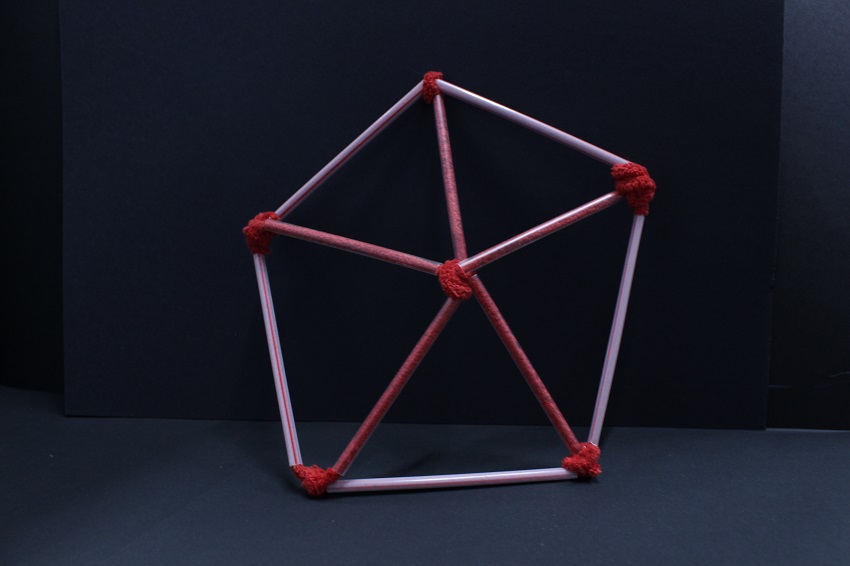
Creating Basic Pentagon Shapes (6 pentagons = geodesic dome)

A pentagon is a two-dimensional geometric figure formed of five sides and five angles.

  1. Select one color straw to be Strut A and one color to be Strut B. Strut A will be longer than Strut B. For example, using ~8” straws, cut straws into 4” lengths and into 3.5” lengths. [Or to determine what length for the straws, Strut B should be smaller than Strut A by a factor of 0.885.] Hint: measure and cut one straw into the correct length then use that straw as your guide to measure and cut the rest of the straws needed.
  2. Make a total of 35 Strut A’s.
  3. Make a total of 30 Strut B’s.
  4. Make some pentagons. Strut A’s will be the outside of each pentagon and Strut B will be the middle of the pentagon. Feed a pipe cleaner through a Strut A. Bend back the end to secure it in place around the straw. Join additional pipe cleaners as necessary to make one continuous length of pipe cleaner by twisting the ends of the pipe cleaners together tightly.
  5. Thread 4 more straws onto the pipe cleaners (for a total of 5 straws) then bend into the shape of a pentagon and secure the ends together.
  6. Thread 2 Strut B’s onto the long end of the pipe cleaner (add more pipe cleaners as necessary) then thread the pipe cleaner into an adjacent straw and out the other side.
  7. Thread 2 more Strut B’s through the pipe cleaner and then secure all Strut B’s at the center.
  8. Thread 1 final Strut B onto the pipe cleaner and secure all Strut B’s at the center of the pentagon with a small piece of pipe cleaner. It helps to wrap the pipe cleaner around the joint of one pair of Strut B’s and then wrap it around the second pair. Hint: Push the end of the pipe cleaner back into one of the straw struts to conceal it!
  9. Make 5 more pentagons as described above.

Note: For a full sphere (rather than a dome) cut more supplies, grab a snack, then make 11 more pentagons.

Make the Dome

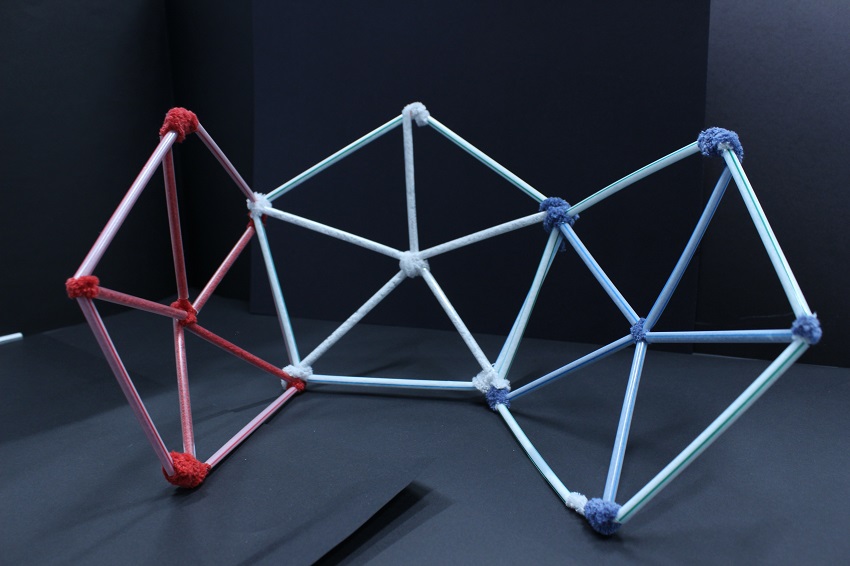
Once you have completed the basic shape that will form the dome (or sphere) all you need to do is connect them together. Geodesic domes are very efficient structures. Can you tell why?

  1. Take one pentagon and thread a pipe cleaner through one side, secure at the end. This will be your center pentagon.
  2. Thread the long end of the pipe cleaner through one Strut B of a second pentagon. Make sure the pointed sides of the shapes are facing OUT. Pull them together.
  3. Repeat Steps 1 and 2 to connect a 3rd, 4th, and 5th pentagon at the joints of the center pentagon. Pull tightly.
  4. Take the 5 single Strut B’s and feed them through the base of the row of pentagon at the bottom, alternating pentagons and struts. Pull tightly.

This project was created by ICA Family Programs Coordinator Kathleen Lomatoski, with support from Ana Dziengel.

© 2015 Department of Education, The Institute of Contemporary Art/Boston

The Dubai-based collaborators combine artworks with everyday and offbeat objects in sincere and probing assemblages.

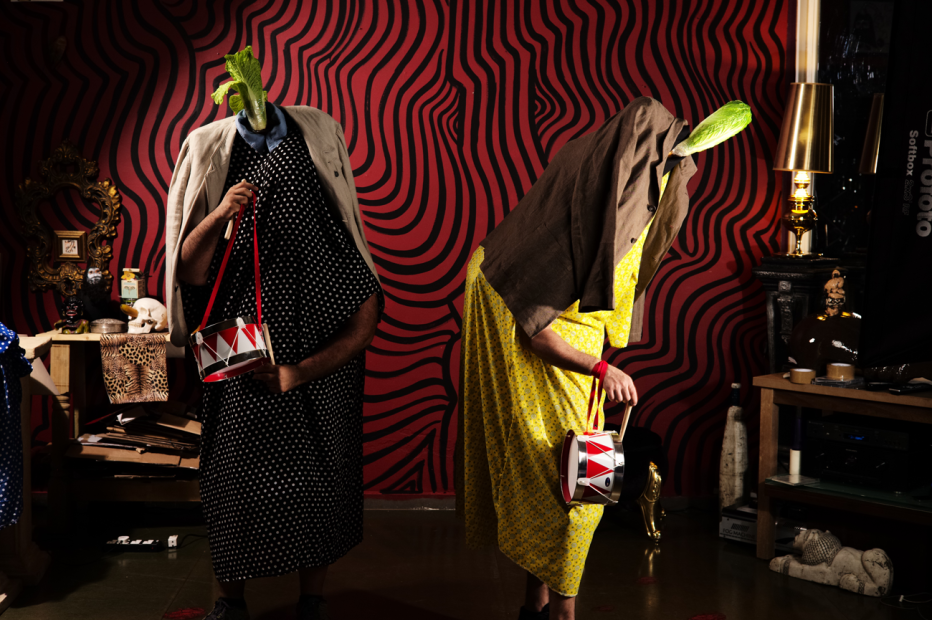
Ramin Haerizadeh, Rokni Haerizadeh, and Hesam Rahmanian draw from a wide range of material and cultural sources in their work, combining everyday and offbeat objects with their own artworks and those of other artists in sincere and probing assemblages. For The Birthday Party, their first major U.S. museum exhibition, the Dubai-based collaborators worked for the first time with a museum’s collection, choosing works by Louise Bourgeois, Jimmy De Sana, and Ree Morton to incorporate into their lively installation.

Some of the materials they transported from Dubai to pair with them are:

  • Campbell’s Soup can candle
  • Two sets of bird dresses
  • Two gardening forks
  • Mermaid
  • Three Uglydolls
  • One crutch
  • Artificial baguette
  • Artificial lettuce
  • Two papier-mache pigs (Tooth Pig and Pig Punk)
  • E.T. finger
  • Aluminum and duct tape rabbit

Prefer inspiration to resolutions? Words of encouragement from Black Mountain College artists and educators, from constructive to inspirational to abstract.

Don’t fight forces, use them.

Buckminster Fuller

  • “Our world goes to pieces. We have to rebuild our world.”  –Anni Albers
  • “Education is not preparation for life; education is life itself.” –John Dewey
  • “When you put a seed in the ground, it doesn’t stop growing after eight hours. It keeps going every minute that it’s in the earth. We, too, need to keep growing every moment of every day that we are on this earth.” –Ruth Asawa

If you don’t have trouble paying the rent, you have trouble doing something else; one needs just a certain amount of trouble.

Robert Rauschenberg

  • “We need not destroy the past. It is gone.”  –John Cage
  • “Failure is instructive. The person who really thinks learns quite as much from his failures as from his successes.”  –John Dewey
  • “Ninety-nine percent of who you are is invisible and untouchable.”  –Buckminster Fuller

Creating is the most intense excitement one can come to know.  

Anni Albers

  • “I can’t understand why people are frightened of new ideas. I’m frightened of the old ones.”  –John Cage
  • “All that we can hope for is to put some order into ourselves.” –Willem de Kooning
  • “A thing is never seen as it really is.”  –Josef Albers
  • “I don’t mess around with my subconscious.”  –Robert Rauschenberg

There is nothing in a caterpillar that tells you it’s going to be a butterfly.

Buckminster Fuller
 

  • “I want to give an example from my lessons: you drink wine for the first time. Please don’t judge, but drink many wines, study them and probably then if you are looking for words to describe a wine you will see that you can’t find them.”   –Josef Albers
  • “The only way to do it is to do it.” –Merce Cunningham
  • “I am happy to have some friends here in the kitchen.” –Charles Olson
  • “Arriving at one goal is the starting point to another.” –John Dewey

Falling is one of the ways of moving. 

MERCE CUNNINGHAM

  • “Wholeness is not a Utopian dream, it is something that we once possessed and now seem largely to have lost, or to say it less pessimistically, seem to have lost were it not for our inner sense of direction which still reminds us that something is wrong here because we know of something that is right.” –Anni Albers
  • “The self is not something ready-made, but something in continuous formation through choice of action.” –John Dewey
  • “I’m trying to climb up both walls at once.” –Charles Olson

Art is spirit and spirit is eternal.  


JOSEF ALBERS

There is so much to learn from Black Mountain College. Leap Before You Look in 2016!

A new book brings together the artist’s fantastical drawings on paper and walls.

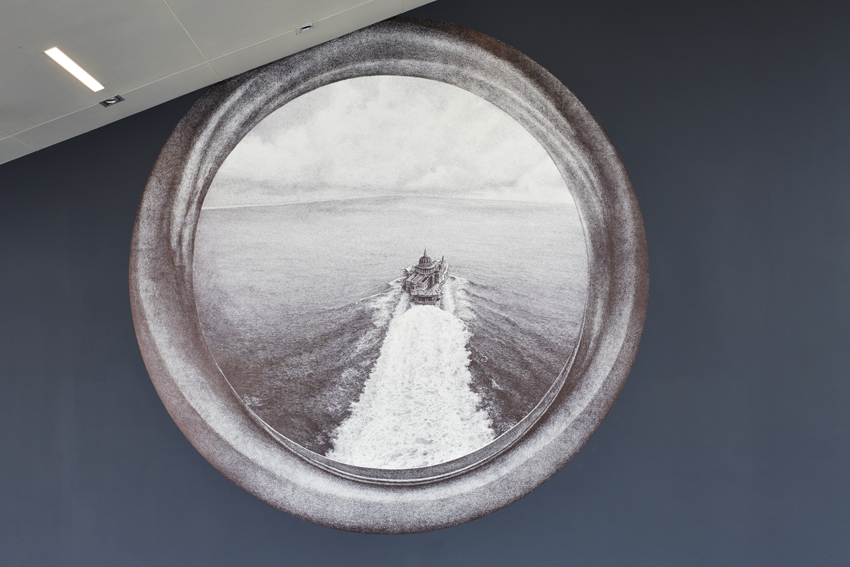
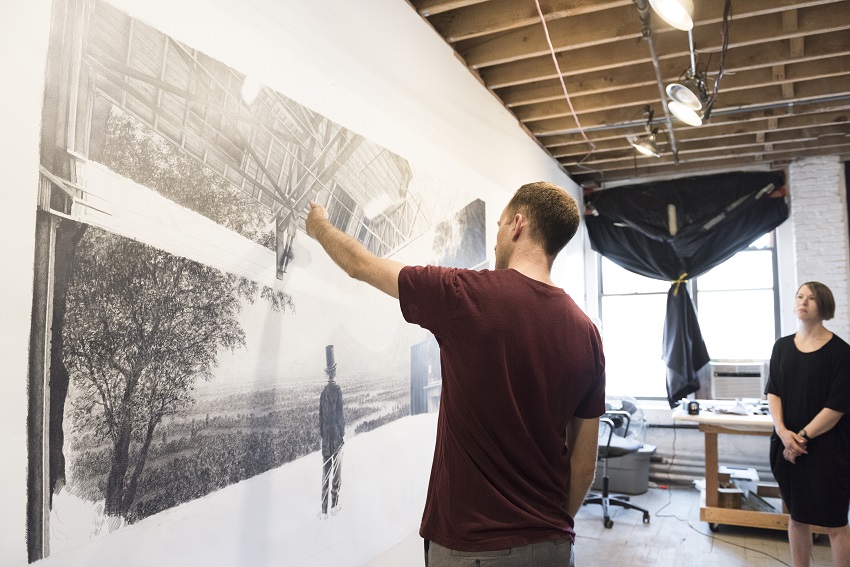
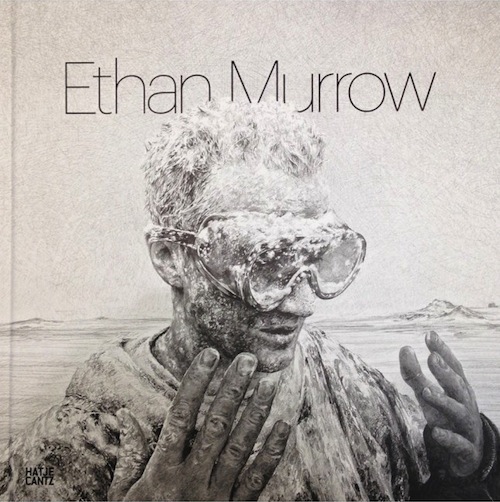
 GRAPHIC_Murrow_book.jpgMonumental as it is, Ethan Murrow’s drawing Seastead on the Sandra and Gerald Fineberg Art Wall at the ICA is only one small part of the Boston-based artist’s output. A new book, Ethan Murrow (Hatje Cantz) gathers dozens of his works, presenting for the first time in print his large-scale wall drawings in ballpoint pen alongside those he executes on paper. Murrow’s work, photorealist but fantastical, examines the boundaries between fiction and depicted reality while telling stories of the artist’s creation.

Ruth Erickson, Assistant Curator at the ICA and organizer Seastead, contributed texts to the book, available at the ICA Store. Read an excerpt below.


The landscape around the ICA seems to be in a state of constant change. New buildings appear over night, while historical structures, like the brick sailor’s church, Our Lady of Good Hope, disappear just as quickly. This dramatic architectural transformation of the Seaport District (what has already taken place and what is planned for the near future) is only echoed in the watery depths of the adjoining Boston Harbor. While the sea’s steady tides might suggest a sense of timelessness—the retreat and return with each moon cycle—the natural harbor links to a vast network of waterways, bodies, and commerce undergoing significant alterations. The harbor becomes a kind of marker of the many ways that environmental changes, from rising sea levels to diminished fishing stocks, reshape, and will increasingly reshape, human existence on the earth. It is with these thoughts in mind that I invited Murrow to create a wall drawing for the ICA’s Sandra and Gerald Fineberg Art Wall.

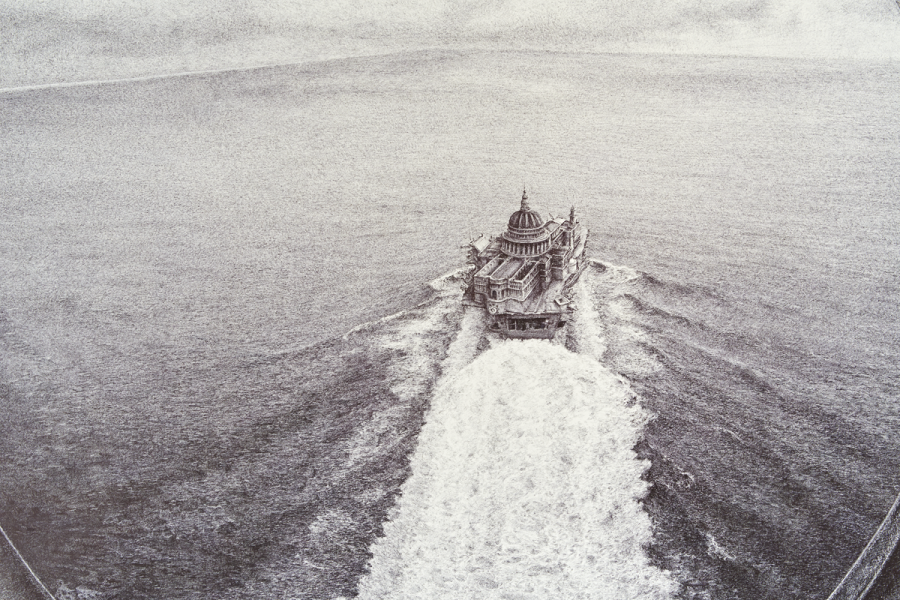
Murrow based his drawing of the large boat on American aircraft carriers, the impressive nautical devices that have been central to the nation’s military prowess. Perched on top of the carrier, Murrow has drawn St. Paul’s Cathedral, which was constructed in London after the great fire in 1666 and withstood the Blitz bombing of World War II. Sourcing images from the Internet, Murrow created a digital mock-up, marrying the carrier and the cathedral in the middle of the sea, and then set out with three assistants to draw it, by hand and in marker directly on the wall over the course of ten days. This formidable task, which took almost 100 hours and exhausted over 400 Sharpie pens, embodied a remarkable commitment and expenditure of raw energy, an effort that resonated with the subject matter.

Structures of immense physical strength, the carrier and cathedral are symbolic of the nations that created them—not coincidentally, the same great powers of Boston’s own Puritan origins—but in Seastead, they appear somewhat tenuous. Is this a rebellious breakaway, a forced exile, or a utopian endeavor? What triggered it? Insurgent political regimes, rising sea levels? The work’s title, Seastead, is derived from “seasteading” (a combination of the words “sea” and “homesteading”), which refers to the creation of an island state outside of the boundaries and the laws of any sovereign nation. If taken at face value, the title and imagery may conjure a break-up of the great Western powers and the formation of a new entity in its nascent stage of assembly, an apt characterization of the twenty-first century. Such a process is replicated in the individual marks that begin as countless crosshatches by a team of hands and then cohere at a distance into a photorealistic drawing only to dissolve into thousands of indeterminable marks upon scrutiny. Murrow holds together these opposing processes, allowing formation and disintegration to coexist in both the narrative arc and drawing. Seastead is neither a beginning nor an ending but rather both at once, capturing the resilience of the one and the many working together.


Individual support accounts for more than 60% of the ICA’s annual operating budget. We couldn’t do what we do without your support.

The ICA strives to bring contemporary art and ideas to audiences of all ages in Boston—and we couldn’t do it without support from donors, support that accounts for more than 60% of the annual operating budget.

It is thanks to our contributors that the ICA is able to serve as a platform for thought-provoking conversations and ground-breaking exhibitions, such as this fall’s highly acclaimed Leap Before You Look: Black Mountain College 1933–1957.

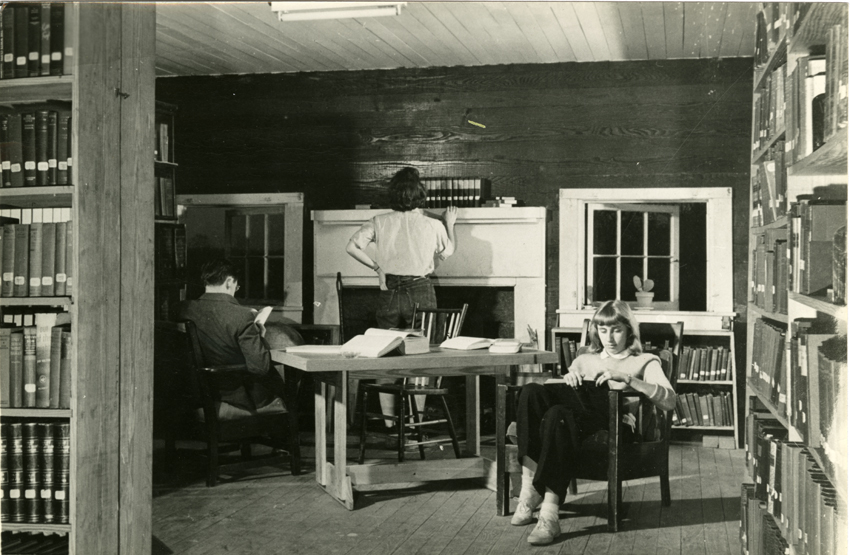
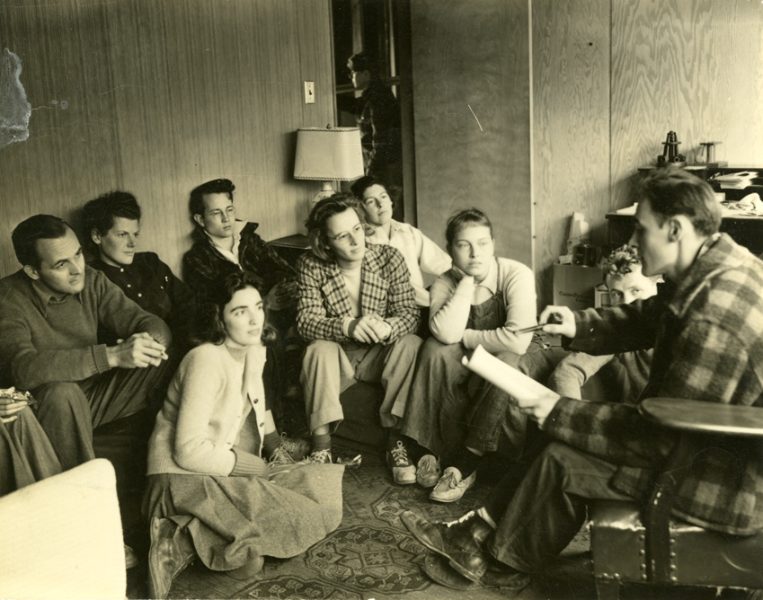
Black Mountain College, a small liberal school founded in 1933 outside Asheville, North Carolina, has had enormous influence on the post-war culture of the United States—and shares certain similarities to the ICA. Like the progressive college, the ICA has been resolute in its embrace of the art of its time, confident in the belief that a progressive plurality of the arts is essential to a thriving cultural and civic life. The ICA—like Black Mountain College—insists on the centrality of artistic experience in preparing students and audiences of all ages for full participation in our democratic society. Now, nearly a century after the founding of the college and of the ICA, experimentation, collaboration, risk, failure, and experiential learning—key tenets of both institutions—are central to conversations in education reform, workforce development, creative economies, and innovation.

Please consider a 100% tax-deductible donation to ensure that undertakings like Leap Before You Look: Black Mountain College 1933–1957—as well as free programming such as talks and tours, Play Dates, and digital media courses for teens—are realized.