Simpson’s work will be included in the ICA’s upcoming collection exhibition titled To My Best Friend

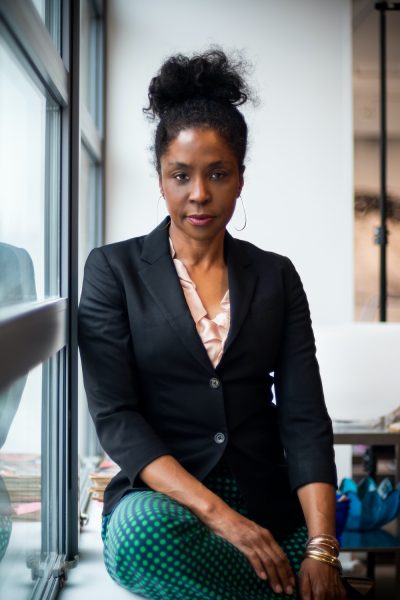
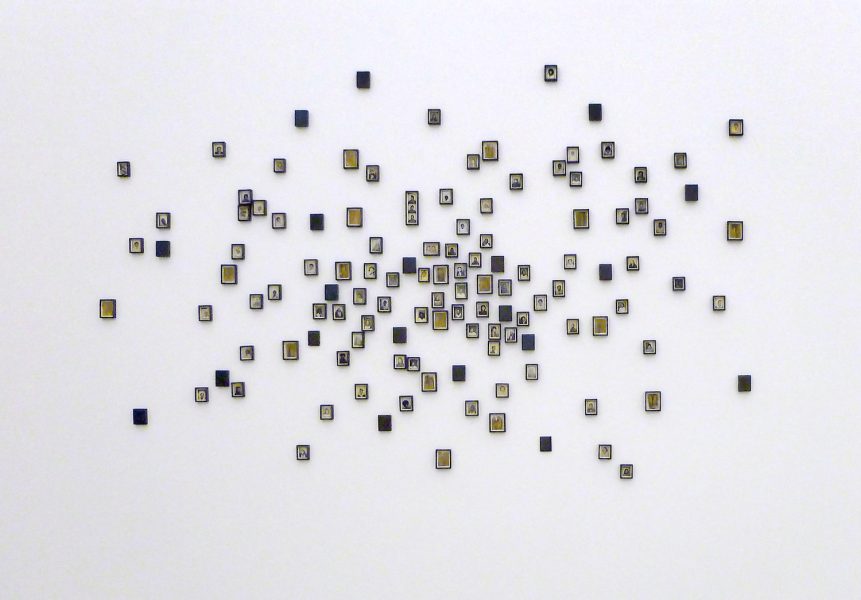
(Boston, MA—Dec. 10, 2025) The Institute of Contemporary Art/Boston (ICA) is pleased to announce Lorna Simpson (b. 1960, New York) as the 2026 recipient of the Meraki Artist Award. Known for her pioneering approach to conceptual photography in the 1980s and 1990s, Simpson has expanded the boundaries and possibilities of representation for more than 40 years. Her text and image works undermine widely held assumptions about race and gender within American culture, encouraging audiences to re-examine these ideas and unconscious classifications. In her more recent body of vibrant, large-scale paintings, Simpson probes the complexities of memory, history, and experience, while innovatively experimenting with diverse media. Simpson’s continued commitment to experimentation has made her a visionary and one of the most widely admired artists of our time. Her work To My Best Friend, 2013, will be on view at the ICA as part of a collection exhibition of the same name, opening on Jan. 23, 2026. 

“I am incredibly grateful to be recognized as the next Meraki Artist Award recipient,” said Simpson. “It is an honor to receive an award that celebrates the creativity and care of today’s artists.”  

The $100,000 annual Meraki Artist Award is generously funded by Fotene Demoulas and recognizes the artistic achievements of women artists. Taking inspiration from the Greek word “meraki,” which means to do something with soul, love, or creativity, the Meraki Artist Award was established in 2025 to support the ICA’s efforts in exhibiting, presenting, and collecting the work of visionary artists. Simpson will accept the Meraki Artist Award at the museum’s annual Women’s Luncheon on Apr. 27, 2026. 

“I’m proud to partner with the ICA to recognize the important contributions of Lorna Simpson through the Meraki Artist Award,” said Demoulas. “It is with great joy that I congratulate Lorna, whose powerful and innovative work challenges us to question and imagine a better world.”  

“It is a joy to celebrate the work and practice of one of the most resonant and inspiring artists working today, Lorna Simpson, who embodies the spirit of the Meraki Artist Award and its celebration of artists who illuminate new ways of seeing the world,” said Nora Burnett Abrams, Ellen Matilda Poss Director at the ICA. “We are so excited to celebrate Lorna’s powerful and thought-provoking practice and her vision, at once rigorous, lyrical, and deeply human, as the award’s 2026 recipient.” 

In January 2026, the ICA will present To My Best Friend, a collection-focused exhibition featuring works given, promised, or lent by Demoulas and Tom Coté. The artworks included represent multiple generations, styles, media, and thematic concerns, featuring stunning works by 17 of today’s leading artists. Simpson’s installation of the same name features more than 100 found elements, including 85 found photobooth images—an early democratic form of self-representation. Much like the title of Simpson’s work, the exhibition evokes the warmth and reciprocity at the heart of the relationships the ICA has built between artists, audiences, and collectors. 

About Lorna Simpson 
Lorna Simpson came to prominence in the early 1990s with her pioneering approach to conceptual photography. Simpson’s early work raised questions about the nature of representation, identity, gender, race, and history that continue to drive the artist’s expanding and multi-disciplinary practice today. Over the past 30 years, Simpson has continued to probe these questions while expanding her practice to encompass various media including film and video, collage, drawing, painting, and sculpture. Her works have been exhibited at and are in the collections of many major museums internationally and she was awarded the J. Paul Getty Medal in 2019. Lorna Simpson is represented by Hauser & Wirth. 

About the Meraki Artist Award  
The Meraki Artist Award is an annual artist award that is a key part of the ICA’s efforts to exhibit, present and collect the work of women artists. The award takes its inspiration from the Greek word “meraki” (may-rah-kee), which means to do something with soul, love, or creativity. The Meraki Artist Award is funded by long-time ICA trustee and supporter Fotene Demoulas. The artist is recognized at the ICA’s annual Women’s Luncheon. 

About the ICA 
Since its founding in 1936, the ICA has shared the pleasures of reflection, inspiration, imagination, and provocation that contemporary art offers with its audiences. A museum at the intersection of contemporary art and civic life, the ICA has advanced a bold vision for amplifying the artist’s voice and expanding the museum’s role as educator, incubator, and convener. Its exhibitions, performances, and educational programs provide access to the breadth and diversity of contemporary art, artists, and the creative process, inviting audiences of all ages and backgrounds to participate in the excitement of new art and ideas. The ICA is located at 25 Harbor Shore Drive, Boston, MA, 02210. The Watershed is located at 256 Marginal Street, East Boston, MA 02128. For more information, call 617-478-3100 or visit our website at icaboston.org. Follow the ICA on Facebook, Instagram, and TikTok.  

Media Contact: Theresa Romualdez, press@icaboston.org 
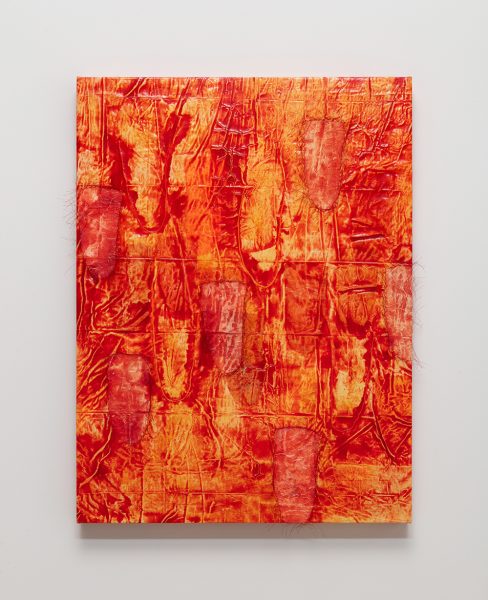
The exhibition includes works by Olga de Amaral, Njideka Akunyili Crosby, Mickalene Thomas, and Meraki Artist Award recipients Lorna Simpson and Sarah Sze

(Boston, MA—Dec. 10, 2025) The Institute of Contemporary Art/Boston (ICA) presents To My Best Friend, a collection-focused exhibition featuring stunning works by 17 of today’s leading artists. This exhibition features works gifted and promised to the ICA by longtime supporters of the museum, Fotene Demoulas and Tom Coté. Committed to supporting artists at every stage of their career through exhibitions, publications, and museum acquisitions, Demoulas and Coté have foregrounded the visionary work of historically-underrepresented and women artists through their philanthropy. The included artworks represent multiple generations, styles, media, and thematic concerns, exemplifying a sustained interest in formal and material complexity and a steadfast belief in the singular perspectives that artists contribute to the world. To My Best Friend opens with 20 works by 17 women artists—including several recent acquisitions on view for the first time—by artists Njideka Akunyili Crosby, Olga de Amaral, Huma Bhabha, Charline von Heyl, Roni Horn, Deana Lawson, Laura Owens, R. H. Quaytman, Deborah Roberts, Jaune Quick-to-See Smith, Rose B. Simpson, Becky Suss, Mickalene Thomas, Vivian Suter, and Lynette Yiadom-Boakye, and Meraki Artist Award recipients Lorna Simpson and Sarah Sze. The exhibition borrows its title from an installation by Lorna Simpson which opens the show and features more than 100 found elements, including 85 found photobooth images—an early democratic form of self-representation. Much like the title of this artwork, To My Best Friend evokes the warmth and reciprocity at the heart of the relationships the ICA has built between artists, audiences, and collectors. The exhibition is organized by Erika Umali, Curator of Collections at the ICA, and will be on view from Jan. 23, through Dec. 31, 2026.

“The ICA has a very long history of presenting the work of women and underrepresented artists,” said Nora Abrams, Ellen Matilda Poss Director at the ICA. “And, we have been able to build a diverse collection based on this ethos because of our generous supporters in and around Boston. We are so grateful for Fotene’s and Tom’s support towards this vision.”

“It is with great pleasure that I have continued to support the ICA in presenting and acquiring the work of women artists at every stage of their career,” said Demoulas. “I am excited to see works from the past 20 years reflected in this exhibition.” 

To My Best Friend draws primarily from the ICA Collection. The ICA has a long exhibition history of presenting women artists, queer artists, and artists of color; and since the museum started collecting in 2006, it has continued to reflect the same ethos. Today, 60% of the collection is made up of women artists and over 40% of the artists in the collection identify as BIPOC. 

A sampling of the works that will be presented include:  

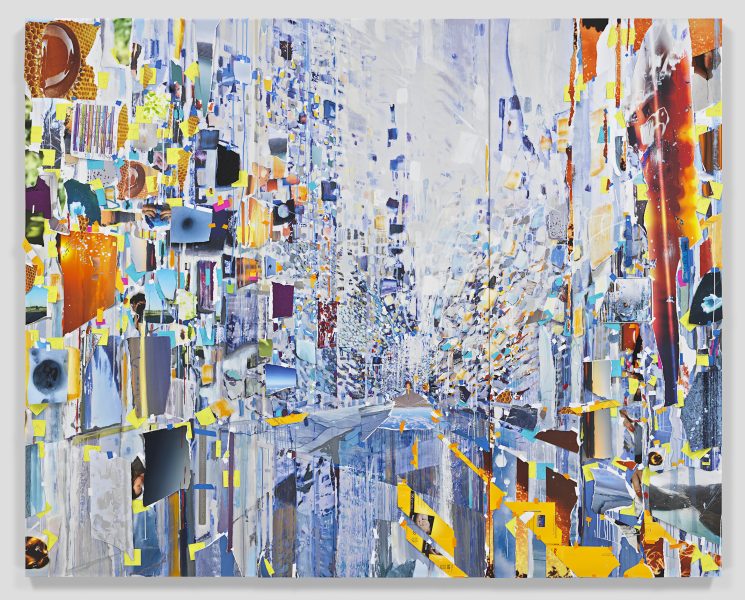
  • Surround Sound (After Studio), 2019, by 2025 Meraki Artist Award recipient Sarah Sze (born 1969 in Boston). Sze uses everyday materials to explore the built environment and our increasingly image-saturated world. In this over 8-foot-tall work, Sze layers images of speakers, Post-it notes, and mirrored surfaces to capture the unique sonic, physical, and aesthetic space of the artist’s studio. As Sze said in the same year this painting was made: “In the age of the image, a painting is a sculpture.” 
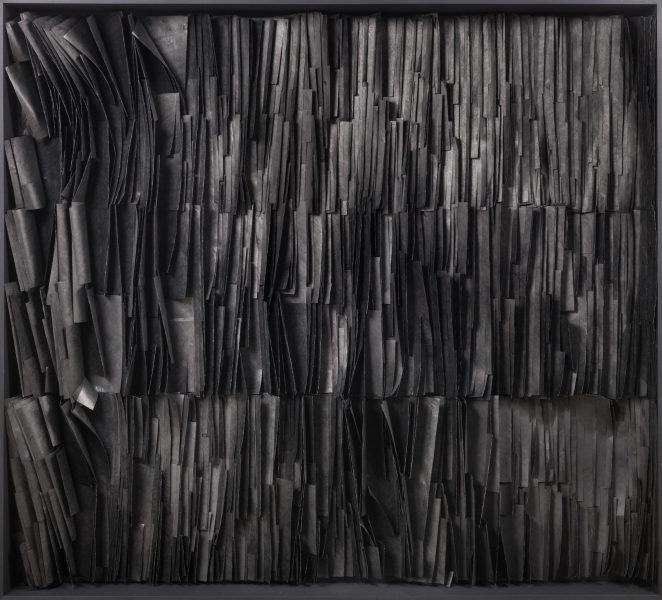
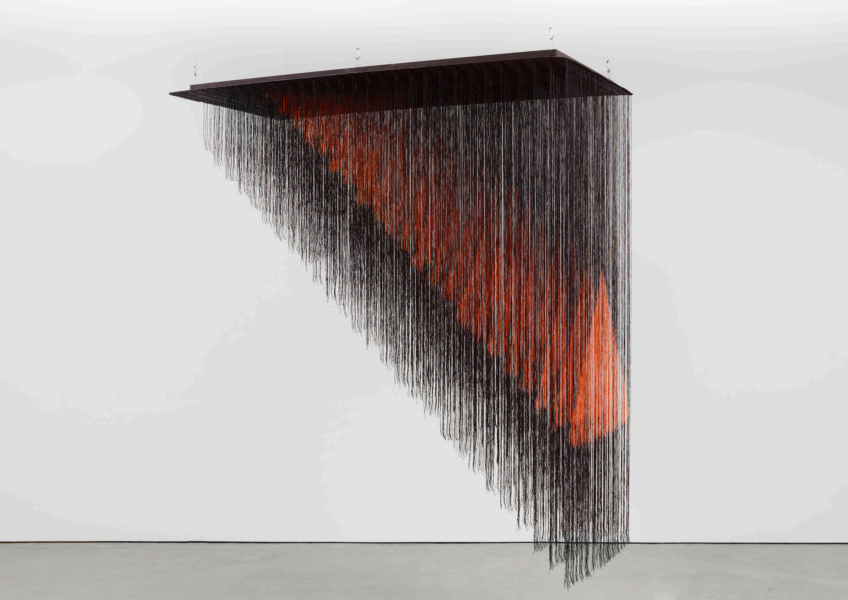
  • Bruma W, 2018, by Olga de Amaral (born 1932 in Bogotá, Colombia). Known for her large-scale, abstract, fiber-based works, Amaral brings together local traditions and global developments in the art world through her innovative weavings. In Bruma W, part of the artist’s Brumas series, linen threads cascade from a wooden panel to create an optical effect that recalls the work’s title, Bruma, the Spanish word for mist. Discussing her practice, Amaral notes: “As I build surfaces, I create spaces of meditation, contemplation, and reflection. Every small unit that forms the surface is not only significant in itself, but is also deeply resonant of the whole. Likewise, the whole is deeply resonant of each individual element.” 
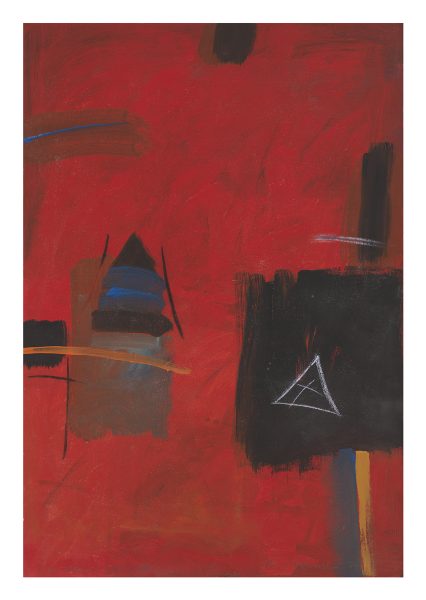
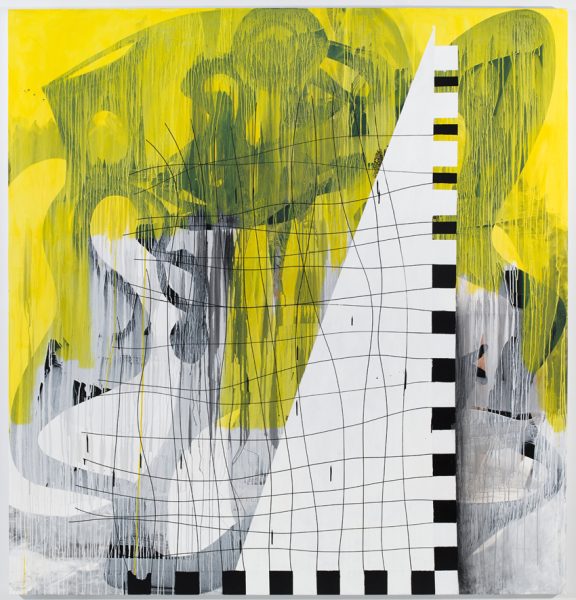
  • Guitar Gangster, 2013, by artist Charline von Heyl (born 1960 in Mainz, Germany). Heyl’s paintings encourage dialogue between painting and abstraction. In this large-scale painting, the artist combines architectonic and organic forms and bright expanses of color to give the work dynamic energy. About her work, Heyl says: “It is about the feeling that painting can give—when you can’t stop looking because there is something that you want to find out, that you want to understand.” 

Exhibition credits: 
To My Best Friend is organized by Erika Umali, Curator of Collections at the ICA. 

This exhibition is funded, in part, with support from Leadership in Arts Museums, an initiative to create more racial equity in art museum leadership, supported by the Ford Foundation, Mellon Foundation, Pilot House Philanthropy, and Alice L. Walton Foundation. 

Media Contact: Theresa Romualdez, press@icaboston.org 
Featuring five decades of work by 39 artists, the exhibition illuminates a living archive of creative resistance, cultural memory, and Black artistic excellence

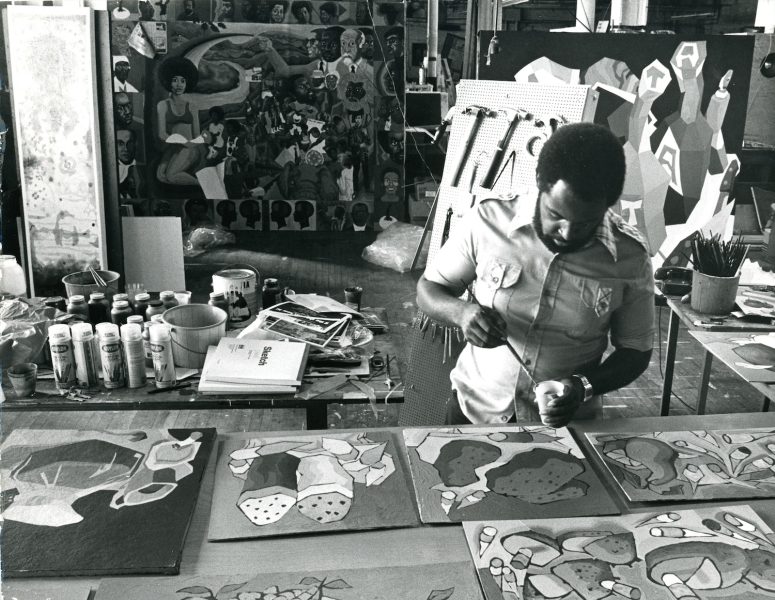
(Boston, MA—December 3, 2025) In February 2026, the Institute of Contemporary Art/Boston (ICA) opens Say It Loud: AAMARP, 1977 to Now, an exhibition dedicated to Boston’s African American Master Artists-in-Residence Program (AAMARP). A vital outgrowth of the Black Arts Movement, AAMARP was founded by artist, educator, and activist Dana C. Chandler Jr. at Northeastern University in 1977, making it one of the first in-residence programs for Black artists in the United States. Tracing the evolution of AAMARP through the artists’ voices, their engagement with global artistic and political movements, and their deep-rooted sense of community, the exhibition illuminates a living archive of creative resistance, cultural memory, and Black artistic excellence over five decades. Say It Loud: AAMARP, 1977 to Now features more than 50 works by 39 artists spanning generations and mediums, including figurative and abstract painting, collage, woodworking, experimental textile art, street photography, public murals, and more. Accompanied by a scholarly publication, the exhibition is on view from Feb. 12—Aug. 2, 2026, and is organized by Jeffrey De Blois, the Mannion Family Curator at the ICA, with Meghan Clare Considine, Curatorial Assistant at the ICA. 

“AAMARP was created to be a center of excellence in multicultural visual and performing arts, and an enriching environment to nurture and support artists of African descent,” said artist and AAMARP Director, Reginald L. Jackson, PhD. “AAMARP continues to be a visual arts resource and ambassador of goodwill to the local, national, and international art community, and remains a prominent center for discussion of African diasporic cultural growth and development.”  

“AAMARP proudly continues the legacy of earlier Black artistic guilds—including the Harlem Renaissance, Spiral, Weusi, Obassi, and AfriCOBRA—to intentionally utilize aesthetics and creative expression to advance Black liberation across all periods of time and geographic locations,” said L’Merchie Frazier, an AAMARP artist and educator.  

“The ICA is very proud to present the first museum survey of AAMARP, which highlights the diversity of approaches long championed by AAMARP artists and positions Boston as a key nodal point in the regional histories of the Black Arts Movement that scholars are charting today,” said Nora Burnett Abrams, Ellen Matilda Poss Director of the ICA. 

In founding AAMARP, Chandler’s vision was for a Black artist-run visual arts complex—including exhibition and studio spaces as well as a community center—whose program would provide a “living focus” on the “diverse dynamics of African American aesthetics.” He selected an initial group of artists for the program “with an eye towards a diversity of visual arts disciplines and aesthetics,” and included some of the Boston area’s most prominent Black artists, such as Ellen Banks, Calvin Burnett, and John Wilson. Now housed in Boston’s Jamaica Plain neighborhood, AAMARP’s programmatic offerings include dance, poetry readings, artist talks, workshops, award ceremonies, and, as in the past, regular student group visits. 

Embodying the program’s ethos of collaboration and exchange, the exhibition curators worked alongside Chandler before his untimely passing in June of 2025, AAMARP’s executive committee, and active members to plan Say It Loud and its accompanying publication. The book features never-before-published archival materials; new scholarly essays by De Blois and Faye R. Gleisser; a robust annotated chronology compiled by Considine and De Blois; a coda by Connie H. Choi that considers the importance of sustaining Black-run arts spaces; and personal reflections by AAMARP-affiliated artists and community members. 

“When we first discussed the possibility of doing an exhibition about AAMARP with Dana Chandler, he immediately said: ‘Hurry up and do it.’ This sense of urgency, informed by the fact that in-depth institutional recognition was overdue, informed every aspect of our endeavor to highlight the powerful and historically important body of work created by artists affiliated with AAMARP,” said De Blois and Considine. “The exhibition and publication reflect the program’s vibrancy and vitality, highlighting Chandler’s original vision of an artist-run alternative art space, free and open to everyone, where Black art and culture could flourish.” 

Spanning multiple galleries, Say It Loud follows AAMARP’s rich history from its founding in 1977 to today, and the loosely chronological installation echoes the vibrancy of AAMARP’s programmatic offerings. Works in the exhibition include: 

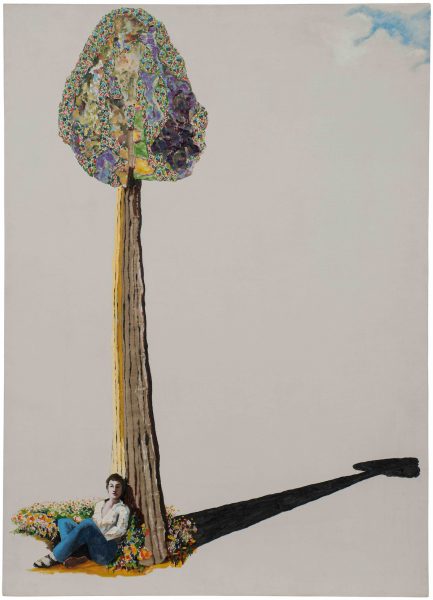
  • Benny Andrews, Nene, 1978. Nene is a collaged oil portrait depicting the artist’s future wife, Nene Humphrey, leisurely resting against a tree at MacDowell, an artist retreat in New Hampshire, where the pair met. In 1980, the work was included in an exhibition of the renowned artist’s work curated by Chandler. The ICA worked closely with the Benny Andrews Estate to identify Nene from archival images. The work has not been presented since the artist died in 2006. 
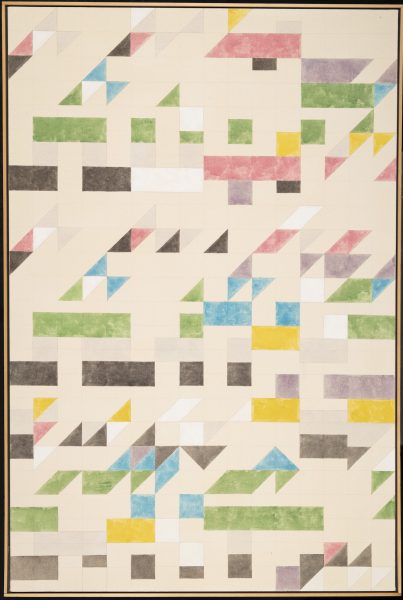
  • Ellen Banks, Scott Joplin, 1982. An original AAMARP-affiliated artist, Banks was trained in both painting and piano. Her painting, Scott Joplin, is emblematic of her geometric abstractions derived from musical scores, in which colors correspond to pitches, and shapes to durations and tempos. Banks’s commitment to non-figurative painting during AAMARP’s early years was notable because she positioned herself in opposition to the dominant strands of politically-engaged practices that characterized the Black Arts Movement.  
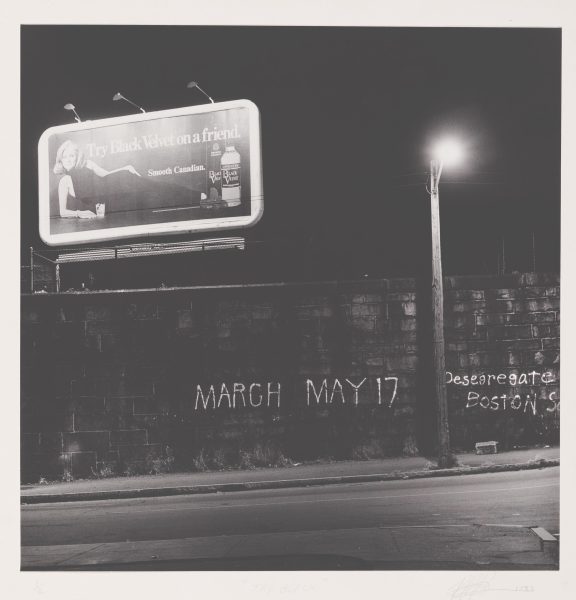
  • Rudolph R. Robinson, TRY BLACK, 1983. Robinson, another original AAMARP affiliate, was a fine arts photographer for the Museum of the National Center of Afro-American Artists in Roxbury and the Museum of Fine Arts, Boston. Robinson’s works include a wide range of subjects, from the nighttime scene TRY BLACK to his Invisible Man/Europe series documenting the growing Black communities there. Robinson was an influential member of the AAMARP program and a mentor to many, including Hakim Raquib, one of the photographers still working at AAMARP today. 
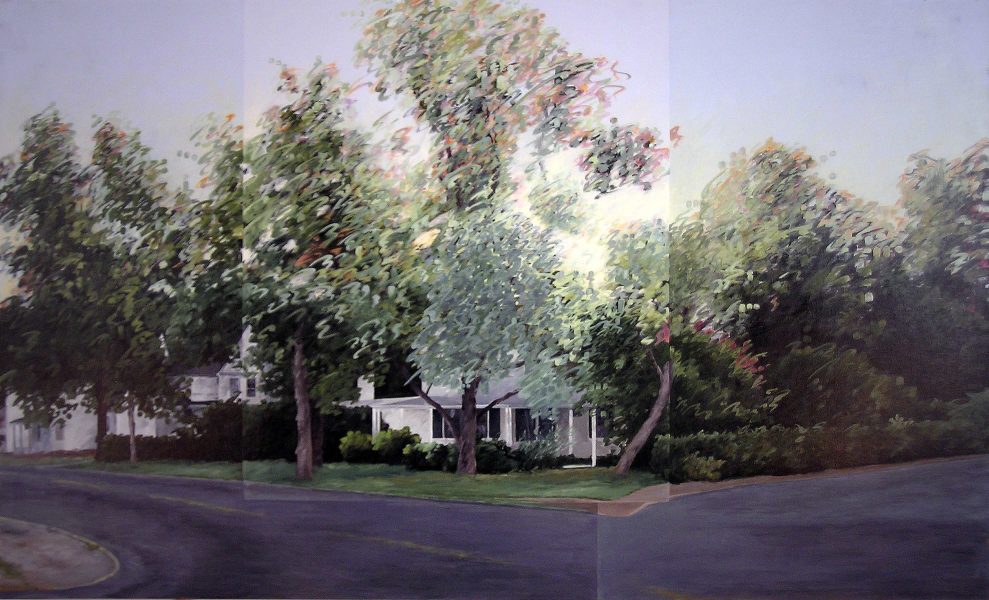
  • Keith Morris Washington, George Armwood: Front Lawn of Judge R. Duer’s Home; Princess Anne, Maryland, 1999. In the late 1990s, thanks to his generous studio space at AAMARP, Keith Morris Washington began an ongoing series of large-scale paintings he called Within Our Gates: Site and Memory in the American Landscape. Each work takes as its subject the site of an American lynching; as the artist says, he is “mediating spaces, investigating a past still present, interrogating tradition, questioning discrepancies extolled in Hudson River / Luminist Painting.” 
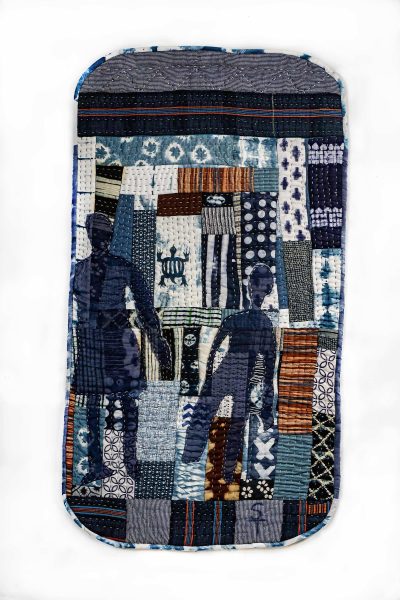
  • Susan Thompson, Call of the Ancestors 1 and 2, both 2017. Thompson, a pillar of the program today, has been working at AAMARP since 1985. With Allan Rohan Crite as her mentor, Thompson went from creating wall hangings and costumes for her child’s grade school play, to mastering a range of artistic techniques, especially transforming various fabrics into narrative quilts. Call of the Ancestors 1 and 2 are pieced quilts with applique that are both abstract and meditative. The works feature shadowy, featureless figures against a patchwork landscape, and are strong examples of the creative innovations in fiber arts that have been present at AAMARP since its inception. 

Artists in the exhibition: Benny Andrews, Ellen Banks, Gloretta Baynes*, Calvin Burnett, Ambreen Butt, Dana C. Chandler Jr., Jeff Chandler*, Allan Rohan Crite, Milton Derr, Sharon Dunn, Marlon Forrester*, L’Merchie Frazier*, Tyrone Geter, Ricardo “Deme5” Gomez*, Paul Goodnight, Reginald L. Jackson*, Michael Jones, Shea Justice*, Kofi Kayiga*, Khalid Kodi*, Marcia Lloyd, Vusumuzi Maduna, Bryan McFarlane*, Stanley Pinckney, Hakim Raquib*, James Reuben Reed, Rudolph R. Robinson, Renée Stout, Edward Strickland, Susan Thompson*, Arnold Trachtman, Wen-ti Tsen, Barbara Ward, Keith Morris Washington, Don West*, Rene Westbrook, John Wilson, Richard Yarde, and Theresa-India Young.

*Current AAMARP members 

Credits 
Say It Loud: AAMARP, 1977 to Now is organized by Jeffrey De Blois, Mannion Family Curator, with Meghan Clare Considine, Curatorial Assistant. 

Support for Say It Loud: AAMARP, 1977 to Now is provided by the Terra Foundation for American Art, The Kristen and Kent Lucken Fund for Photography, and The Sandra and Gerald Fineberg Exhibition Fund. 

The publication is supported by Wagner Foundation. 

Logo of the Terra Foundation for American Art, with terra in bold lowercase letters and Foundation for American Art in smaller text to the right on a light background.
The image shows the logo for Wagner Foundation, with the foundations name in bold, black, serif font on a light gray background.

Derrick Adams: View Master offers a comprehensive look at 20 years of the artist’s multidisciplinary practice celebrating contemporary Black life and culture

(Boston, MA—November 13, 2025) In April 2026, the Institute of Contemporary Art/Boston (ICA) opens Derrick Adams: View Master, the first survey of New York-based multidisciplinary artist Derrick Adams (b. 1970, Baltimore). The survey exhibition presents more than 100 works spanning over 20 years of the artist’s practice, including never-before-seen works from Adams’s personal archive, immersive exhibition design created by the artist for the ICA, and new works debuting at the ICA. Adams’s paintings, sculptures, collages, performances, videos, and public projects celebrate the richness and complexity of everyday Black American life, and over the past two decades, have transformed these moments into a distinct iconography. On view from April 16 to September 7, 2026, Derrick Adams: View Master is organized by Dexter Wimberly, Independent Curator, with Tessa Bachi Haas, Assistant Curator, ICA/Boston. 

“Whether through intimate portraits or large-scale public projects, Adams offers compelling narratives of affirmation and celebration. His work delights in the everyday moments that define the pursuit of happiness in America. Taken together, the works in this exhibition invite audiences to experience joy and feel uplifted through his engaging and visionary practice,” said Nora Burnett Abrams, Ellen Matilda Poss Director at the ICA. 

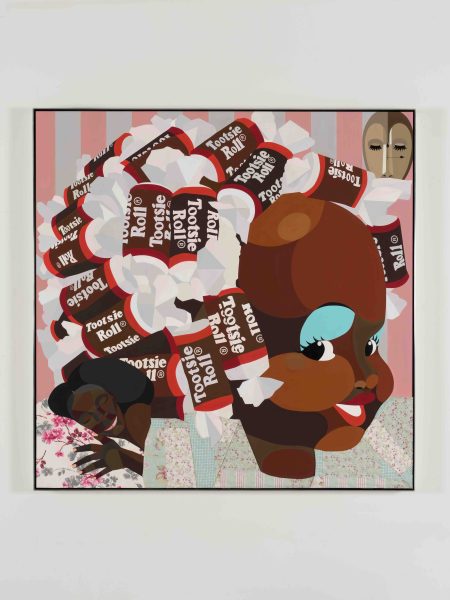
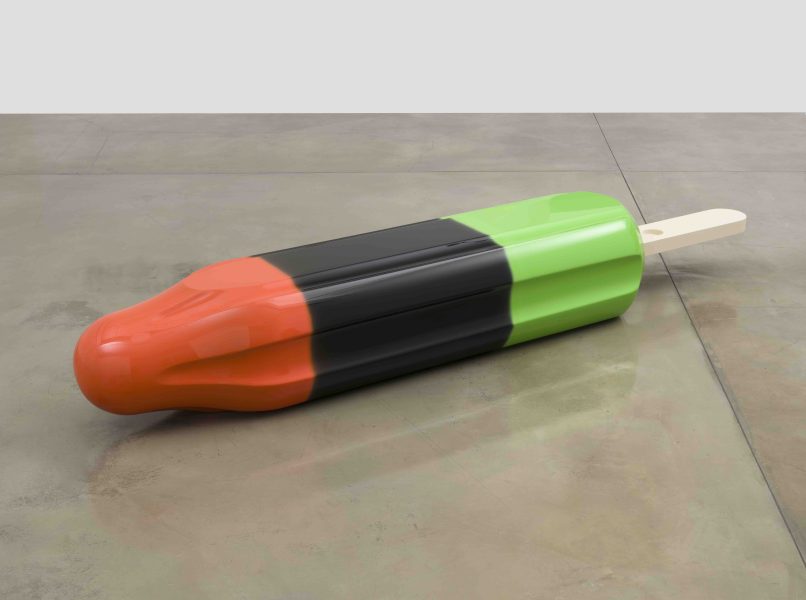
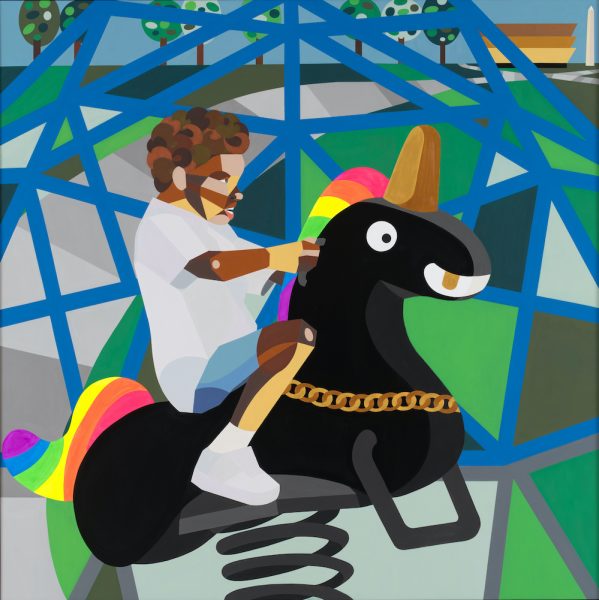
Derrick Adams’s work centers Black subjects depicted in vibrant scenes of rest, recreation, and self-care. Play is also a central theme in Adams’s practice. Braving the Path, 2023, depicts a young Black boy riding a Funtime Unicorn, referencing the interactive sculptures that Adams has created and installed across various urban landscapes for passers-by to engage with. His vibrant explorations of contemporary life convey a palpable sense of power, referencing many pop culture moments. In another work, Only Happy Thoughts, 2024, Adams portrays a Black woman adorned with bright blue eye shadow and Tootsie Roll candies alongside African masks and elements drawn from Black art traditions. This painting is one of several vibrant and multifaceted portraits that convey his serio-comedic storytelling, establishing situations starring both real and imagined characters through humorous juxtapositions. In one of Adams’s interactive, sculptural works, Cool Down Bench (RBG), 2023, the artist recalls childhood memories of neighborhood ice cream trucks with a large-scale, functional sculpture modeled after the popular red, white, and blue ice pops. However, in this instance, the bench features the colors of the Pan-African flag—red, black, and green—representative of Black liberation. 

“Adams’s use of bold colors, dynamic compositions, and layered textures creates a powerful visual impact that underscores the depth of the Black experience,” said Wimberly and Haas. “His work invites visitors to see the beauty and strength in the everyday lives of Black people with a sense of humor and whimsy.” 

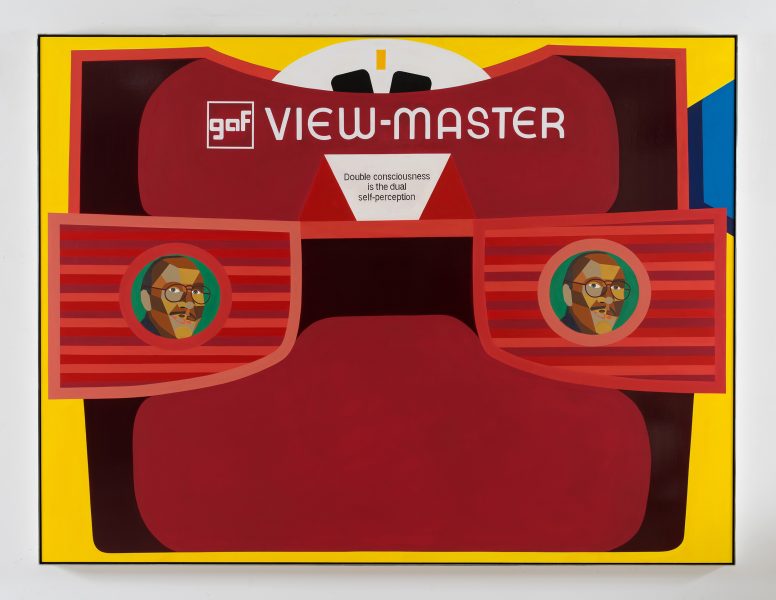
In Derrick Adams: View Master, Adams invites viewers to engage with a world where cultural and creative freedom is essential. The exhibition’s sub-title, View Master, is an ode to the toy that the Black inventor Charles Harrison redesigned in 1958 and reflects Adams’s distinct ability to capture the Black gaze. For the ICA’s presentation, Adams will debut a new work titled View Master, 2025, a large 6 x 8-foot painting featuring a view master—a stereo picture-viewing system that creates the illusion of a 3D world. Adams’s worldbuilding extends to the galleries, where wallpapers designed by the artist will create an immersive visual experience for visitors.  Derrick Adams: View Master is a testament to Adams’s commitment to expanding the conversation around what it means to live and thrive in today’s world.

The exhibition follows Adams’s first-ever monograph, featuring 150 of the artist’s most significant works to date. Published by Phaidon and Monacelli, the book also includes essays by Hallie Ringle, Salamishah Tillet, and Dexter Wimberly, and an interview by Sandra Jackson-Dumont. 

Media Contact: Theresa Romualdez, press@icaboston.org 
Digital Press Kit: https://bit.ly/DerrickAdams 

Credits
Derrick Adams: View Master is organized by Dexter Wimberly, Guest Curator, with Tessa Bachi Haas, Assistant Curator, ICA/Boston.

Support for Derrick Adams: View Master is provided by Gagosian and the Brizius Family Fund for Artists.

With warmest thanks, we gratefully acknowledge the generosity of the ICA’s Avant Guardian Society in making this exhibition possible.

Gagosian logo

Beyond the galleries, the ICA highlights Indigenous makers in a series of public programs and performances 

(Boston, MA—SEPTEMBER 22, 2025) On October 9, the Institute of Contemporary Art/Boston (ICA) opens An Indigenous Present, a nationally touring, thematic exhibition spanning 100 years of contemporary Indigenous art. The exhibition includes new commissions and significant works by 15 artists who use strategies of abstraction to represent personal and collective narratives, describe specific and imagined places, and build upon cultural and aesthetic traditions. Co-organized by artist Jeffrey Gibson and independent curator Jenelle Porter, the exhibition offers an expansive consideration of Indigenous art practices that highlights a continuum of elders and emerging makers, and premieres newly commissioned site-specific works by Raven Chacon, Caroline Monnet, and Anna Tsouhlarakis. An Indigenous Present emerges from Gibson and Porter’s 2023 landmark publication of the same name, which brought together work by Native North American artists exploring diverse approaches to concept, form, and medium. Their engagement with artists during the making of the book inspired this exhibition—one that demonstrates the endless variability of abstraction and its capacity to hold multiple forms and histories. An Indigenous Present debuts at the ICA, where it will be on view from October 9, 2025, through March 8, 2026, before traveling to the Frist Art Museum in Nashville (June 26—September 27, 2026) and the Frye Art Museum in Seattle (November 7, 2026—February 14, 2027). 

“This exhibition is one take on the field of contemporary art and culture by Native and Indigenous makers. Some of these artists have been working for decades, and I follow in their path; others are at an earlier stage in their careers, and I see new routes and possibilities in their respective practices. Together, they are amplifying the histories that have come before them and building a new context for present and future artists,” said Gibson.    

​​Porter added: ​“Since curating Jeffrey’s first solo museum exhibition at the ICA in 2013, he and I have continued to think together about ways to enlarge art histories. This exhibition is a proposal, one that explores the ways that these artists challenge the often arbitrary, historical categorizations of art by Indigenous makers​.”​ 

At the ICA, An Indigenous Present includes two new commissions that expand the exhibition beyond the galleries. An immersive sound work by Raven Chacon fills ICA’s Founders Gallery overlooking Boston Harbor. A site-specific installation by Caroline Monnet for the museum’s Sandra and Gerald Fineberg Art Wall is composed of commercial building materials that are sewn into a fractal-based composition inspired, in part, by Boston’s 600-year history of land reclamation and the ICA’s harbor location. The fractal patterns, or population “blooms,” derive from Anishinaabeg designs that, for the artist, symbolize interconnectedness, knowledge transmission, and kinship. 

The exhibition unfolds across several galleries, beginning with a focus on the work of George Morrison and Mary Sully, two important forebearers whose works anchor An Indigenous Present in the first decades of the 20th century. Throughout the exhibition, works by emerging artists are positioned in dialogue with those by more established makers within five sections: 

Section 1 
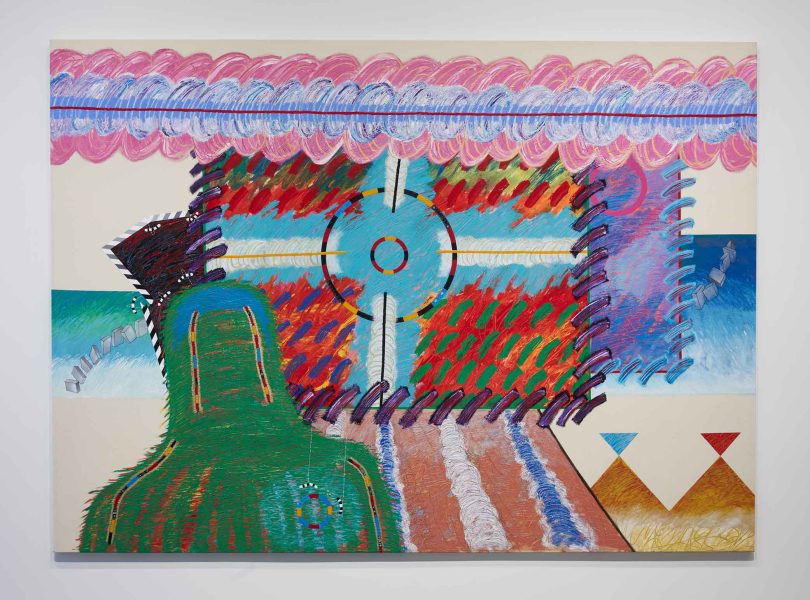
Ground is the term for both land and a receiving surface that has been prepared for painting. It can be understood as both a generative subject and a visual motif—George Morrison and Teresa Baker evoke the land and light of their ancestral homelands through an interplay of color and form. In this section, artists merge these conceptions of “ground,” using abstraction to visualize sense memories, places, and histories. Section 1 includes artworks by Teresa Baker, Raven Chacon, Sky Hopinka, George Longfish, Caroline Monnet, George Morrison, and Mary Sully. 

Section 2 
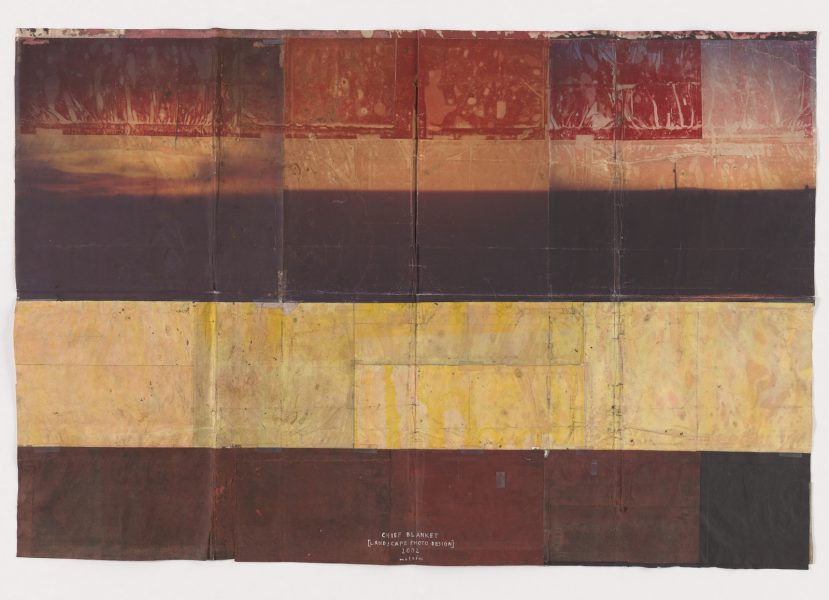
This gallery includes works that use abstraction to convey expansive concepts through minimal means. It begins with Kay WalkingStick’s monumental Chief Joseph Series, from the 1970s, a work about the heroic Nez Perce chief. The 27 paintings, arranged in a grid, assert space and accumulate meaning. Other works in this section use similar strategies of repetition, with individual parts inextricable from the whole. Section 2 includes artworks by Sonya Kelliher-Combs, Dakota Mace, Kimowan Metchewais, Caroline Monnet, George Morrison, Mary Sully, and Kay WalkingStick. 

Section 3 
In this gallery, sound is an abstraction that flows through shape, line, and pattern. Following the theory of counterpoint—a composition of two or more voices that are both harmonically interdependent, and distinct in melody and rhythm—the works here converse with one another. Some reference stories, prayers, and singing, evoking the sounds these modes of communication require. Other works portray composers, compositions, and sound patterns. Section 3 includes artworks by Teresa Baker, Raven Chacon, Sky Hopinka, Caroline Monnet, Audie Murray, Jaune Quick-to-See Smith, and Mary Sully. 

Section 4 
The works in this gallery feature a range of techniques and media that artists use to collapse the distinctions between concept and material. Labored surfaces obscure shapes and images, scale equalizes object and space, and a reduced palette is used to compress space and obscure subjectivity. Section 4 includes artworks by Teresa Baker, Sonya Kelliher-Combs, George Longfish, Kimowan Metchewais, George Morrison, and Kay WalkingStick. 

Section 5 
In this gallery, we see artists merging idea and medium. Anna Tsouhlarakis mixes found and sourced materials in her new large-scale sculpture, and Jaune Quick-to-See Smith smokes and works the surface of a canvas as one would a hide. Both found and sourced materials come with pre-existing associations that artists coax into works that draw from personal and cultural knowledge. Section 5 includes artworks by Teresa Baker, Sonya Kelliher-Combs, Gabrielle L’Hirondelle Hill, Kimowan Metchewais, Caroline Monnet, Jaune Quick-to-See Smith, Mary Sully, Anna Tsouhlarakis, and Kay WalkingStick. 

Press Preview 
Media are invited to attend the press preview for An Indigenous Present on Tuesday, October 7, at 9:30am. RSVP to press@icaboston.org 

Programming 
Throughout the run of the exhibition, the ICA will host a series of performances, including a new, multidisciplinary commission by Raven Chacon. On October 11, visitors will experience a full day of the Pulitzer Prize-winning artist’s sound-based works and installations presented throughout the museum. Other programming throughout the run of the exhibition includes a short film series curated by artist Sky Hopinka in the museum’s Barbara Lee Family Foundation Theater; an interactive and family-friendly art installation by Mashpee-Wampanoag artist Robert Peters in the ICA Bank of America Art Lab; an Artist’s Voice conversation with artists Caroline Monnet and Sky Hopinka; and many more related events. 

Artist List  
Teresa Baker (Mandan/Hidatsa; born 1985 in Watford City, ND) 
Raven Chacon (Diné; born 1977 at Fort Defiance, Navajo Nation) 
Sky Hopinka (Ho-Chunk Nation; born 1984 in Bellingham, WA) 
Sonya Kelliher-Combs (Iñupiaq and Koyukon Athabascan; born 1969 in Bethel, AK) 
Gabrielle L’Hirondelle Hill (Cree and Métis; born 1979 in Comox, British Columbia) 
George Longfish (Seneca and Tuscarora; born 1942 in Ohsweken, Ontario) 
Dakota Mace (Diné; born 1991 in Albuquerque, NM) 
Kimowan Metchewais (Cree; born 1963 in Oxbow, Saskatchewan; died 2011 in St. Paul, Alberta) 
Caroline Monnet (Algonquin-Anishinaabe and French; born 1985 in Ottawa, Ontario) 
George Morrison (Ojibwe; born 1919 in Chippewa City, MN; died 2000, Red Rock, MN) 
Audie Murray (Cree and Métis; born 1993 in Saskatoon, Saskatchewan) 
Jaune Quick-to-See Smith (citizen of the Confederated Salish and Kootenai Nation; born 1940 at St. Ignatius Mission, Flathead Reservation, MT; died 2025 in Corrales, NM) 
Mary Sully (Yankton Dakota; born 1896 at Standing Rock Reservation, SD; died 1963 in Omaha, NE) 
Anna Tsouhlarakis (Navajo, Creek, and Greek; born 1977 in Lawrence, KS) 
Kay WalkingStick (Cherokee and Anglo; born 1935 in Syracuse, NY) 

Credits  
An Indigenous Present is organized by Jeffrey Gibson and Jenelle Porter, guest curators, with Erika Umali, Curator of Collections, and Max Gruber, Curatorial Assistant. 

This exhibition is supported in part by Mathieu O. Gaulin, Peggy J. Koenig, Barbara H. Lloyd, Kim Sinatra, the Fotene Demoulas Fund for Curatorial Research and Publications, and an anonymous donor. 

With warmest thanks, we gratefully acknowledge the generosity of the ICA’s Avant Guardian Society in making this exhibition possible. 

About the ICA  
Since its founding in 1936, the ICA has shared the pleasures of reflection, inspiration, imagination, and provocation that contemporary art offers with its audiences. A museum at the intersection of contemporary art and civic life, the ICA has advanced a bold vision for amplifying the artist’s voice and expanding the museum’s role as educator, incubator, and convener. Its exhibitions, performances, and educational programs provide access to the breadth and diversity of contemporary art, artists, and the creative process, inviting audiences of all ages and backgrounds to participate in the excitement of new art and ideas. The ICA is located at 25 Harbor Shore Drive, Boston, MA, 02210. The Watershed is located at 256 Marginal Street, East Boston, MA 02128. For more information, call 617-478-3100 or visit our website at icaboston.org. Follow the ICA on Facebook, Instagram, and TikTok.  

Media Contact  
Theresa Romualdez, press@icaboston.org 
Opening Aug. 28, the exhibition features new boldly colored paintings born out of the artist’s dreams

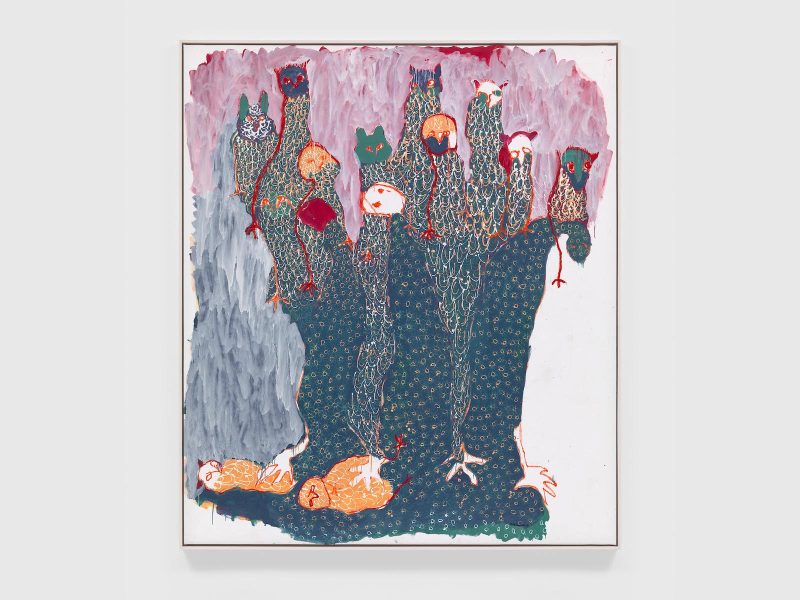
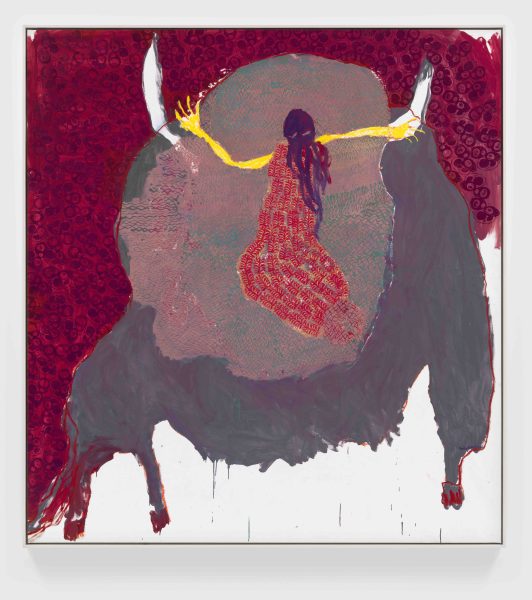
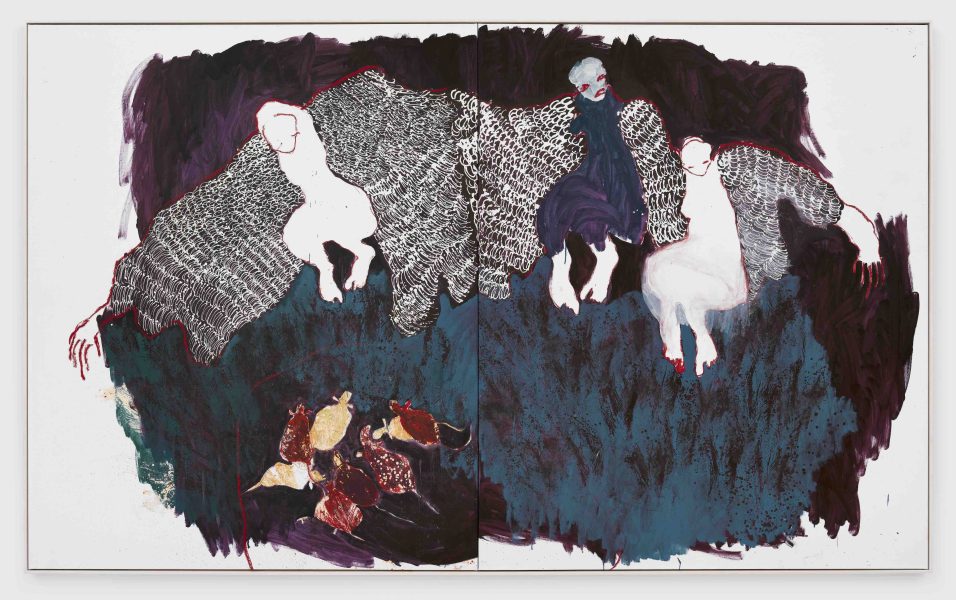
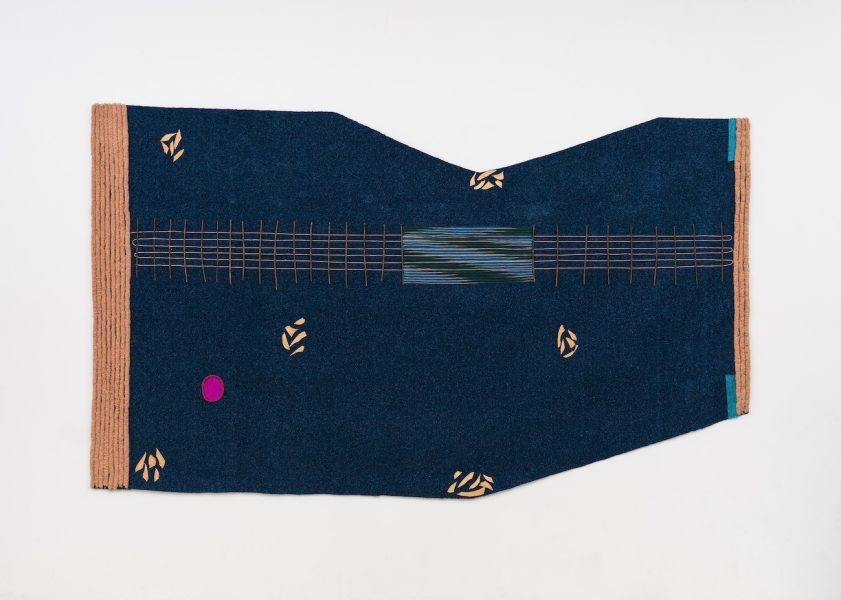
(Boston, MA—MAY 29, 2025) This August, the Institute of Contemporary Art/Boston (ICA) opens artist Portia Zvavahera’s (born 1985 in Harare, Zimbabwe) first solo museum exhibition in the U.S. Inspired by Zvavahera’s dreams, her layered compositions merge painting and printmaking techniques to create a dazzling array of flat layers and textures. These include the markings of wax relief, linocut stamps, cardboard stencils, lace, and palm leaves from her garden that form figures in atmospheric settings. This exhibition centers animals and the role they play in Zvavahera’s work and the many traditions she draws upon. Featuring a selection of seven of the artist’s works, Zvavahera’s ICA presentation includes three new paintings on view for the first time. Organized by Ruth Erickson, Barbara Lee Chief Curator and Director of Curatorial Affairs, with Meghan Clare Considine, Curatorial Assistant, Portia Zvavahera: Hidden Battles/Hondo dzakavanzika is on view from Aug. 28, 2025, to Jan. 19, 2026. 

Portia Zvavahera: Hidden Battles/Hondo dzakavanzika includes a selection of recent and new works that focus on the animals that populate the artist’s dreams and thus her pictorial world, revealing the significant and symbolic role animals play. A single powerful dream can produce several distinct and evocative paintings. Throughout the work, Zvavahera engages with Zimbabwean figurative painting as well as the Indigenous Shona and African Pentecostal faith traditions in which she was raised. Her works navigate a broad range of references, from the Shona belief that eagles travel between heaven and earth carrying messages, to the symbolic role of the snake in the biblical story of Adam and Eve, to the flattened pictorial field of modern art.  

“Zvavahera compares her practice to the act of worship,” said Erickson and Considine. “Her vivid paintings conjure worlds glimpsed in her dreams, where animals repeatedly appear, bringing with them foreboding and prophetic associations that she is able to visualize in her work.” 

In Ndirikumabvisa (2024), a hoard of rats is painted alongside a figure lying prostrate atop a dripping red background, referencing a nightmare during Zvavahera’s pregnancy. Rats reappear in Tinosvetuka Rusvingo (2024), where they gather underneath a trio of winged figures that evoke associations with angels in Western painting traditions and large birds of prey, which are powerful creatures in Shona cosmology. A bull appears to commune with a figure in Prayer amid a battle (2021), and coiled and double-headed snakes appear in her most recent paintings completed in May 2025. This exhibition will be an opportunity for a wider audience to encounter the work of one of the most exciting contemporary painters working in Southern Africa today. 

Artist Biography 
Portia Zvavahera was born in 1985 in Harare, Zimbabwe, where she currently lives and works. She studied at the BAT Visual Arts Studio, National Gallery of Zimbabwe, from 2003 to 2004. She then received a diploma in fine arts from Harare Polytechnic in 2006. 

The artist has presented several solo exhibitions with Stevenson, Cape Town and Johannesburg (2014–2023), and a solo exhibition with Marc Foxx Gallery, Los Angeles (2017), as well as solo and group exhibitions at David Zwirner, New York, Los Angeles and London (2020-2024). The National Gallery of Zimbabwe, Harare, presented her solo exhibition Under My Skin in 2010, and in 2020, the Institute of Contemporary Art Indian Ocean, Port Louis, Mauritius, held her solo exhibition Walk of Life. She was invited to show her work as part of the Zimbabwean Pavilion exhibition Dudziro: Interrogating the Visions of Religious Beliefs at the 55th Venice Biennale in 2013. In 2022, her work was included in the Milk of Dreams exhibition at the 59th Venice Biennale. In October 2024,  Zvavahera had her first European institutional solo exhibition at Fondation Louis Vuitton, Paris, part of their Open Space programming; in the same month the artist had her first UK solo institutional exhibition Zvakazarurwa, organized between Kettle’s Yard, Cambridge and Fruitmarket Gallery, Edinburgh (travelled in 2025).  

About the ICA   
Since its founding in 1936, the ICA has shared the pleasures of reflection, inspiration, imagination, and provocation that contemporary art offers with its audiences. A museum at the intersection of contemporary art and civic life, the ICA has advanced a bold vision for amplifying the artist’s voice and expanding the museum’s role as educator, incubator, and convener. Its exhibitions, performances, and educational programs provide access to the breadth and diversity of contemporary art, artists, and the creative process, inviting audiences of all ages and backgrounds to participate in the excitement of new art and ideas. The ICA is located at 25 Harbor Shore Drive, Boston, MA, 02210. The Watershed is located at 256 Marginal Street, East Boston, MA 02128. For more information, call 617-478-3100 or visit our website at icaboston.org. Follow the ICA on Facebook, Instagram, and TikTok.   

Media Contact 
Theresa Romualdez, press@icaboston.org
Credits 
Portia Zvavahera is organized by Ruth Erickson, Barbara Lee Chief Curator and Director of Curatorial Affairs, with Meghan Clare Considine, Curatorial Assistant.  

Nationally touring exhibition curated by artist Jeffrey Gibson and Jenelle Porter; includes work by Teresa Baker, Raven Chacon, Kimowan Metchewais, Caroline Monnet, George Morrison, Mary Sully, Jaune Quick-to-See Smith, and Kay WalkingStick, among others

(Boston, MA—MAY 2, 2025) This October, the Institute of Contemporary Art/Boston (ICA) opens An Indigenous Present, a thematic exhibition spanning 100 years of contemporary Indigenous art. The exhibition includes new commissions and significant works by 15 artists who use strategies of abstraction to represent personal and collective narratives, describe specific and imagined places, and build upon cultural and aesthetic traditions. Co-organized by artist Jeffrey Gibson and independent curator Jenelle Porter, the exhibition offers an expansive consideration of Indigenous art practices that highlights a continuum of elders and emerging makers, and premieres newly commissioned site-specific works by Raven Chacon, Caroline Monnet, and Anna Tsouhlarakis. An Indigenous Present emerges from Gibson and Porter’s 2023 landmark publication of the same name, which, through a collaborative process, brought together work by Native North American artists exploring diverse approaches to concept, form, and medium. Their engagement with artists during the making of the book inspired this exhibition—one that demonstrates the endless variability of abstraction and its capacity to hold multiple forms and histories. An Indigenous Present debuts at the ICA, where it will be on view from October 9, 2025, through March 8, 2026, before traveling to the Frist Art Museum in Nashville (June 26—September 27, 2026) and the Frye Art Museum in Seattle (November 7, 2026—February 14, 2027). 

“This exhibition is one take on the field of contemporary art and culture by Native and Indigenous makers. Some of these artists have been working for decades, and I follow in their path; others are at an earlier stage in their career, and I see new routes and possibilities in their respective practices. Together, they are amplifying the histories that have come before them and building a new context for present and future artists,” said Gibson.

​​Porter added: ​“Since curating Jeffrey’s first solo museum exhibition at the ICA in 2013, he and I have continued to think together about ways to enlarge art histories. This exhibition is a proposal, one that explores the ways that these artists challenge the often arbitrary, historical categorizations of art by Indigenous makers​.”​ 

The exhibition unfolds across 10 galleries, beginning with a focus on the work of George Morrison and Mary Sully, two important forebearers in the development of contemporary Indigenous art during the first half of the 20th century. Throughout the exhibition, works by emerging artists are positioned in dialogue with those by more established makers. Kay WalkingStick and Dakota Mace explore seriality and repetition in bodies of work realized in the 1970s and 2020s, respectively. WalkingStick’s Chief Joseph Series—dedicated to the heroic Niimíipuu / Nez Perce chief—presents a grid of 32 paintings that characterize the artist’s decades-long devotion to serial forms and storytelling. Mace’s So’ II (Stars II) is composed of 40 unique chemigram prints that draw on Diné (Navajo) design histories and heritage. In another artistic dialogue, George Morrison and Teresa Baker evoke the land and light of their own ancestral homelands through an interplay of color and form. Morrison, who trained alongside Abstract Expressionists painters in New York in the 1950s, is known for vibrant compositions, especially those inspired by the horizon near his Lake Superior, MN, home. Baker composes with yarn, paint, willow, and hide on irregularly cut artificial turf to create large-scale abstractions that convey her memories of place, such as the Northern Plains of her youth, as well as legacies of color field painting and collage.

At the ICA, An Indigenous Present includes two new commissions that expand the exhibition beyond the galleries. An immersive sound work by Raven Chacon will fill the ICA’s Founders Gallery overlooking Boston Harbor. Monnet’s site-specific installation for the museum’s Sandra and Gerald Fineberg Art Wall is composed of commercial building materials—such as Tyvek and roofing underlayment—that are sewn into a fractal-based composition inspired, in part, by Boston’s 600-year history of land reclamation and the ICA’s harbor location. The fractal patterns, or population “blooms,” derive from Anishinaabeg designs that, for the artist, symbolize interconnectedness, knowledge transmission, and kinship. Throughout the run of the exhibition, the ICA will host a series of performances of Raven Chacon’s scores and sound works, a film series curated by artist Sky Hopinka in the ICA’s Barbara Lee Family Foundation Theater, and a number of other public programs (dates and details to be announced). 

Artist List
Teresa Baker (Mandan/Hidatsa; born 1985 in Watford City, ND)
Raven Chacon (Diné; born 1977 in Fort Defiance, Navajo Nation)
Sky Hopinka (Ho-Chunk Nation; born 1984 in Bellingham, WA)
Sonya Kelliher-Combs (Iñupiaq/Athabascan; born 1969 in Bethel, AK)
Gabrielle L’Hirondelle Hill (Cree and Métis; born 1979 in Comox, British Columbia)
George Longfish (Seneca and Tuscarora; born 1942 in Ohsweken, Ontario)
Dakota Mace (Diné; born 1991 in Albuquerque, NM)
Kimowan Metchewais (Cree; born 1963 in Oxbow, Saskatchewan; died 2011, St. Paul, Alberta)
Caroline Monnet (Anishinaabe [Algonquin] and French; born 1985 in Ottawa, Ontario)
George Morrison (Ojibwe; born 1919 in Chippewa City, MN; died 2000, Red Rock, MN)
Audie Murray (Cree and Métis; born 1993 in Saskatoon, Saskatchewan)
Jaune Quick-to-See Smith (citizen of the Confederated Salish and Kootenai Nation; born 1940 in St. Ignatius Mission, Flathead Reservation, MT; died 2025, Corrales, NM)
Mary Sully (Susan Mabel Deloria) (Yankton Dakota; born 1896 in Standing Rock Reservation, ND; died 1963, Omaha, NE)
Anna Tsouhlarakis (Navajo/Creek/Greek; born 1977 in Lawrence, KS)
Kay WalkingStick (Cherokee and Anglo; born 1935 in Syracuse, NY)

Credits  
An Indigenous Present is organized by Jeffrey Gibson and Jenelle Porter, guest curators, with Erika Umali, Curator of Collections, and Max Gruber, Curatorial Assistant.  

This exhibition is supported in part by Peggy J. Koenig, Barbara H. Lloyd, and Kim Sinatra.  

With warmest thanks, we gratefully acknowledge the generosity of the ICA’s Avant Guardian Society in making this exhibition possible. 

About the ICA  
Since its founding in 1936, the ICA has shared the pleasures of reflection, inspiration, imagination, and provocation that contemporary art offers with its audiences. A museum at the intersection of contemporary art and civic life, the ICA has advanced a bold vision for amplifying the artist’s voice and expanding the museum’s role as educator, incubator, and convener. Its exhibitions, performances, and educational programs provide access to the breadth and diversity of contemporary art, artists, and the creative process, inviting audiences of all ages and backgrounds to participate in the excitement of new art and ideas. The ICA is located at 25 Harbor Shore Drive, Boston, MA, 02210. The Watershed is located at 256 Marginal Street, East Boston, MA 02128. For more information, call 617-478-3100 or visit our website at icaboston.org.  

Media Contact 
Theresa Romualdez, press@icaboston.org 
New $100,000 award recognizes the achievements of women visual artists

(Boston, MA—MARCH 18, 2025) The Institute of Contemporary Art/Boston (ICA) is pleased to announce Sarah Sze (b. 1969, Boston, MA) as the inaugural recipient of its new Meraki Artist Award. Widely recognized for expanding the boundaries between painting, sculpture, video, and installation, Sze’s work blends the intimate with the monumental, precision with chaos, and the physical with the digital. Her intimate paintings and large-scale installations and public works challenge perceptions of space, time, and scale, making her one of the most compelling artists of our time.

“It’s a huge honor to be the first recipient of the Meraki Artist Award and I’m inspired by the dedication to love, care, and art that the award stands for,” said Sze.  

Generously funded by Fotene Demoulas, the $100,000 award celebrates the artistic achievements of women artists and their impact on the field of contemporary visual art. Sze will accept the Meraki Artist Award at the museum’s annual Women’s Luncheon on May 5, 2025. 

“I am honored to collaborate with the ICA to spotlight the passion and presence that women visual artists bring to their practice through the Meraki Artist Award,” said Demoulas. “I want to offer heartfelt congratulations to Sarah, whose innovate work inspires us to see the world in new ways.”

“In Greek, the word meraki means to pour your soul into something, and I can think of no better way to describe Fotene’s longstanding support of artists and the ICA,” said Jill Medvedow, Ellen Matilda Poss Director of the ICA. “The generosity of this award is echoed in the open spirit and artistic expansiveness of Sarah’s work. We are thrilled to recognize Sarah as the inaugural recipient of the Meraki Artist Award and to celebrate her important contributions to art and culture.”

An exhibition of works promised to the ICA by Fotene and Tom Coté will go on view at the museum in January 2026. Reflecting their longtime support of artists at every stage of their career through exhibitions, publications, and museum acquisitions, the exhibition features work by 20 artists including Charlene von Heyl, Deana Lawson, Deborah Roberts, Diedrick Brackens, Laura Owens, Lynette Yiadom-Boakye, Mickalene Thomas, Njideka Akunyili Crosby, Olga de Amaral, and Sarah Sze. The artworks reflect multiple generations, styles, media, and thematic concerns, exemplifying a sustained interest in formal and material complexity and a steadfast belief in the singular perspectives that artists contribute to the world.

About Sarah Sze 
Sarah Sze gleans objects and images from worlds both physical and digital, assembling them into complex multimedia works that shift scale between microscopic observation and macroscopic perspective on the infinite. A peerless bricoleur, Sze moves with a light touch across proliferating media. Her dynamic, generative body of work spans sculpture, painting, drawing, printmaking, video, and installation while always addressing the precarious nature of materiality and grappling with matters of entropy and temporality. 

Born in Boston, Sze earned a BA from Yale University in 1991 and an MFA from the School of Visual Arts, New York, in 1997. While still in graduate school, she challenged the very nature of sculpture, at MoMA PS1 in New York, by burrowing into the walls of the building, creating sculptural portals and crafting ecosystems that radically transformed the host architecture. A year later, for her first solo institutional exhibition, at the Museum of Contemporary Art Chicago, she presented Many a Slip (1999), an immersive installation sprawling through several rooms in which flickering projections were scattered among complex assemblages of everyday objects. This marked Sze’s first foray into video, which has since become a central medium of her installations. Citing the Russian Constructivist notion of the “kiosk” as a key inspiration, she conceived subsequent installations as portable stations for the interchange of images and the exchange of information. Sze represented the United States in the 55th Venice Biennale in 2013, and her work has been the subject of numerous solo exhibitions, including recently at Nasher Sculpture Center, Dallas (2024); Solomon R. Guggenheim Museum, New York (2023); and Fondation Cartier, Paris (2020), and featured in the Carnegie International (1999); Whitney Biennial (2000); and the Bienal de São Paulo (2002). She was awarded a MacArthur Fellowship in 2003. 

About the Meraki Artist Award  
The Meraki Artist Award is an annual artist award that is a key part of the ICA’s efforts to exhibit, present and collect the work of women artists. The award takes its inspiration from the Greek word “meraki” (may-rah-kee), which means to do something with soul, love, or creativity. The Meraki Artist Award is funded by Fotene Demoulas and will continue to be supported for the next ten years. The artist will be recognized at the ICA’s annual Women’s Luncheon

About the ICA 
Since its founding in 1936, the ICA has shared the pleasures of reflection, inspiration, imagination, and provocation that contemporary art offers with its audiences. A museum at the intersection of contemporary art and civic life, the ICA has advanced a bold vision for amplifying the artist’s voice and expanding the museum’s role as educator, incubator, and convener. Its exhibitions, performances, and educational programs provide access to the breadth and diversity of contemporary art, artists, and the creative process, inviting audiences of all ages and backgrounds to participate in the excitement of new art and ideas. The ICA is located at 25 Harbor Shore Drive, Boston, MA, 02210. The Watershed is located at 256 Marginal Street, East Boston, MA 02128. For more information, call 617-478-3100 or visit our website at icaboston.org. Follow the ICA on Facebook, Instagram, and TikTok.  

Media Contact  
Theresa Romualdez, press@icaboston.org 
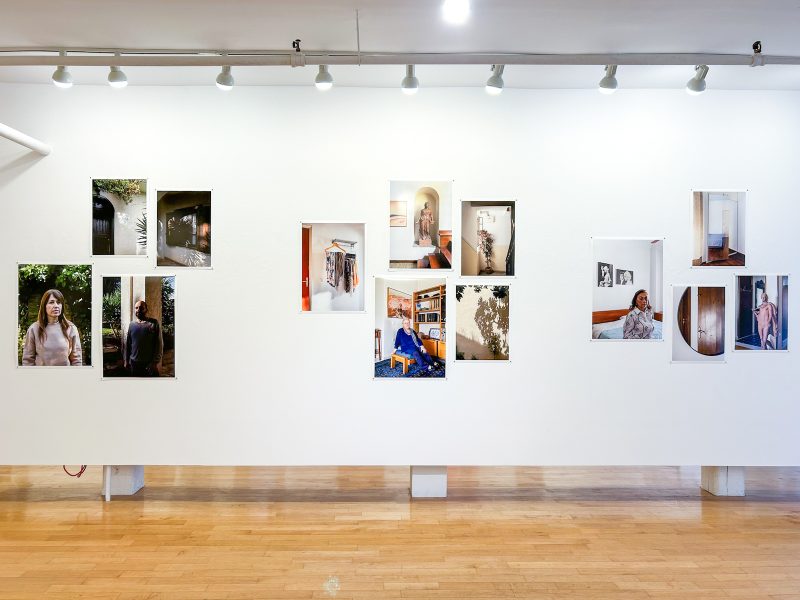
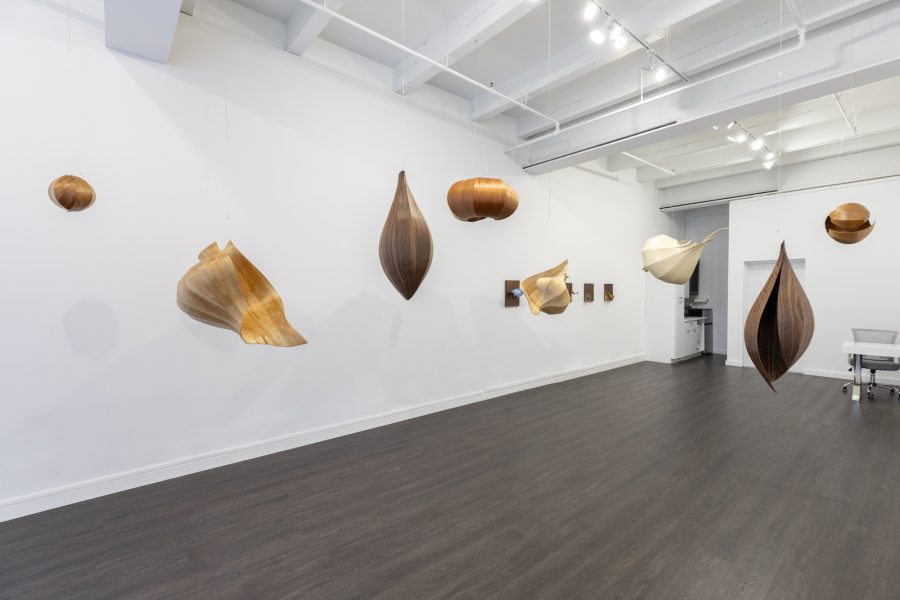
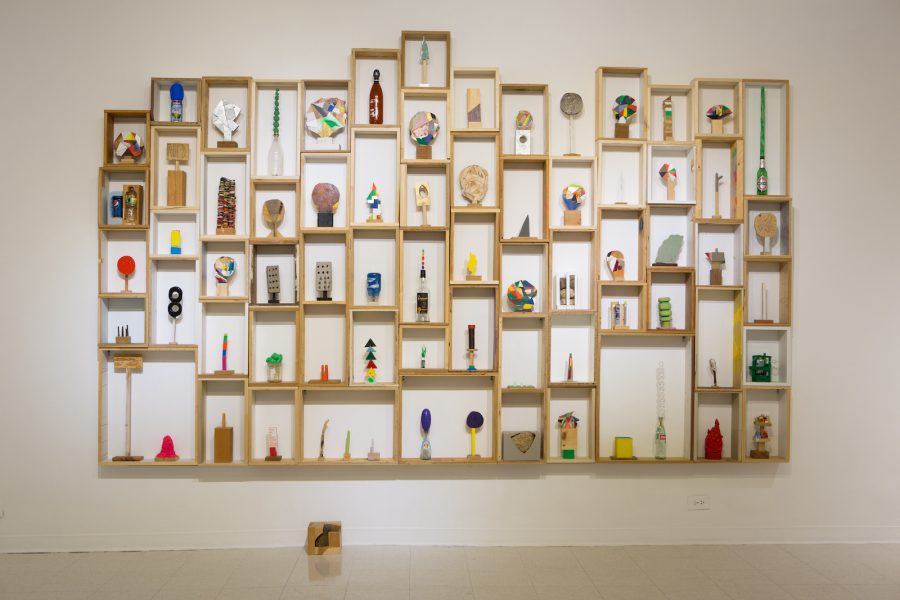
(Boston, MA—Feb. 20, 2025) Alison Croney Moses, Yorgos Efthymiadis, Damien Hoar de Galvan, and Sneha Shrestha (aka Imagine) have been named the recipients of the 2025 James and Audrey Foster Prize, the museum announced today. Their work will be presented in the 2025 James and Audrey Foster Prize Exhibition, on view from Aug. 25, 2025, through Jan. 19, 2026. Organized by Tessa Bachi Haas, Assistant Curator, the exhibition recognizes the global and local roots of each artist, and how this is reflected in their practice.

“The biennial James and Audrey Foster Prize Exhibition consistently introduces audiences to the vitality of Boston’s artistic community and supports artists through exhibition, collaboration and a deepened sense of community. It is always a highly anticipated moment within our exhibition program,” said Jill Medvedow, Ellen Matilda Poss Director. “We are grateful to Jim and Audrey Foster, whose ongoing generosity over two decades has made it possible for us to share the work of immensely talented area artists with many thousands of people in person and online.”   

“We are thrilled to congratulate the 2025 Foster Prize artists, whose work demonstrates the strength and creativity of Boston’s arts scene. We can’t wait to see their work on view in the ICA galleries,” the Fosters added.  

Following recent visits to over 50 Boston-area artist studios, Haas wishes to express her immense gratitude to each artist with whom she has met during this time and over her years in Boston. “It is a unique and necessary privilege to spend extended time with artists in their studios,” said Haas. “I am immensely proud to organize an exhibition of four outstanding artists who are pillars of supporting the arts, equity, and education in our region.” 

“Each of this year’s Foster Prize recipients draws on materials that connect their local and global roots,” said Haas. “Whether through woodworking, installation, sculpture, painting, and photography, the expansive art practices of Croney Moses, Efthymiadis, Galvan, and Shrestha underpin the strength of our greater Boston arts community.”  

The James and Audrey Foster Prize is key to the ICA’s effort to recognize, present, and acquire works by exceptional Boston-area artists. First established in 1999, the Foster Prize (formerly the ICA Artist Prize) expanded its format when the museum opened its Seaport building in 2006. James and Audrey Foster, passionate collectors and lifelong supporters of contemporary art, endowed the prize, ensuring the ICA’s ability to sustain and grow the program for years to come. 

The program has proven to be a springboard for many artists to have major museum exhibitions. The selection of artists for the James and Audrey Foster Prize Exhibition spans generations and results from sustained conversations with Boston’s community of working artists. More than 46 artists have participated in the Foster Prize exhibition program, including: Ambreen Butt (1999), Taylor Davis (2001), Kelly Sherman (2006), Rania Matar (2008), Evelyn Rydz (2010), Luther Price (2013), Lucy Kim (2017), Lavaughn Jenkins (2019), Marlon Forrester (2021), Yu-Wen Wu (2023), and many more. Works by many Foster Prize recipients have entered the ICA’s permanent collection.  

Artist Biographies 
Alison Croney Moses (born 1983, Fayetteville, North Carolina; lives and works in Roslindale, MA, and Allston, Boston, MA) creates wooden objects that reach for your senses—the smell of cedar, the glowing color of honey, the round form that signifies safety and warmth, the gentle curve that beckons to be touched. Born and raised in North Carolina by Guyanese parents, Croney Moses remembers making clothing, food, furniture, and art as part of her childhood. She carries these values and habits into adulthood and parenting, creating experiences, conversations, and educational programs that cultivate the current and next generation of artists and leaders in art and craft. Croney Moses holds an MA in Sustainable Business & Communities from Goddard College, and a BFA in Furniture Design from Rhode Island School of Design. She has been included in group exhibitions at Houston Center for Contemporary Craft (2024-25); Palais de Tokyo, Paris (2024); Bill & Melinda Gates Foundation Discovery Center (2023); Center for Art in Wood, Philadelphia (2022-23); MassArt Art Museum, Boston (2022); the Museum of Fine Arts, Boston (2021-22); and Center for Architecture + Design, Philadelphia (2021), among others. Croney Moses’s work is in the collections of Fuller Craft Museum, Brockton, MA; Museum of Fine Arts, Boston; Museum of Fine Arts, Houston; Detroit Institute of Arts Museum; and Renwick Gallery, Smithsonian American Art Museum, Washington, D.C. She is recipient of the 2024 Black Mountain College International Artist Prize, the 2023 Boston Artadia Award, the 2022 USA Fellowship in Craft, and a finalist of the 2024 LOEWE FOUNDATION Craft Prize. She will debut her first public art installation at the Boston Public Art Triennial in 2025 through their Accelerator program. This is Croney Moses’s first institutional solo exhibition. 

Damien Hoar de Galvan (born 1979, Northampton, MA; lives and works in Milton, MA) has developed a unique output of painted sculpture made primarily from recycled wood for nearly 20 years. His sculptures range from smaller tabletop objects to larger wall-sized installations. Some of the wood Hoar de Galvan uses is reclaimed from his time as a preparator at the deCordova Sculpture Park and Museum in Lincoln, MA, and from his father’s carpentry projects, which he began in the 1970s as an immigrant to Massachusetts from Argentina. Hoar de Galvan recently completed a sculpture-a-day series over the 2024 calendar year and plans to incorporate recycled wood from ICA installations into new works. Hoar de Galvan holds a Post-Baccalaureate Certificate from the School of the Museum of Fine Arts, Boston, and a BA from Green Mountain College in Poultney, VT. He has exhibited in group exhibitions at Concord Center for Visual Art, Concord, MA (2024); Drive-By Projects, Watertown, MA (2023); and has had several solo and group exhibitions at galleries in New York, Seattle, Santa Barbara, Los Angeles, San Francisco, and across Massachusetts.

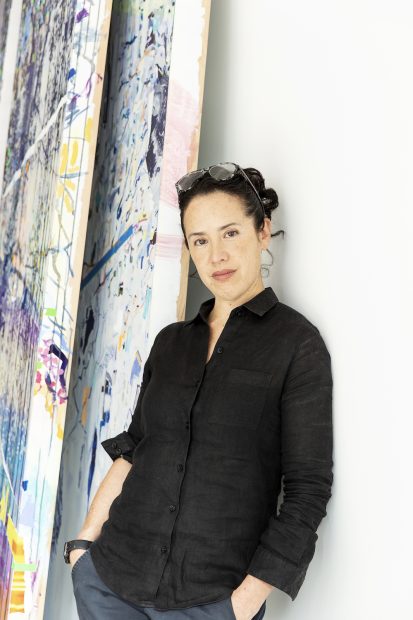
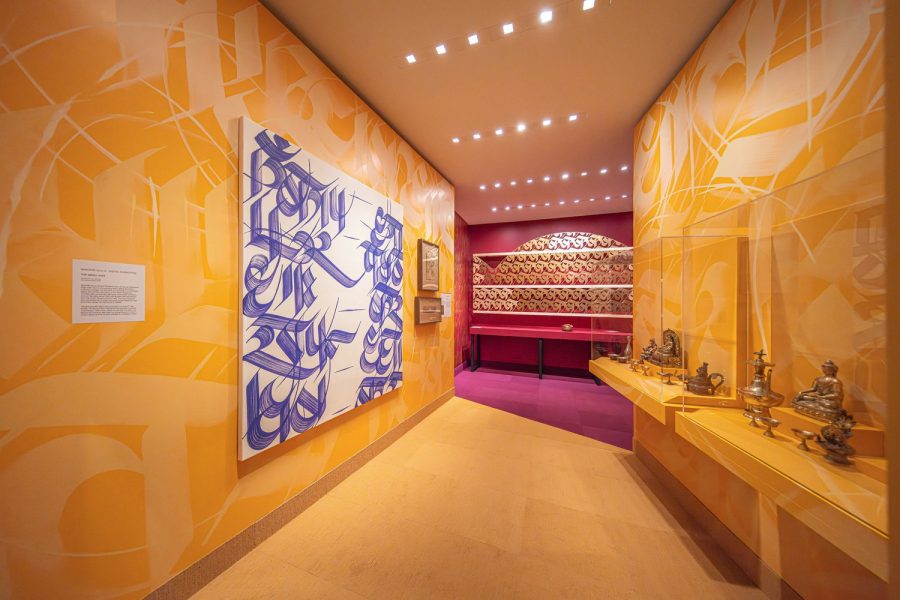
Sneha Shrestha (born 1987, Kathmandu, Nepal; lives and works in Kathmandu, Boston, and Somerville, MA), also known as Imagine, creates paintings, works on paper, sculpture, and larger-than-life murals that harmoniously blend her native Nepali and Sanskrit languages, mantras, sacred sounds used in meditation and prayer, and American graffiti hand styles. Education has always been at the forefront of Shrestha’s work to celebrate and inspire an appreciation for the beauty and diversity of Nepali language. Shrestha received her MA in Education from Harvard University. She has had a solo exhibition at Cantor Arts Gallery, College of the Holy Cross, Worcester, MA (2024); and participated in group exhibitions at Wrightwood 659, Chicago (2024-25); Nepal Arts Council, Kathmandu (2024); and Rubin Museum of Himalayan Art, New York (2024). In 2025, she will complete a public art project in partnership with Rubin Museum and New York City Department of Transportation’s Temporary Art Program. One of her iconic public murals is at the corner of Massachusetts Avenue and Main Street in Central Square, Cambridge, MA, and her work can also be found in the collections of the Museum of Fine Arts, Boston; and Fidelity Art Collection, among others. Shrestha’s additional honors include a commissioned thirty-foot sculpture at the Isabella Stewart Gardner Museum, Boston (2024); a grant from the Collective Futures Fund (2024); becoming the first contemporary Nepali artist the be included in the Museum of Fine Arts, Boston’s permanent collection (2023); inclusion in WBUR The ARTery’s 25 Millennials of Color (2019); recognition as one of the 100 most influential women in Nepal by the Nepal Cultural Council (2018); a Boston Artist-in-Residence Award (2018); the HUBWeek Change Maker Award (2018); South Asia and the Arts Fund Grant, Harvard University (2017); and Project Zero Artist-in-Residence Award, Harvard University (2017). She was recently selected for a studio residency at Boston Center for the Arts. 

Yorgos Efthymiadis (born 1972, Halkidiki, Greece; lives and works in Somerville, MA) is an artist and curator who works in photographic media. Drawing from his experience as an architectural photographer, recent series by Efthymiadis explore portraiture of kin through their material cultures and surrounding natural environments in Greece, Boston, and beyond. Efthymiadis has had solo exhibitions at Gallery Kayafas, Boston (2024, 2019, and 2016) and the Griffin Museum of Photography, Winchester, MA (2016); and has been included in several group exhibitions including at the Griffin Museum of Photography, Winchester, MA (2025, 2024, 2023, and 2020); Boston City Hall (2024 and 2017); Filter Photo Gallery, Chicago (2023, 2022, 2017, and 2014); Vermont Center for Photography, Brattleboro, VT (2022 and 2017); Danforth Art Museum, Framingham, MA (2022, 2016, 2015, and 2013); Distillery Gallery, Boston (2021); Rhode Island Center for Photographic Arts, Providence (2020); Somerville Museum, Somerville, MA (2019); and Photographic Resource Center, Boston (2015). Efthymiadis is an awardee of the Artist’s Resource Trust A.R.T. Grant (2024); a finalist for the Massachusetts Cultural Council Fellowship (2017); and recipient of the St. Botolph Club Foundation Emerging Artist Award (2017). A board member of Somerville Arts Council and chair of the Visual Arts Fellowship Grants since 2017, Efthymiadis has also been a reviewer for the Lenscratch Student Prize Awards since 2023 and finds it deeply fulfilling to work with fellow photographers and give back to the photographic community. In 2015, Efthymiadis created a gallery in his own kitchen titled The Curated Fridge, to celebrate fine art photography and connect photographers with established and influential curators, gallerists, publishers, and artists from around the world through free, quarterly curated calls. The Curated Fridge recently celebrated 10 years of exhibitions featuring more than 1500 artists in 40 shows juried by 45 guest curators.  

Exhibition Credits
The 2025 James and Audrey Foster Prize is organized by Tessa Bachi Haas, Assistant Curator. 

This exhibition and prize are generously endowed by James and Audrey Foster. 

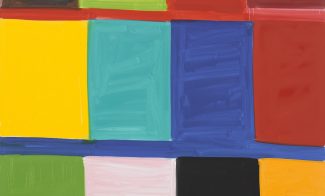
Stanley Whitney: How High the Moon traces the evolution of Whitney’s unique and powerful abstractions over the course of his 50-year career

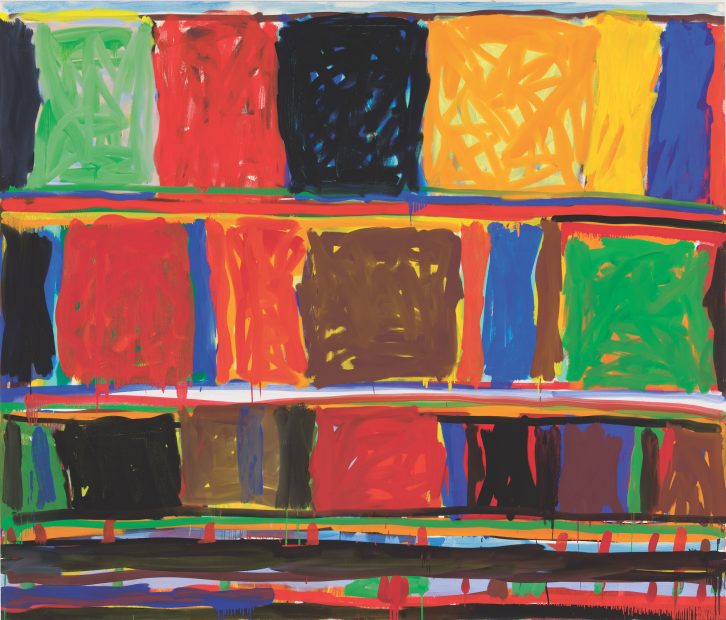
(Boston, MA—February 6, 2025) In April 2025, the Institute of Contemporary Art/Boston (ICA) will open Stanley Whitney: How High the Moon. The ICA/Boston will be the last stop for this major touring survey, which traces the development of Whitney’s unique and powerful abstractions over his 50-year career. The exhibition includes over 100 works, featuring extensive installations of the artist’s improvisatory small paintings; drawings and prints; and a selection of his sketchbooks spanning from 1987 to 2021, offering a view into Whitney’s endless variations on the theme of color, form, and his engagement with the written word. 

Stanley Whitney: How High the Moon is organized by the Buffalo AKG Art Museum and is curated by Cathleen Chaffee, Charles Balbach Chief Curator at the Buffalo AKG Art Museum. The ICA’s presentation is organized by Ruth Erickson, Barbara Lee Chief Curator and Director of Curatorial Affairs, with Tessa Bachi Haas, Assistant Curator, and will be on view from April 17 through September 1, 2025. 

“Like the 1940 song, penned by Nancy Hamilton and Morgan Lewis, that inspired the exhibition’s title, Stanley Whitney: How High the Moon conveys feelings of enchantment through the artist’s consistent yet wholly expansive paintings,” said Ruth Erickson, Barbara Lee Chief Curator and Director of Curatorial Affairs at the ICA. “Whitney’s abstractions create a space for viewers focus on their wide-ranging responses to color, rather than a specific subject.” 

This exhibition places Whitney’s color-saturated paintings in the context of his diverse sources of inspiration, which include jazz and soul music, poetry, American quilting traditions, and global histories of art and architecture. Between the early 1970s and the early 1990s, while making works characterized by a bold, experimental palette and unique rhythm, Whitney wrestled with the spatial legacies of foreground and background, and of object and field. His travels through the American West, Italy, and Egypt in the mid-1980s and the early 1990s transformed his work. Prior this period, Whitney’s paintings of colorful forms were suspended in what Whitney called “landscape air.” In the decades since, inspired by the natural and built environments he encountered, including Egyptian Pyramids and the Roman Colosseum, he began grounding his paintings with the loose but ever-present framework featuring horizontal rows of alternately askant and ordered squares, resulting in the loosely gridded abstractions that capture the imagination of audiences today. 

Stanley Whitney: How High the Moon surveys Whitney’s extensive investigation of color at the true height of his career. The survey features the artist’s large-scale explorations of color alongside his improvisatory small paintings. His drawings and prints provide vital, and often overlooked, context to the artist’s practice. These smaller works will be exhibited alongside a chronological selection of the artist’s sketchbooks spanning from 1987 to 2021 to provide a view into Whitney’s engagement with the written word, and contemporary social and political issues.

This career retrospective is accompanied by a catalogue featuring new essays by Chaffee and host curators Ruth Erickson, Barbara Lee Chief Curator and Director of Curatorial Affairs at the ICA, and Pavel S. Pyś, Curator of Visual Arts at the Walker Art Center, Minneapolis. It also features texts by Kim Conaty, Nancy and Steve Crown Family Chief Curator at the Whitney Museum of American Art, New York; Normal Cole, a poet, designer, painter, and translator; and Duro Olowu, a London-based fashion designer and curator. These examinations of and reflections on the arc of Whitney’s career are presented alongside full-color reproductions of the works featured in the exhibition, a robust bibliography, an exhibition history, an illustrated chronology, and an extensive interview with the artist by Grégoire Lubineau and a conversation between Cole and Whitney.

Media Preview of Stanley Whitney: How High the Moon and Christian Marclay: Doors
Tuesday, April 15 from 9:30 AM
Join us for a walkthrough of Stanley Whitney: How High the Moon and Christian Marclay: Doors with curators Ruth Erickson and Tessa Bachi Haas.

The Artist’s Voice: Stanley Whitney with Narayan Khandekar
Thursday, April 17 at 7 PM 
In this conversation moderated by Ruth Erickson, Whitney and Khandekar, curator of the Forbes Pigment Collection at Harvard Art Museum and director of the Strauss Center for Conservation and Technical Studies, will come together to reflect on their lifetime work, including Whitney’s five decades of painting represented in his retrospective. 

About the ICA     
Since its founding in 1936, the ICA has shared the pleasures of reflection, inspiration, imagination, and provocation that contemporary art offers with its audiences. A museum at the intersection of contemporary art and civic life, the ICA has advanced a bold vision for amplifying the artist’s voice and expanding the museum’s role as educator, incubator, and convener. Its exhibitions, performances, and educational programs provide access to the breadth and diversity of contemporary art, artists, and the creative process, inviting audiences of all ages and backgrounds to participate in the excitement of new art and ideas. The ICA is located at 25 Harbor Shore Drive, Boston, MA, 02210. The Watershed is located at 256 Marginal Street, East Boston, MA 02128. For more information, call 617-478-3100 or visit our website at icaboston.org. Follow the ICA on Facebook, Instagram, and TikTok. 

Media Contact 
Theresa Romualdez, press@icaboston.org 
Credits 
Stanley Whitney: How High the Moon is organized by the Buffalo AKG Art Museum. 

The exhibition is curated by Cathleen Chaffee, Charles Balbach Chief Curator, Buffalo AKG Art Museum. The ICA/Boston’s presentation is organized by Ruth Erickson, Barbara Lee Chief Curator and Director of Curatorial Affairs, with Tessa Bachi Haas, Assistant Curator. 

With warmest thanks, we gratefully acknowledge the generosity of the ICA’s Avant Guardian Society in making the ICA’s presentation of this exhibition possible