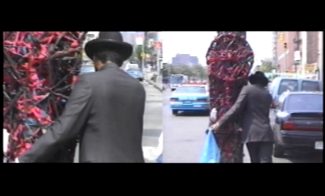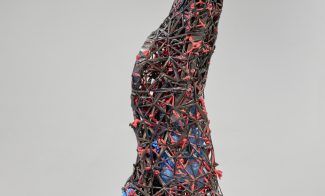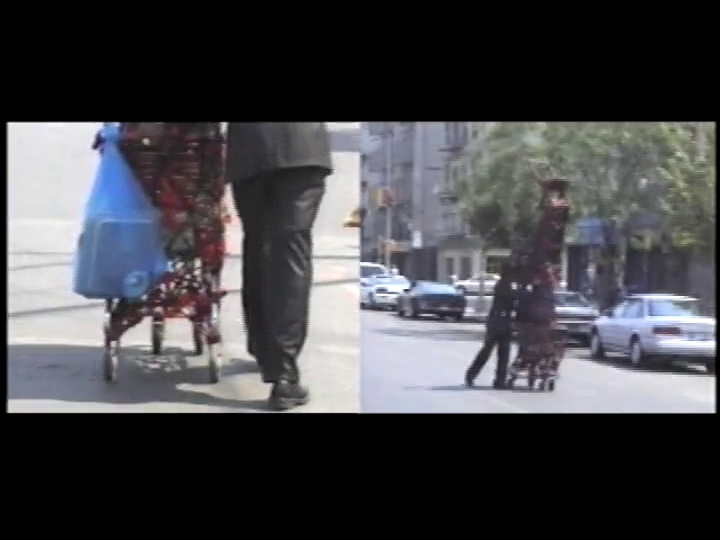
In Pushing Savior (1996), Nari Ward moves slowly through the streets of Harlem, guiding a tall, webbed sculpture built atop a common shopping cart titled Savior (1996). The act echoes a religious procession, transforming the urban setting into a site of ritual. Ward began Savior during a residency at Sabbathday Lake Shaker Village in Maine, where he reflected on the role of faith, communal labor, and craft in American history. Returning to New York City, Ward completed the sculpture by gathering discarded materials and undertook the performance Pushing Savior, connecting his profound experiences with the Shakers to Harlem. In this context, the cart pushed through the neighborhood recalls the precarity of unhoused individuals and the ongoing homelessness crisis in the United States. Through the sculpture and performance, Ward reframes a familiar urban reality as both spiritual and political. Thirty years later, Ward’s sculpture and the documentation of his performance bring faith, displacement, and civic ritual into direct conversation, reflecting on fundamental questions of agency and belief as they shape life in America.
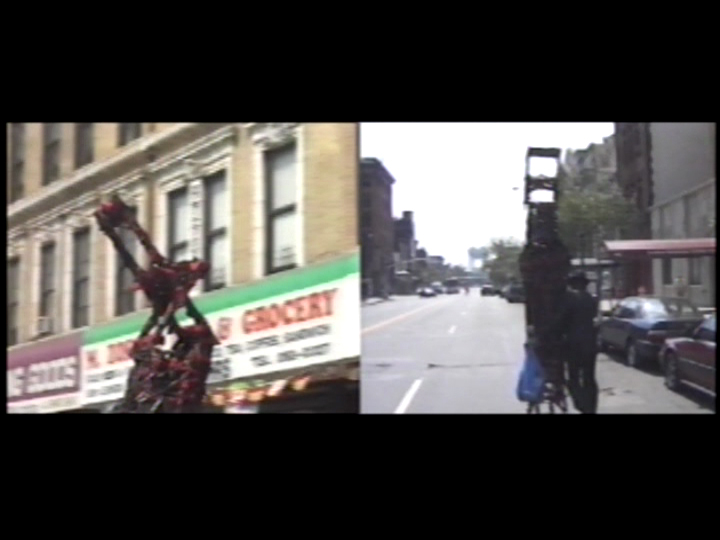
Nari Ward, Pushing Savior, 1996. Video (color, sound; 7:01 minutes). Dimensions variable. Institute of Contemporary Art/Boston. Gift of the artist. Courtesy the artist and Lehmann Maupin, New York, Seoul, and London. Filmed by Marcel Odenbach. © Nari Ward