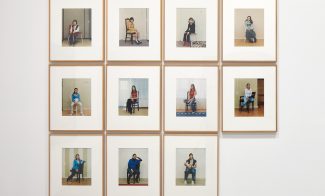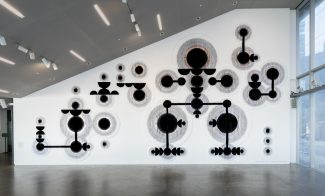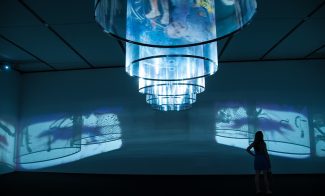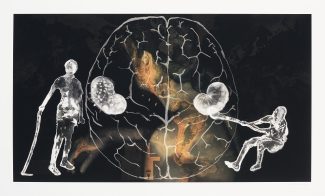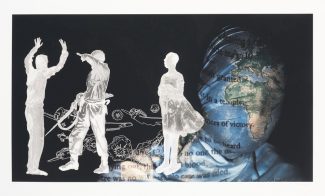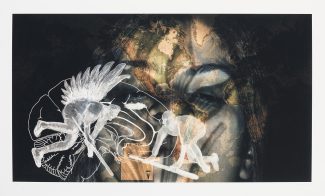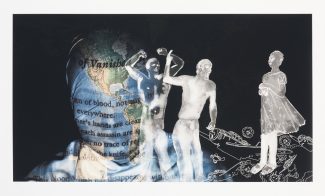
Nalini Malani (Born 1946 in Karachi, Pakistan) is one of India’s most prominent contemporary artists and a pioneer of video art in South Asia. She and her family became refugees in 1947 as a result of the partition of India, which divided the country along religious lines. Malani originally studied classical painting, but abandoned this tradition in the 1990s as a reaction to a growing religious fundamentalism in Indian politics. To raise political consciousness, she turned to ephemeral wall drawings, performances, experimental theater, and video installations—art forms new to India at the time—and has brought this experimental approach to her acclaimed large-scale video/shadow plays. For nearly fifty years, Malani has expressed her commitment to social activism and feminist causes in her art, which centers on themes of femininity, the body, violence, and nationhood.
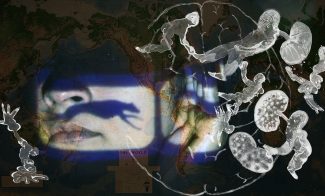
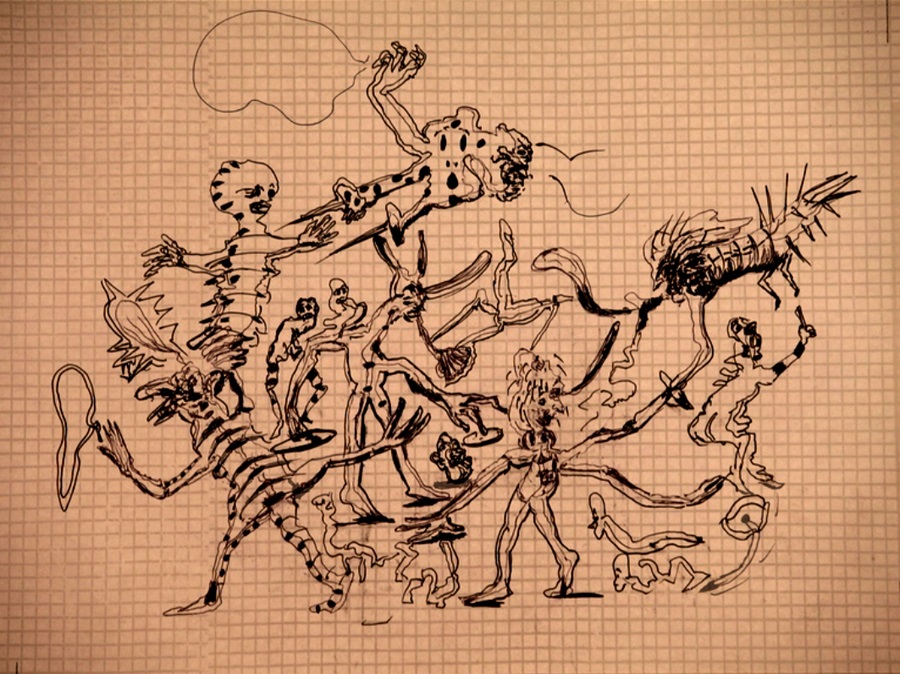
The stop-motion animation Penelope is inspired by the female protagonist of Homer’s Odyssey who, to stall her suitors who press her to remarry, obsessively weaves and unweaves a shroud during her husband’s extended absence. The work depicts a monstrous figure who comes into being line by line and disappears in the same manner, visualizing Penelope’s continuous loop of stitching and unstitching by means of Malani’s consummate drawing technique.